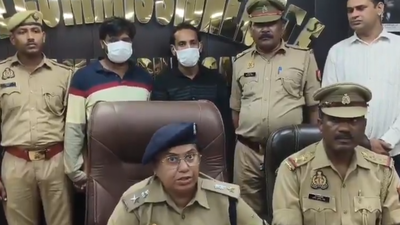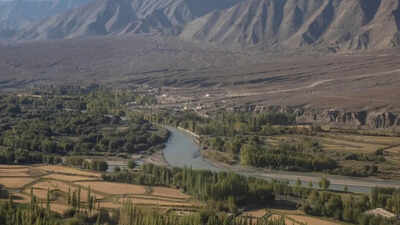
Just days after India rejected an international tribunal’s ruling on the Indus Waters Treaty (IWT) and dismissed its jurisdiction, Pakistan on Wednesday urged New Delhi to engage “constructively” within the framework of the 1960 water-sharing agreement.According to news agency PTI, Pakistan foreign office spokesperson Tahir Andrabi said the Permanent Court of Arbitration had reaffirmed that the treaty remained fully enforced and binding. Pakistan, he said, would take “all possible measures” to ensure the decision was implemented.Andrabi said Pakistan remained committed to implementing the treaty in letter and spirit in accordance with its language and provisions.Pakistan will continue to urge India to reciprocate with the same approach whereby the treaty is upheld in letter and spirit and in its full legal documented provisions, he said, according to PTI.Pakistan had approached the Permanent Court of Arbitration in The Hague in March 2026, seeking a determination on the status of the treaty after India placed it in abeyance.
India rejects tribunal ruling
India, however, has consistently rejected the jurisdiction of the arbitration process.On Monday, the ministry of external affairs (MEA) said, “India categorically rejects its so-called award, just as it has firmly rejected all prior pronouncements by this illegally constituted body.”“India’s decision to hold the Indus Waters Treaty in abeyance remains in force,” the ministry said.MEA said the Court of Arbitration had issued what it termed an award on May 15, 2026, concerning maximum pondage supplemental to an earlier award on issues of general interpretation of the IWT.“This so-called Court was constituted by the World Bank in patent breach of the terms of the Treaty and India categorically rejects its so-called award, just as it has firmly rejected all prior pronouncements by this illegally constituted body”, the ministry stated.India has maintained that the establishment of the arbitral body itself violates the IWT and that it has no jurisdiction over India’s sovereign decision to place the treaty in abeyance.
Water, terrorism and the SCO
The dispute also featured indirectly at the Shanghai Cooperation Organisation (SCO) summit, in Bishkek, where Prime Minister Narendra Modi called for action against countries that use terrorism as an instrument of state policy.“We cannot remain confined to an action-reaction approach,” Modi said, calling for the dismantling of terrorist ecosystems, including funding networks, recruitment pipelines and territorial sanctuaries.Pakistan prime minister Shehbaz Sharif, speaking at the summit, described water as the region’s “lifeblood” and said it “must never be weaponised”.“The treaties governing our shared waters are solemn, binding international commitments. They are not matters of political convenience to be cast aside at your will. They must be honoured unconditionally, in both letter and spirit,” Sharif said, according to Dawn.India placed the IWT in abeyance following the April 22, 2025 Pahalgam terror attack, in which 26 people were killed. The Cabinet Committee on Security took the decision on April 23, 2025, with New Delhi saying the conditions underlying the treaty had fundamentally changed.India has said the treaty will remain in abeyance until Pakistan “credibly and irrevocably abjures its support for cross-border terrorism”.