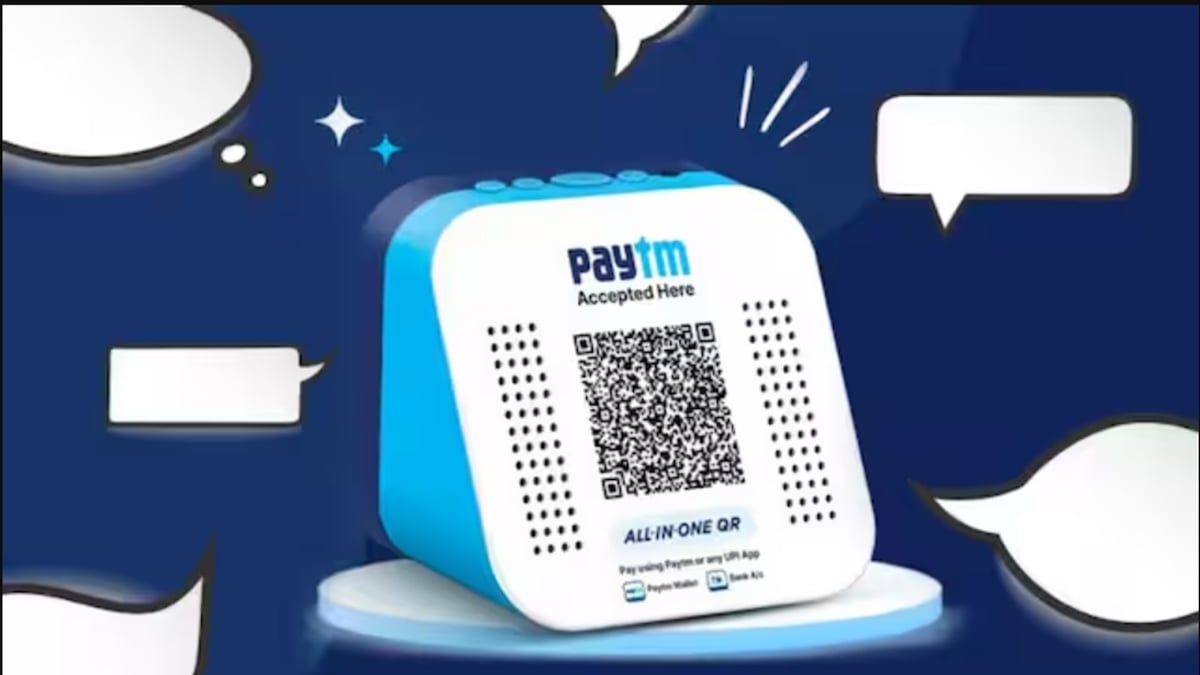
The stock has gained nearly 34% in a month and 33% so far in 2026. It has also climbed more than 80% from its 52-week low of ₹947.10, touched on March 30.
The rally comes against the backdrop of stronger quarterly earnings, expectations of faster revenue growth and the possibility of a change in how some UPI transactions are priced.
Earnings improve, revenue growth picks up
Paytm reported a 79% year-on-year increase in consolidated net profit to ₹220 crore for the first quarter of FY27, while revenue from operations rose 27.6%.
The company has also said it expects revenue growth in FY27 to exceed the 22% recorded in the previous financial year.
The results have strengthened the case that Paytm is moving beyond its earlier focus on cutting costs, with revenue growth now becoming a bigger part of the earnings story.
Could MDR make a comeback on some UPI payments?
Another factor in focus is the government’s consideration of a legal framework that could bring back the Merchant Discount Rate (MDR) on a limited category of UPI transactions.
MDR is a fee paid by merchants for processing digital payments. The fee is typically calculated as a percentage of the transaction value and shared among participants in the payments ecosystem.
Under a proposal reportedly under consideration, large merchants could be charged an MDR of 0.3% to 0.5% on UPI transactions above ₹2,000, while UPI would remain free for consumers and most merchants.
Such transactions account for only around 4% of UPI transaction volumes but nearly 67% of transaction value, according to news reports.
Analysts have estimated that such a change could create an annual revenue pool of ₹5,000 crore to ₹10,000 crore for the payments industry.
For Paytm, which has a large merchant payments business, the return of MDR on even a limited section of UPI payments could open up an additional source of revenue. However, the framework remains under consideration and no final decision has been announced.
Institutional investors pick up 3% stake
The rally also follows a large institutional transaction in Paytm shares last week.
A group of foreign and domestic institutional investors acquired about 1.92 crore shares, representing a 3% stake in One97 Communications, for ₹2,949 crore through open-market transactions.
Foreign investors participating in the transaction included Goldman Sachs, BNP Paribas and Societe Generale, along with Ghisallo Capital Management, Oxbow Capital Management, North Rock Capital Management, Viridian Asset Management, Vittoria Fund-OC and Integrated Core Strategies (Asia), according to NSE block-deal data.
Domestic buyers included SBI Mutual Fund, Aditya Birla Sun Life Mutual Fund, HDFC Mutual Fund, Kotak Mahindra Mutual Fund, HSBC Mutual Fund, Sundaram Mutual Fund and Tata Mutual Fund.
ICICI Prudential Life Insurance and Tata AIA Life Insurance were among the insurers that bought shares.
The breadth of institutional participation has also drawn attention, with the transaction bringing in a mix of foreign funds, domestic mutual funds and insurers.
Paytm board proposes higher pay for Vijay Shekhar Sharma
Separately, One97 Communications’ board has proposed revising the remuneration of founder and Chief Executive Vijay Shekhar Sharma after an independent benchmarking exercise found his existing compensation to be “materially below” comparable roles.
Sharma’s base remuneration has remained unchanged since August 2022, when he was reappointed managing director and chief executive.
According to the company’s annual general meeting notice, Sharma had voluntarily asked for his remuneration to remain unchanged.
He received total remuneration of ₹4.33 crore in FY26, including perquisites, compared with ₹4.5 crore in FY25.
Sharma also voluntarily surrendered 2.10 crore employee stock options in 2025 and currently holds no ESOPs in the company.
The remuneration proposal is separate from the factors directly affecting Paytm’s operating performance, but comes as the company’s shares trade at their highest level in a year.
Also Read: Here’s how much Indian IT has spent on AI-linked acquisitions