
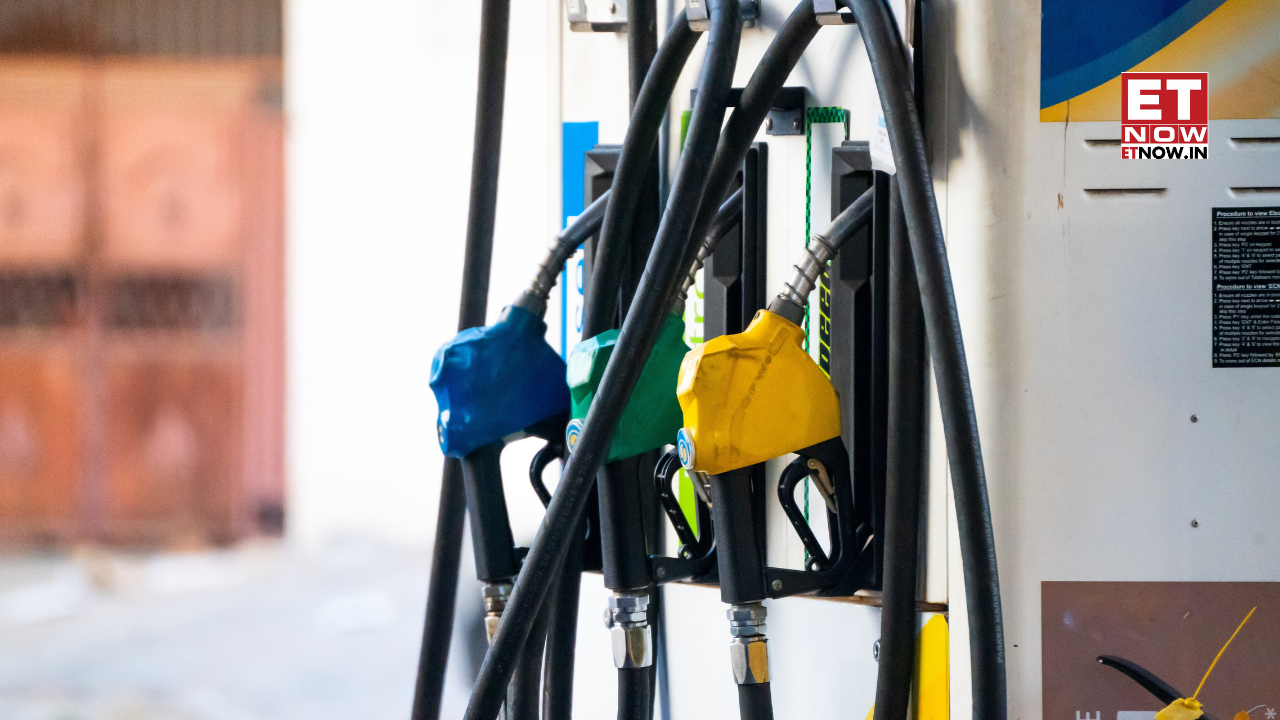
State-run oil marketing major Indian Oil Corporation Ltd (IOCL) has increased petrol and diesel prices by around Rs 3 per litre, marking the first major revision since the prolonged price freeze that began in 2022. The hike comes amid rising global crude oil prices and mounting financial pressure on oil marketing companies (OMCs).
Following the revision, petrol prices in Delhi have risen from Rs 94.77 per litre to Rs 97.77 per litre. Diesel prices have also been increased, climbing from Rs 87.67 per litre to Rs 90.67 per litre. Similar upward revisions have been implemented across other major cities, with sharper increases in some regions due to local taxes and levies.
In Kolkata, petrol now costs Rs 108.74 per litre after a hike of Rs 3.29, while in Mumbai the price has risen by Rs 3.10 to Rs 106.64 per litre. In Noida, petrol prices have increased by Rs 3.30 to Rs 98.04 per litre. Bengaluru has seen a rise of Rs 3.21, taking the price to Rs 106.17 per litre, and Hyderabad recorded one of the steepest hikes, with petrol up by Rs 3.39 to Rs 110.89 per litre.
The latest move comes at a time when oil companies have been grappling with substantial under-recoveries. Minister of Petroleum and Natural Gas, Hardeep Singh Puri earlier noted that OMCs have been incurring losses of nearly Rs 1,000 crore per day due to the gap between retail fuel prices and rising global crude costs. He added that total under-recoveries have mounted to approximately Rs 1.98 lakh crore.
Puri stated that there is no shortage of petrol or diesel in the country and confirmed that India currently holds sufficient supplies, including strategic crude reserves equivalent to 76 days of consumption.
The fuel price revision coincides with a sharp surge in global crude oil prices. Brent crude, which averaged USD 68.23 per barrel in 2025, has risen significantly in 2026. Starting the year at USD 60.85 per barrel, Brent prices have climbed to around USD 106.9 per barrel, marking a steep increase of nearly 76 per cent so far this year. This rally has exerted considerable pressure on domestic fuel pricing.
The rise in petrol and diesel prices is expected to have broader economic implications. Fuel costs directly impact inflation, with petrol and diesel accounting for roughly 5 per cent of India’s Consumer Price Index (CPI) basket. Higher prices typically feed into transportation costs, leading to increased prices of goods and services.
Sectorally, the impact is likely to be mixed. Oil marketing companies such as HPCL, BPCL, and IOCL may benefit from improved marketing margins and reduced under-recoveries.
However, sectors heavily dependent on transportation, including logistics firms and fast-moving consumer goods (FMCG) companies, could face pressure on margins due to rising input costs. Delivery-based services and quick commerce platforms are also expected to see higher operating expenses as fuel costs push up last-mile delivery charges. In the automobile sector, conventional internal combustion engine (ICE) vehicle makers may experience mild demand softness due to higher running costs, while electric vehicle manufacturers could gain as consumers look for more cost-efficient alternatives.