
Kapadia said the scheme, aimed at evacuating 135 GW of renewable energy and strengthening the transmission network, could begin translating into business opportunities once tendering gains pace over the next six months. He also expects railway and metro capital expenditure to remain healthy, supporting companies such as RITES and BEML over the next few years.
Kapadia said, “This is the first time such a big number has come from the Green Energy Corridor (GEC) side.” He noted that while the overall scheme is worth ₹1.86 lakh crore, around ₹1.44 lakh crore is expected to be spent on transmission infrastructure, with the balance allocated to battery energy storage systems.
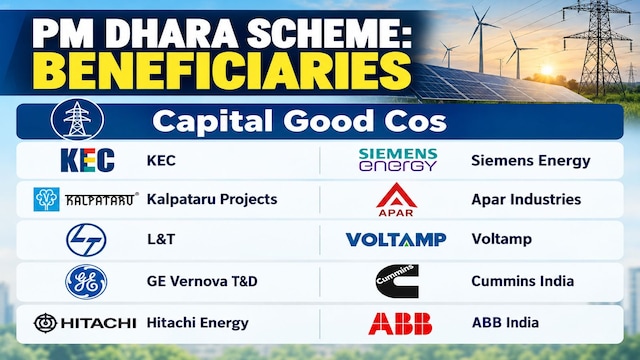
Capital goods companies set to benefit from renewable transmission push
He expects the transmission component to benefit equipment manufacturers supplying high-voltage products for large solar and wind projects. According to Kapadia, companies including Hitachi Energy, Siemens Energy, CG Power, Polycab, KEI Industries and Apar Industries could gain from the increased investment.
On the execution timeline, Kapadia said the scheme will be implemented over five years, with tendering likely to gather pace after about six months.
“Once we have clarity on that number, we’ll be able to give a more concrete view on how the growth would be panning out,” he said.
RITES execution expected to pick up
Kapadia said RITES’ turnkey construction business is entering a stronger execution phase.
He noted that nearly half of RITES’ ₹9,500 crore order book is linked to turnkey construction, including rail connectivity projects connecting industries to ports. He expects this business to grow by around 20% annually over the next two years as project execution accelerates.
Kapadia also said RITES could benefit from upcoming rolling stock tenders and expanding coach export opportunities, with the company looking to add one new export market every year.

PM Dhara scheme to support renewable energy companies as transmission infrastructure expands
Railway capex momentum remains intact
Kapadia believes railway capital expenditure continues to support the sector despite moderation in growth.
He pointed out that railway capex has increased significantly over the past five years, though annual growth has slowed to around 9% from nearly 20% seen earlier. However, continued spending on signalling, electrification, rail overbridges, Vande Bharat trains and high-speed rail projects should sustain opportunities for railway companies.
BEML remains a preferred pick
Kapadia remains positive on BEML, citing its ₹17,000 crore order book, of which around ₹11,000 crore is linked to rail and metro projects.
He said execution of metro coach orders for Bengaluru, Chennai and Mumbai metros is gathering pace, while defence and mining businesses are expected to provide additional growth.
Highlighting the company’s improving financial performance, Kapadia said, “The story has just started for them.” He added that management has guided for 25% revenue growth in the financial year 2026-27 (FY27), supported by stronger execution across rail, defence and mining businesses.
For the full interview, watch the accompanying video

Catch all the latest updates from the stock market here