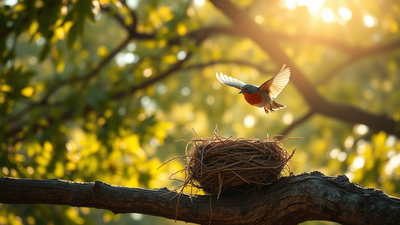
Success rarely comes to those who simply wait for it. While life may provide us with opportunities, talents and resources, it is up to us to make use of them. The saying by J.G. Holland, “God gives every bird its food, but He does not throw it into its nest,” captures this idea through a simple yet powerful image from nature. Birds may live in a world filled with food, but they must still leave the safety of their nests to search for it. In the same way, people must combine opportunity with action if they hope to achieve their goals.Josiah Gilbert Holland (1819–1881) was an American physician, author and poet whose writings often explored themes of hard work, morality and perseverance. This enduring saying has since become one of his best-known quotations, inspiring generations to value effort alongside faith and hope.
Proverb of the day by J.G. Holland
“God gives every bird its food, but He does not throw it into its nest”
What does this proverb mean?
The proverb teaches that while life may offer us possibilities, success is never handed to us without effort. Talent, luck and favourable circumstances can open doors, but determination, discipline and hard work are what allow us to walk through them. It reminds us that we cannot expect rewards without taking action.
Opportunity is only the beginning
Many people wait for the “perfect moment” to pursue a dream, change careers or learn a new skill. Yet opportunities are meaningful only when we act upon them. Just as a bird must leave its nest every day in search of food, we too must step beyond our comfort zones to achieve our ambitions. The proverb reminds us that progress begins with initiative.
Faith and effort go hand in hand
The saying also highlights the balance between hope and responsibility. Believing that things will work out can provide strength during difficult times, but faith alone cannot replace action. Whether preparing for an examination, building a business or pursuing personal goals, consistent effort is what transforms possibility into achievement. The proverb encourages us to trust the process while doing our part.
Hard work gives opportunities their value
Life does not always distribute opportunities equally, but when opportunities do arise, they are most valuable to those who are prepared to seize them. Every accomplishment is built on countless hours of learning, practice and persistence. This saying reminds us that success is rarely a gift, it is usually the result of making the most of what we have been given.
Why this proverb still matters today
In an era of instant gratification and overnight success stories, this proverb offers a refreshing reminder that lasting achievements require patience and effort. Whether applying for jobs, starting a business, improving one’s health or pursuing higher education, waiting alone is never enough. The opportunities may exist, but it is our willingness to act that determines the outcome. The greatest takeaway from J.G. Holland’s words are simple: life may provide the chance, but only effort can turn that chance into success.
Nature rewards those who take the first step
The image of a bird leaving its nest carries an important lesson about courage. The nest offers warmth, safety and comfort, but it cannot provide everything needed for survival. Every day, birds venture into the unknown in search of food, trusting their instincts and adapting to changing conditions. Likewise, personal growth often begins when we are willing to leave familiar surroundings, embrace uncertainty and take the first step towards our goals. Opportunities rarely come to those who wait indefinitely, they are often discovered by those who are willing to seek them.
The true lesson behind the proverb
At its heart, J.G. Holland’s saying is a reminder that blessings and effort are meant to work together. Life may give us abilities, supportive people and unexpected opportunities, but what we do with them is ultimately our responsibility. Success is not about waiting for circumstances to become perfect; it is about making the best use of what we already have. The proverb encourages us to replace excuses with action, reminding us that while opportunity may knock on the door, only determination can invite it in. The nest is comfortable precisely because it was built for rest, not for feeding. What the image captures so cleanly is that the same place offering safety cannot also provide everything needed to grow, and at some point every living thing has to leave it, not because the nest was wrong, but because staying has its own quiet cost.