
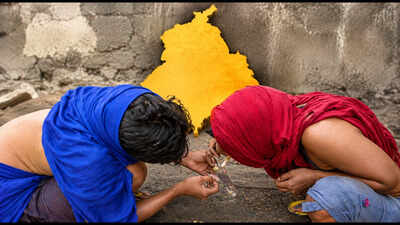
“People here don’t want to fight the problem; they want to get rid of people who are going through problems,” says Aman (name anonymous) who has struggled with drug use, pointing to the stigma surrounding addiction in Punjab.The state’s battle against drugs is not just about curbing supply or getting people into rehabilitation centres. For many, the real struggle begins after they leave these centres when they have to deal with social stigma, a lack of family and community support, and limited opportunities to rebuild their lives.While successive governments have promised action against drug networks and expanded rehabilitation efforts, the risk of relapse remains a concern without sustained care and support.This raises a larger question: are rehabilitation centres enough to address the deeper challenges of addiction.Let’s examine the gaps in the state’s approach and what it takes to make recovery sustainable.
Docto Bhupendra in conversation with TOI
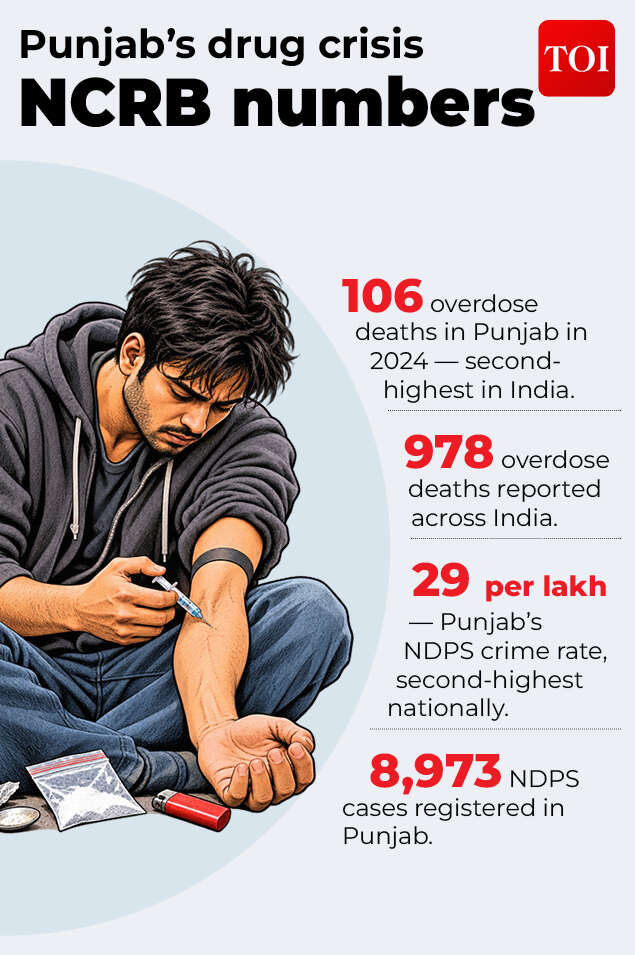
What the numbers revealAfter topping the country in drug overdose deaths in 2022 and 2023, Punjab recorded the second-highest fatalities in 2024, with 106 deaths, according to the latest NCRB report on Accidental Deaths and Suicides in India (ADSI).A total of 978 such deaths were reported nationwide, with Tamil Nadu topping the list at 313, followed by Punjab (106) and Madhya Pradesh (90).While Punjab no longer recorded the highest number of overdose deaths, fatalities in the state rose from 89 in 2023 to 106 in 2024. The figure, however, remained lower than the 144 deaths recorded in 2022. Nationally, overdose deaths stood at 681 in 2022 and 654 in 2023.Among neighbouring regions, Himachal Pradesh reported 31 deaths, up from 21, while Haryana recorded three, compared with none in the previous year. Chandigarh reported seven deaths, down from eight, and Jammu and Kashmir recorded four, one fewer than in 2023.The NCRB Crime in India 2024 report also showed Punjab recording the country’s second-highest crime rate under the Narcotic Drugs and Psychotropic Substances (NDPS) Act, at 29 cases per lakh population.The state registered 8,973 cases, the fourth-highest in the country.Kerala topped both the crime rate, at 75.5 cases per lakh population, and the total number of cases, at 27,149. Maharashtra followed with 15,641 cases and Tamil Nadu with 11,037. The national average stood at 7.8 cases per lakh population, with 1,09,890 cases registered across the country.Of Punjab’s NDPS cases, 6,060 were related to possession for trafficking, the highest number recorded by any state. Uttar Pradesh followed with 3,219 cases and Rajasthan with 2,758.The figures underline the scale of the challenge facing Punjab.Successive governments, successive promises
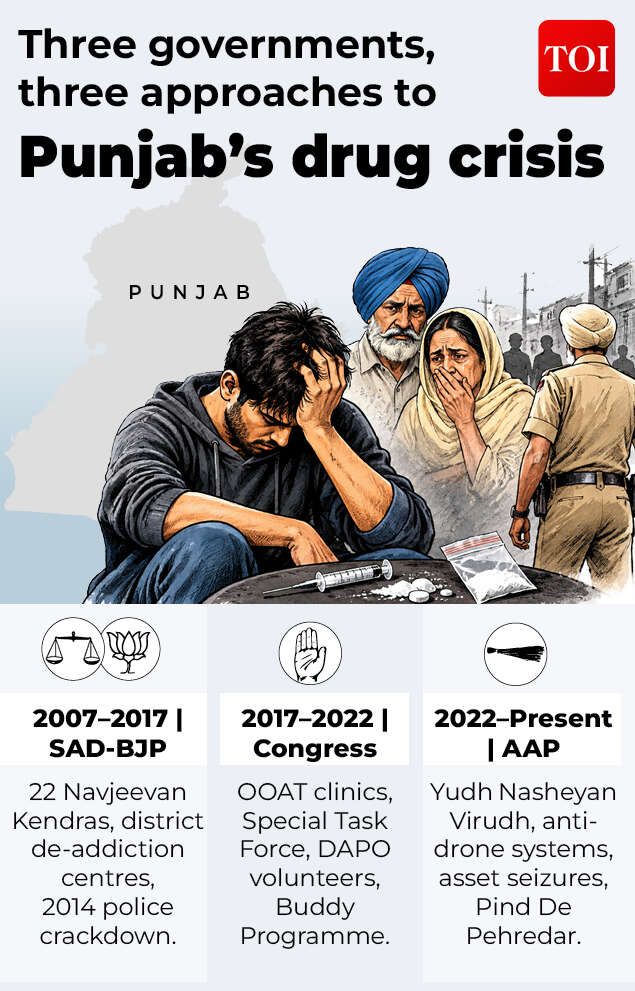
From the SAD-BJP government’s focus on de-addiction infrastructure to the Congress government’s outpatient treatment programmes and the AAP government’s crackdown on drug networks, successive administrations in Punjab have adopted different strategies to tackle substance abuse.The SAD-BJP government (2007–2017) set up government de-addiction centres in district hospitals and 22 rehabilitation centres, known as Navjeevan Kendras, with a focus on counselling and vocational training. It also launched a major police crackdown in 2014 amid concerns over synthetic drugs and smuggling networks.The Congress government (2017–2022), led initially by Captain Amarinder Singh and later by Charanjit Singh Channi, introduced Outpatient Opioid Assisted Treatment (OOAT) clinics, allowing people with opioid dependence to receive medication without prolonged hospitalisation. It also set up a Special Task Force (STF), launched the Drug Abuse Prevention Officers (DAPO) volunteer network and introduced the Buddy Programme in schools and colleges to build awareness among young people.The Bhagwant Mann-led AAP government, in power since 2022, has placed greater emphasis on enforcement, border surveillance and community participation. Its Yudh Nasheyan Virudh campaign, launched in March 2025, has involved large-scale police raids and arrests. The government has also deployed anti-drone systems along the international border, taken action against properties allegedly linked to drug proceeds and involved village-level volunteers, called Pind De Pehredar, in monitoring drug-related activity.However, the political debate over these measures continues. Opposition parties have accused the AAP government of failing to curb drug trafficking and prioritising publicity and policing over rehabilitation. The Congress and AAP have, in turn, traded allegations over the failure of previous administrations to tackle the crisis, with the drug problem continuing across successive governments.While each government has pointed to arrests, enforcement drives, treatment facilities and awareness programmes as evidence of its efforts, the persistence of drug-related deaths and crime raises a larger question: have successive governments focused enough on sustained recovery, or has Punjab’s anti-drug fight remained centred largely on promises and crackdowns?
Life on drugs: A user’s account of addiction and recoveryAman, who moved to Mohali in 2023 for college and took up a job at a pizza store to support himself, says his exposure to drugs began with curiosity rather than addiction.Initially, he occasionally consumed alcohol but became interested in cannabis after reading about it, watching documentaries on the hippie movement and exploring stories of travellers who journeyed across continents in search of nirvana and enlightenment.Towards the end of 2023, he procured marijuana for the first time and learnt to roll a joint through YouTube. He describes his first experience of getting high as something that quietened his mind and softened the edges of everyday anxiety.What began as occasional consumption gradually became more frequent. Over the next year, he experimented with weed and hash before eventually trying LSD during a trip to Kasauli with his cousin.While he says he continues to consume cannabis, he claims to have reduced his use after realising that he was smoking three to four times a day. Gradually cutting down and taking longer breaks helped him bring it down to occasional weekend consumption.Why rehabilitation maybe not enoughAman believes emotional distress, family pressure and the inability to express feelings can push young people towards substance use. Simply admitting someone to a rehabilitation centre or helping them stop consuming drugs, he says, does not address the underlying causes of addiction.Aman says rehabilitation centres must approach patients with empathy rather than treat addiction as a moral failing. He believes recovery also requires family support, mental healthcare and opportunities to rebuild one’s life.On the availability of drugs, Aman claims that access often depends on money and personal contacts.“Drug use is quite common in Punjab, and it often starts within households, with substance use being passed down through generations. Opium (afeem) and poppy husk (dode) are widely consumed, and their use is often glorified in songs. When it comes to availability, these substances are everywhere. Psychedelics, on the other hand, are rare in Punjab, with people more commonly turning to meth, cocaine and heroin.”
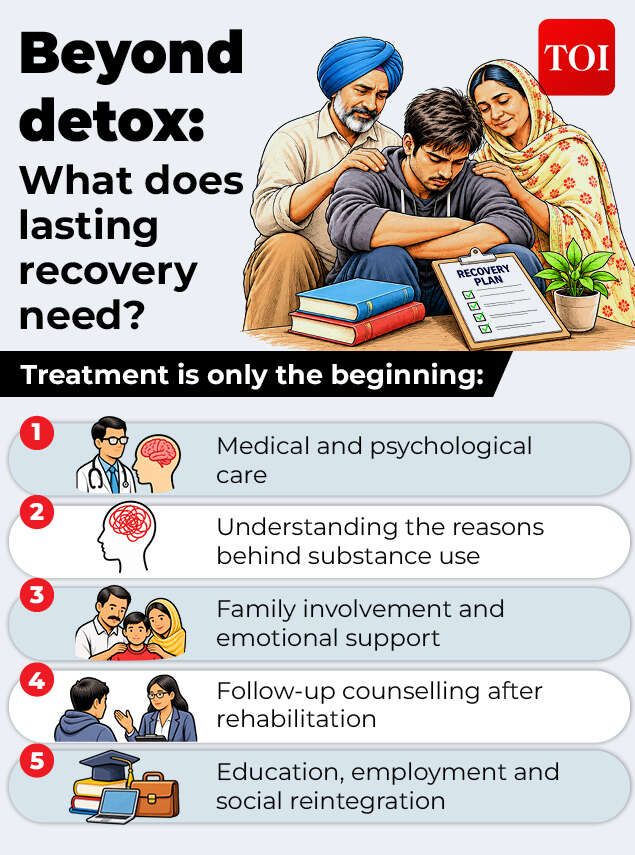
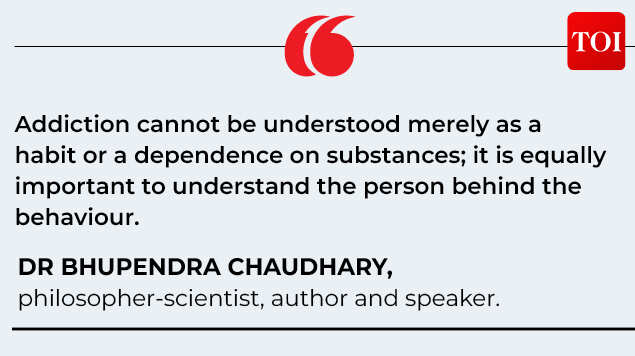
The need to look beyond substance use and understand the person behind the addiction is also emphasised by Dr Bhupendra Chaudhary, philosopher-scientist, author and speaker.“Addiction cannot be understood merely as a habit or a dependence on substances; it is equally important to understand the person behind the behaviour,” he said.He further explained how self-awareness can help people recognise behavioural patterns and regain control over their choices.“When a person begins to observe their automatic responses, detect how their conditionings are in the driver’s seat and reconnect with their real self, they gradually build greater agency over their choices, making more conscious decisions,” he added.Government’s role: What needs to change?For Aman, tackling Punjab’s drug problem requires more than changing political leadership. He believes the government can play a significant role in addressing the crisis but argues that accountability within the system is essential.He alleges that people in positions of power are also involved in illegal activities, including drug trafficking. These allegations could not be independently verified.He says people need to see elected representatives and officials working for the betterment of the state. He also stresses the need to educate people about substance use and make conversations around addiction less taboo, so that young people can seek help without fear of judgement.The larger challenge for the government is to ensure that its response does not end with arrests, seizures or admission into rehabilitation centres. Sustained counselling, mental health support, family involvement and follow-up care are equally important.
Share your thoughts in the comments
Be respectful · TOI community guidelines
With Punjab heading towards another assembly election, the state’s response to the drug crisis is likely to remain a key issue of political accountability. For voters, the question will not just be what parties promise to do against drug networks, but also what they offer to those struggling with addiction and trying to rebuild their lives.Ultimately, the success of a rehabilitation system should not be measured only by how many people enter its centres, but also by whether they receive the support to rebuild their lives after leaving them.