Narayan said India needs a self-sustaining interest rate market where domestic savings, rather than RBI intervention or temporary liquidity measures, determine bond yields. He also suggested tax changes on fixed-income investments could help attract household savings back into debt markets while keeping borrowing costs competitive.
Explaining what he described as a monetary policy trilemma, Narayan said lower interest rates reduce the appeal of fixed-income investments, prompting savers to move into equities, gold and overseas assets. “Your interest rates being kept low is pushing out foreign investments, both into debt as well as into equity,” he said.
He argued that narrower interest rate differentials with global markets also make it cheaper to buy dollars, increasing pressure on the rupee and forcing the RBI to intervene in the foreign exchange market. According to Narayan, the central bank has to be very conscious of these interlinkages because “you cannot divorce yourself and say, I will look only at interest rates, or only at currency markets.”
Narayan said India should gradually move towards market-driven pricing in fixed income. He suggested reducing the tax burden on interest income and debt mutual funds to encourage household savings into bonds. “One way of achieving that is to reduce the tax burden which is there on interest income,” he said, adding that aligning debt taxation with other capital market instruments could stabilise markets without additional RBI intervention.
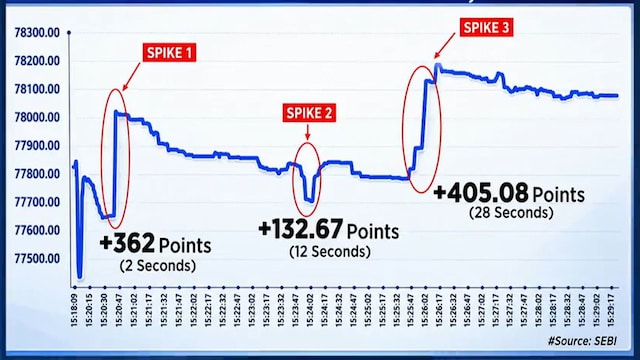
Narayan also commented on SEBI’s recent action against alleged manipulation in Sensex weekly options expiry, saying the regulator’s Closing Auction Session (CAS) has strengthened surveillance. He said the new framework should improve confidence in the market and reduce concerns around expiry-day price manipulation.
According to him, deeper participation by arbitrage funds and improvements in the securities lending and borrowing mechanism (SLBM) would help increase liquidity in the closing auction process. “I think this will continue even further,” he said, expressing confidence that the market will adapt to the new settlement mechanism.For the full interview, watch the accompanying video

Catch all the latest updates from the stock market here