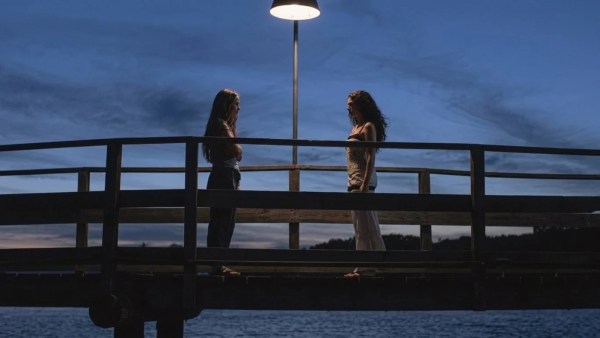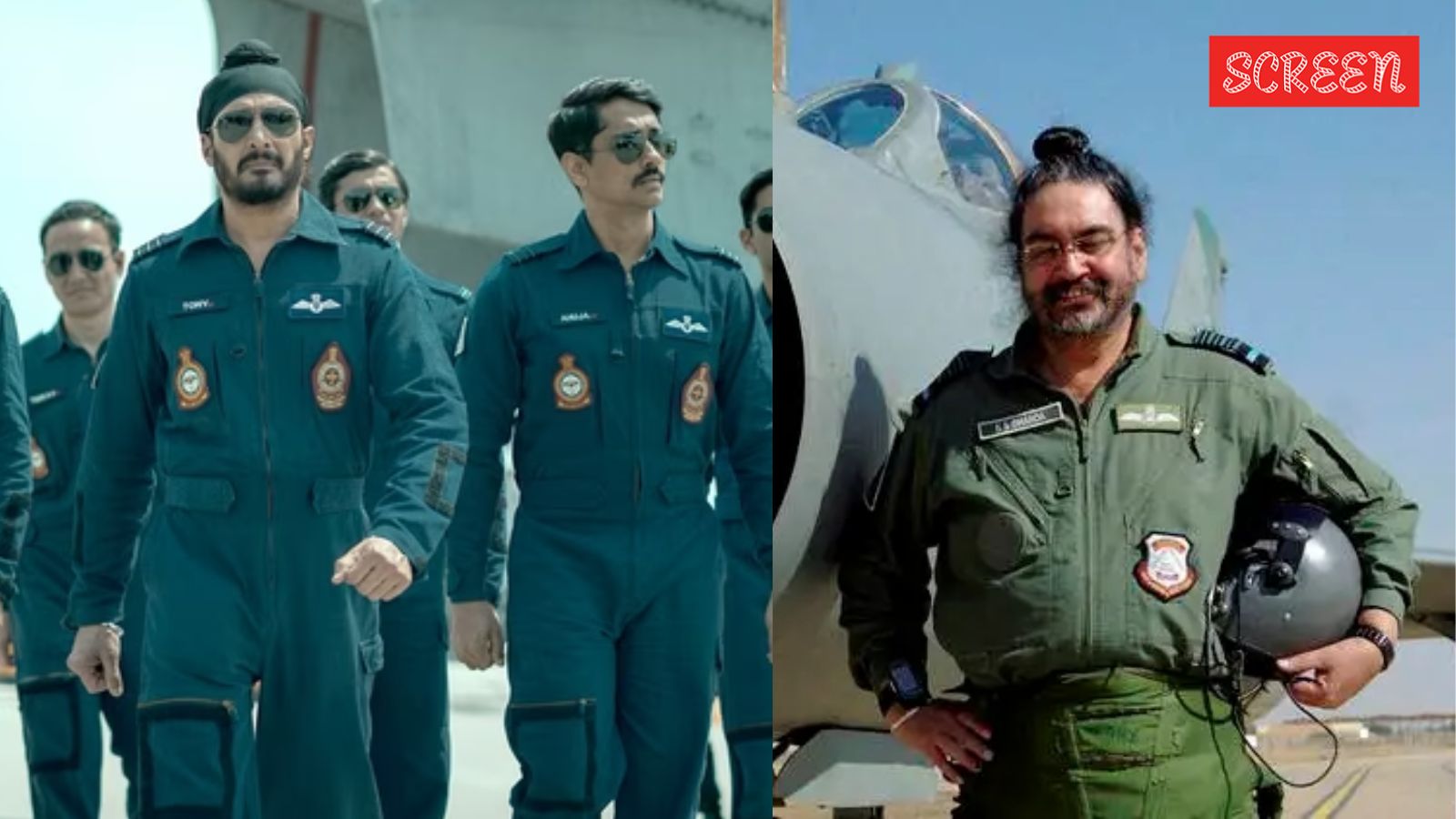
Netflix’s latest show Operation Safed Sagar recalls the contributions of the Indian Air Force during the 1999 Kargil War, and the show presents the ultimate sacrifice of Squadron Leader Ajay Ahuja, played by Siddharth, who was forced to eject from his MiG-17 after a surface-to-air missile hit it.
On May 27, 1999, Squadron Leader Ajay Ahuja was leading a photo reconnaissance mission over the Batalik sector as part of Operation Safed Sagar, the Indian Air Force’s air campaign during the Kargil War. During the operation, Flight Lieutenant K. Nachiketa’s MiG-27 developed technical trouble after coming under enemy fire, forcing him to eject near enemy-held territory. Nachiketa was a prisoner of war (POW) for eight days and was subsequently released. While the show has some actual footage of his release, the story is not presented in detail.
Group Captain K Nachiketa Rao’s ‘fortunate decision’ to eject MiG-27
Group Captain K Nachiketa Rao (retd) first opened up about his story as a POW in 2017 and recalled that he took off from Srinagar, along with three other pilots, on May 27, 1999. He was 26 at the time. He told NDTV that their target was a place called Munthu Dhalo. During the mission, he encountered engine failure while he was firing rockets. Since the MiG-27 is a single engine plane, he was required to follow the “relight process” but because he was at a higher altitude, he “ran out of height.”
As his MiG 27 was starting to lose altitude, he had no other option but to eject as he was flying close to 15,000 ft. “Once I saw the hills gushing towards my aeroplane, I had no option but to eject,” he said and recalled that this was a “fortunate decision” as just after a few seconds, he saw his “airplane crashing onto the hillside. I could have gone with that.”
‘He shoved the barrel of his AK-47 in my mouth’
For Nachiketa, the “comfort of a fighter jet cockpit had gone away” and he now found himself in a snowy area with “one small pistol and 16 rounds.” Soon after, he heard the sounds of firing but could not determine if he was indeed the target. “I then saw five-six troopers. By then, it was clear that I was not in an area where our forces were camping. I fired my pistol, but eight rounds finished very fast. Before I could load the other magazine, one of them had reached me,” he said.
What came next was the stuff of nightmares. “I was looking at his trigger finger, whether he will pull it or not. But destiny has its designs. The Army captain in charge of the platoon stopped him,” he said. Due to that Army captain, Nachiketa did not get shot. He added, “25 years is a very long time, but even now, that guy’s eyes and face are clear in my mind. He shoved the barrel of his AK-47 in my mouth. I was looking at his trigger finger, will he pull it or not?”
Story continues below this ad
Pakistani officer saved him from death
Later, in Swapnil Pandey’s book, Wings of Valor, he recalled that on that particular day, “death came close to me twice.” “First, when my aircraft crashed and I had to eject. Second, when the soldiers were about to shoot me, and that officer arrived just in time. Had he been even a moment late or given the order to kill, I would have been dead. I have immense respect for that officer, Captain Qamar of the 5th Northern Light Infantry,” he said. He also recalled that Captain Qamar gave him first aid as well.
Nachiketa was then taken to the campsite and held captive for the next few days. First came the “soft interrogation”. 24 hours later, he was shifted to Islamabad, and later to Rawalpindi. “They took about one day to declare me uncooperative. That is when they handed me over to the ISI specialist cell,” he said and added that what came next was “quite bad.”
‘They want to break you mentally, physically, emotionally’
He shared, “Staying alone in the cell with a lot of interrogation techniques of heat, standing, hitting, no food. It becomes very tough because they want to break you mentally, physically, emotionally so that you start talking. But, I was again a bit lucky because by the time this part gets over, we get into a state, called drugs or third degree. In case they start third degree, I got to know later, the situation of being sent back is not there. Up till now, all the injuries they can explain by saying that he was trying to escape and all these things happened. But when third degree starts, you’ll have marks on the body they can’t explain. I was lucky that before that stage came, the decision to get me back to India had come.”
Story continues below this ad
The pain inflicted on him was increased in a “systematic process.” “They step up the process and see where you’ll break. Physical hardship, then mental hardship, then heat treatment. High voltage bulbs in the cell pointing towards you. Denial of food, denial of sleep,” he said and added, “The pain of not eating, pain of not sleeping, the physical pain of being hit on the body, or the mental pain. Now you start thinking which pain is more.”
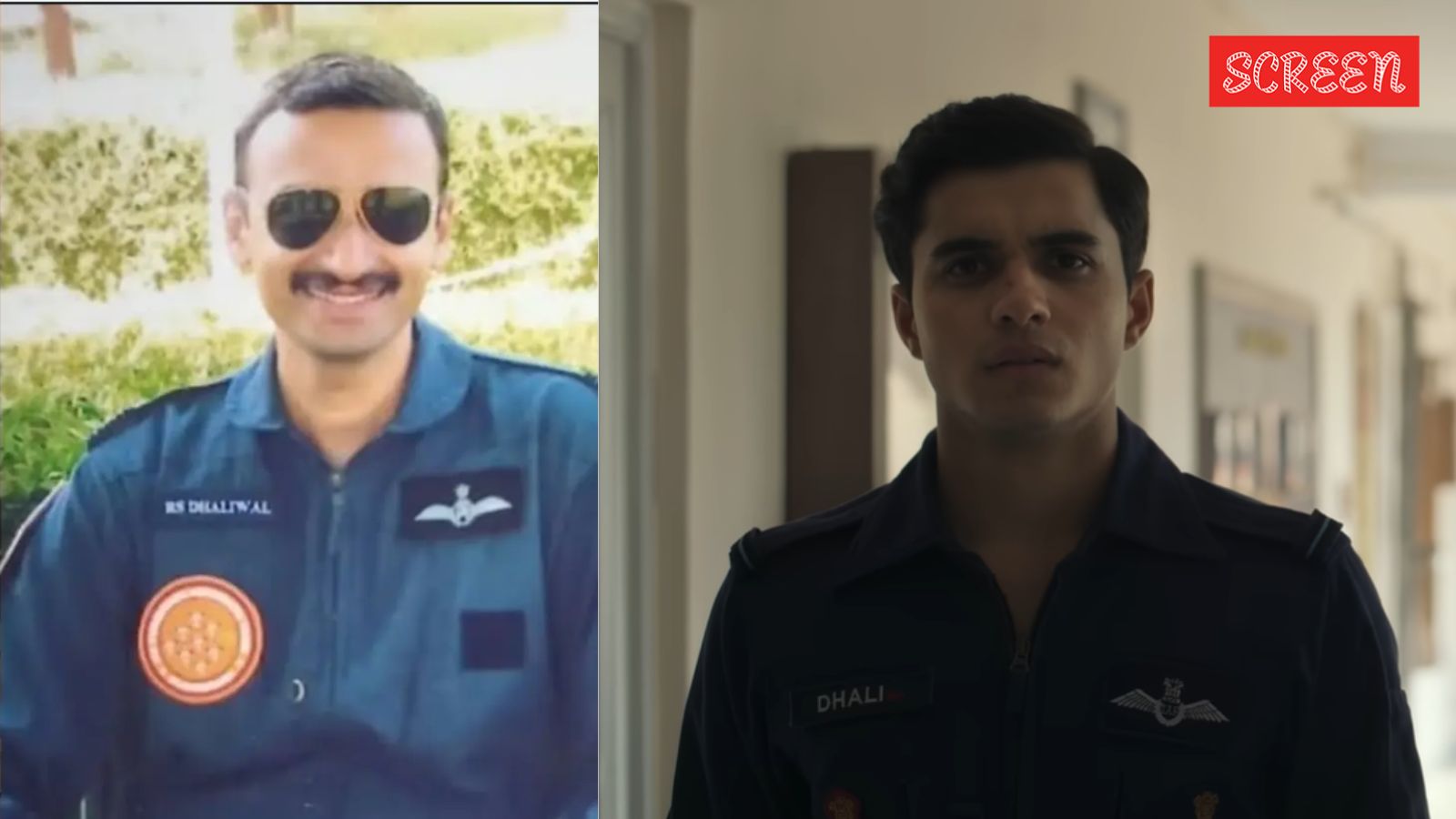
ALSO READ | Real story of RS Dhaliwal, played by Abhay Verma in Operation Safed Sagar
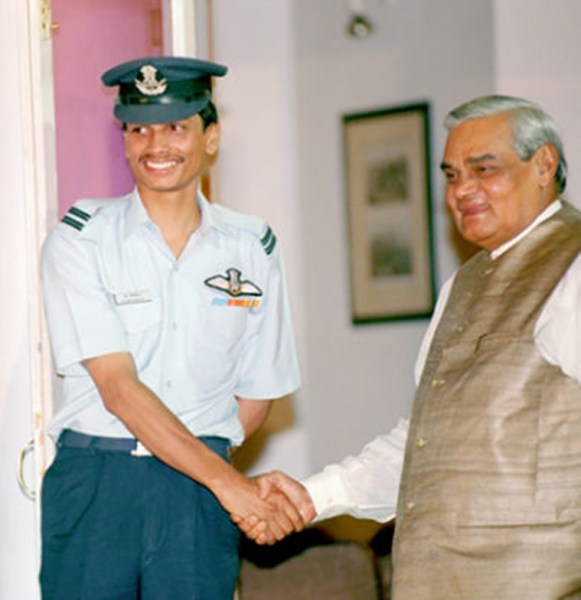
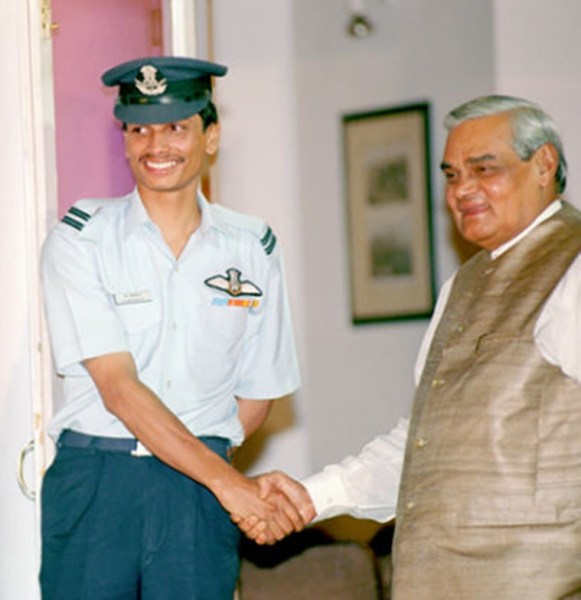 K Nachiketa Rao with Prime Minister Atal Bihari Vajpayee.
After it was decided that Nachiketa would be released, he wasn’t told about it instantly but he could sense that their treatment towards him had changed. “People gave me food, and I got all the basic facilities again. I could make out that something had changed. They did not tell me at that stage, but I could sense something had changed,” he said and recalled that he was next taken to the International Red Cross Society for a medical check up. “After some documentation, they handed me over to the Indian embassy. I spoke to my parents, told them I am fine. Then I had a word with Prime Minister Atal Bihari Vajpayee,” he said. He returned to India, via Attari border on June 3, 1999.
After his incident, he did not fly fighter jets and was moved to the transport division of the IAF. He shared that since he ejected from the MiG-27, he got “compression injuries on the spinal cord” which got complicated as he could not rest after the ejection. “I had a multiple compression on the dorsal part of the spine. So the medical procedure which took about 3 to 4 years indicated that I cannot fly the ejection seat once again. So I was shifted to transport airplanes. During these 3 to 4 years, I flew unmanned aerial vehicles. I flew transport planes, then I retired in 2017 and moved to commercial flights,” he said. He is now 53.
Story continues below this ad
The Pakistani officer was killed
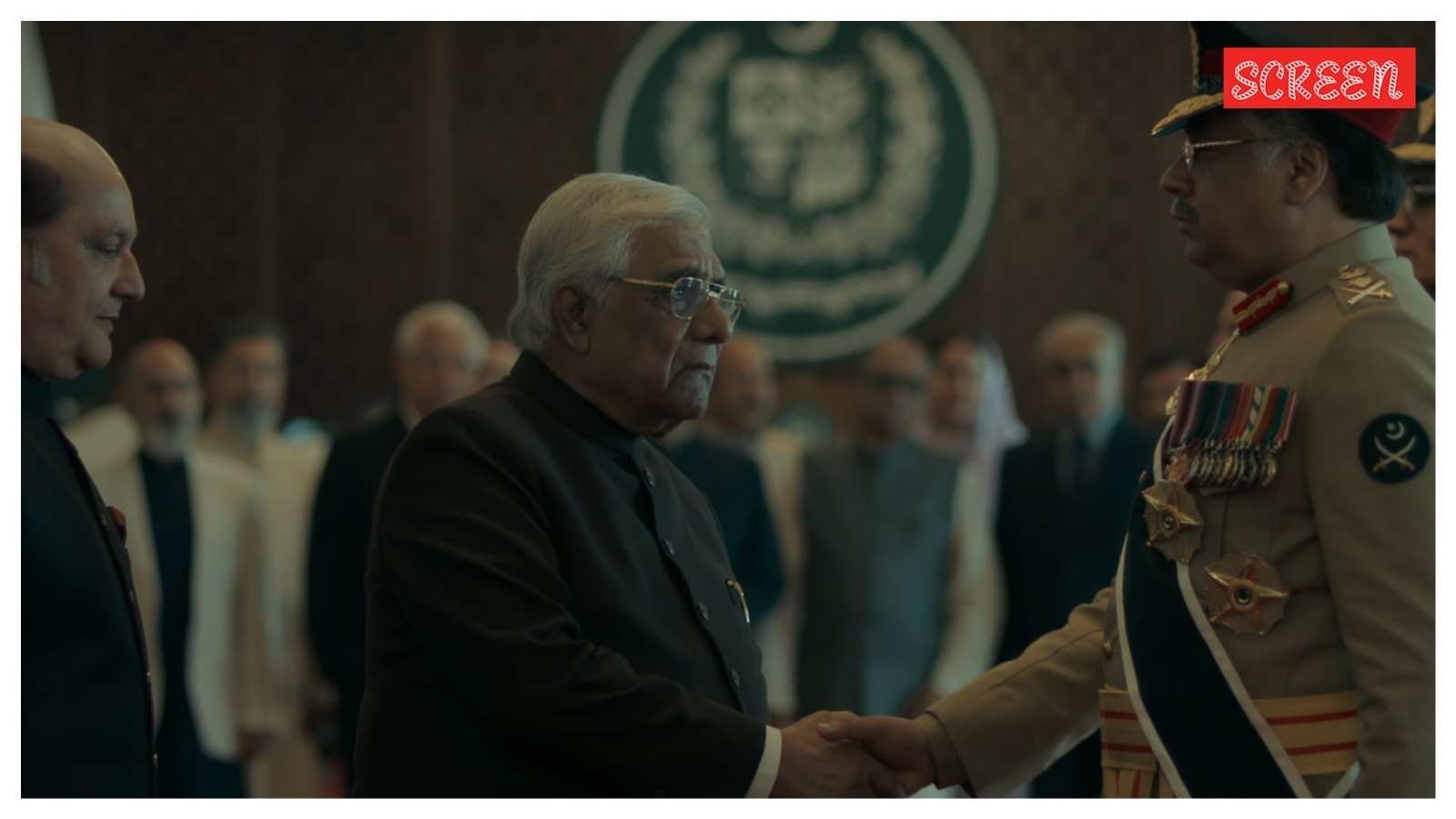
Captain Qamar was later killed. Nachiketa told NDTV, “When our Army finally took over this area and the entire part of land came back to us, this (Pakistani) Army officer was killed. I got to know because I got an extract of his diary from our Army intelligence sources. I have a lot of respect for him for the way he treated me.”
Operation Safed Sagar does not focus on Nachiketa’s story.
DISCLAIMER: This article contains personal accounts of war, captivity, and physical injury, shared solely for historical and informational purposes. Readers are advised to engage with this sensitive content with personal discretion.