
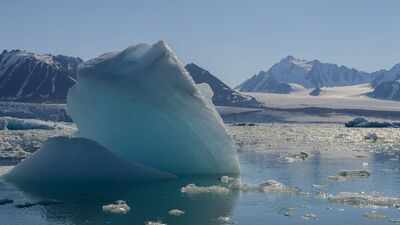
The Arctic region is warming three times faster than the global average since the past 40 years, which makes it one of the most sensitive areas on the planet. Recent scientific findings published in Nature Geoscience have uncovered a previously unknown natural process that massively increases the number of cloud-forming particles in the Arctic atmosphere.An international research team, led by the University of Birmingham and including partners from China and Spain, has provided the first real-world evidence that the meeting point of sea ice and the open ocean is a major source of these particles. When Arctic sea ice melts, it exposes a boundary known as the ‘marginal ice zone.’ In this area, marine life and sunlight combine to release a specific chemical mixture. This mixture seeds the sky, potentially changing cloud cover and the region’s future climate.
How the melting ice edge creates cloud-forming particles
According to the University of Birmingham, the process begins at the marginal ice zone, a narrow band where the open ocean meets melting sea ice. This area is highly productive because of the presence of ‘marine algae.’ As the ice melts away due to a warming atmosphere, more of this ice edge is exposed to sunlight. The research team found that a combination of naturally occurring iodine, sulphur, and organic compounds are released from these waters.When these compounds are released into the air, they undergo a chemical reaction triggered by sunlight. The study explains that this process is known as ‘new particle formation,’ which acts as a critical source of ‘cloud condensation nuclei’(the tiny seeds around which water vapour can condense to form clouds). The study found that near the ice edge, the number of these cloud forming particles can rise by 50 times in a single day. Specifically, in one observed event, the concentration of cloud-seeding particles jumped from approximately 50 to 1,500 per cubic centimetre.
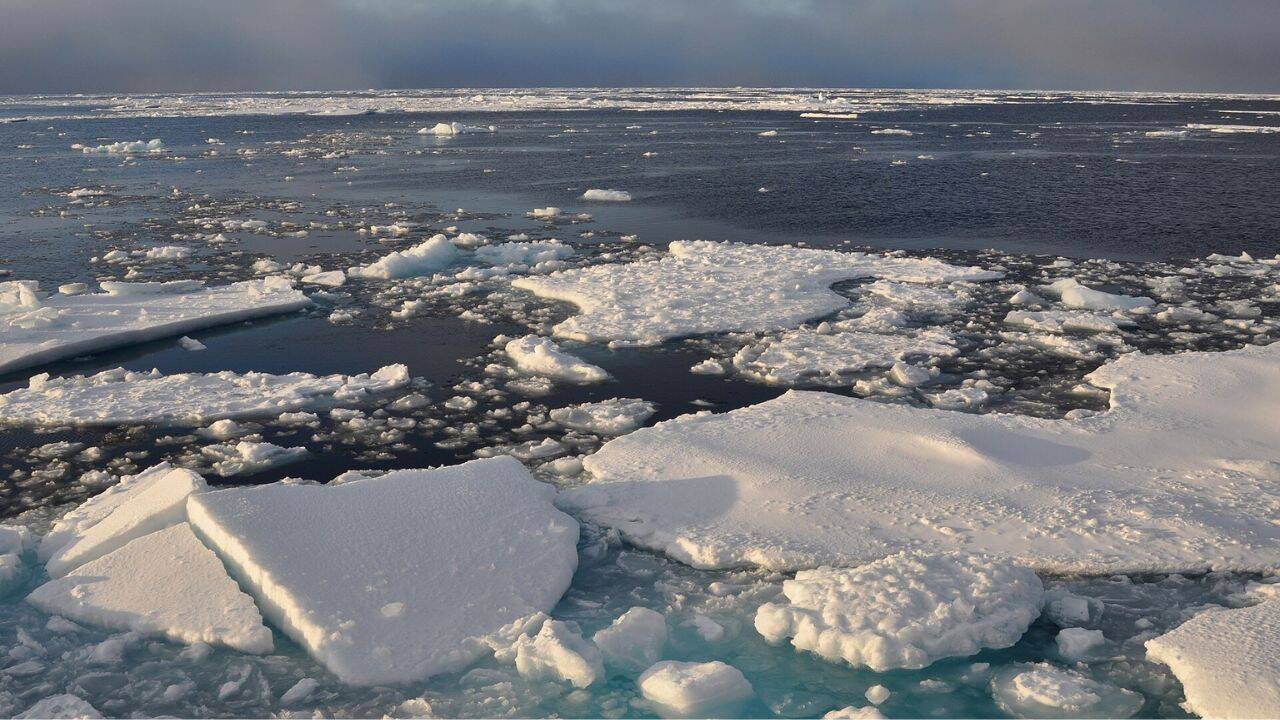
Arctic sea ice. Image Credit: Patrick Kelley
Where did this scientific expedition take place
To find this evidence, the team embarked on a comprehensive research mission. As reported by EurekAlert, the data was gathered during an expedition aboard the Royal Research Ship ‘Discovery’ around Greenland and the Davis Strait. These comprehensive ship-based observations occurred between 19 May and 26 June 2022, stretching from southeastern to western Greenland and deep into the Davis Strait’s marginal ice zone.By being physically present in these remote regions, the scientists could investigate the specific processes controlling atmospheric particles in real-time. This ‘real-world validation’ is a major step forward for science. As Dr James Brean, an Assistant Professor at the University of Birmingham, noted, these findings confirm a chemical mechanism that had previously only been demonstrated in controlled lab environments, such as the CLOUD chamber at CERN.
Which chemical reactions were discovered in the Arctic atmosphere
The researchers found frequent ‘nucleation events’(the birth of new particles) driven by a multicomponent mixture of iodine oxoacid and sulfuric acid. While the birth of a particle is important, it must also grow large enough to actually influence a cloud. The study observed that these newly formed particles grew rapidly beyond 20nm on 8 out of 13 nucleation days.This rapid growth was mainly driven by oxygenated organic molecules resulting from the oxidation of substances like aldehydes and monoterpenes, which are released naturally from the ocean or land. Interestingly, the researchers identified a completely new class of compounds: iodine-containing oxygenated organic molecules (I-OOMs). According to the University of Birmingham, these I-OOMs play a vital role in helping tiny particles grow larger that are capable of seeding clouds.
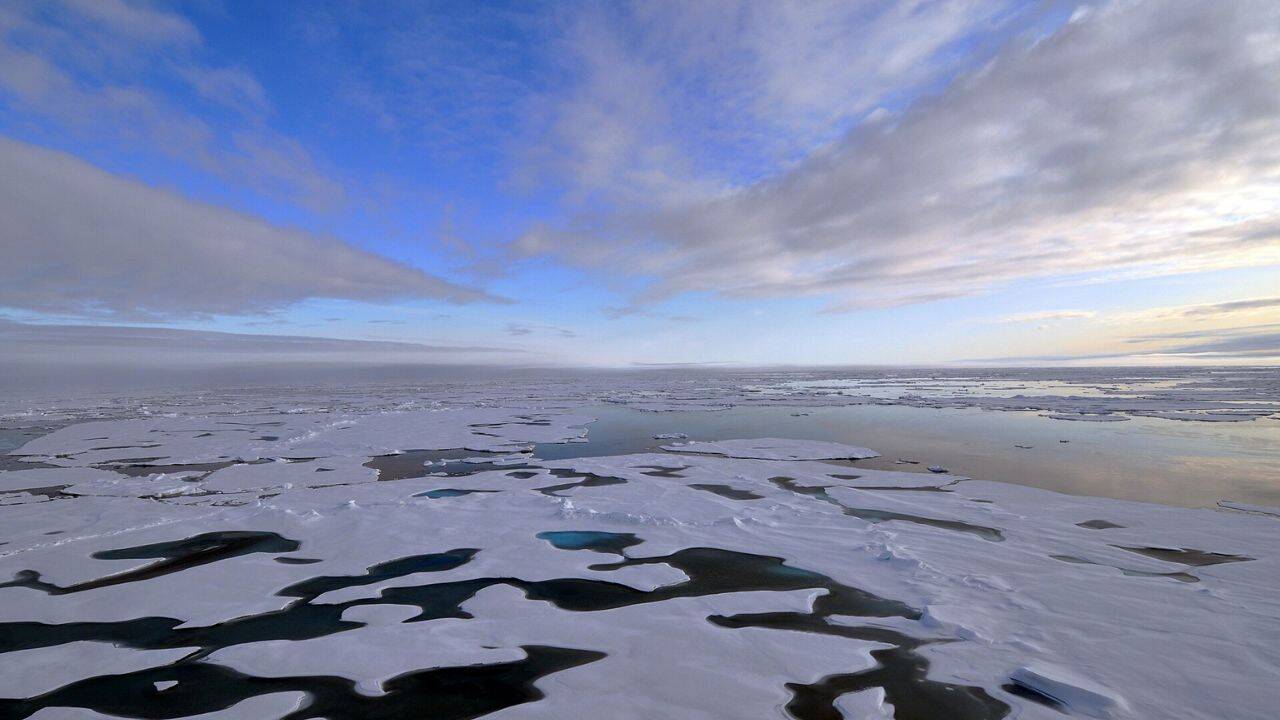
Thin clouds over the Arctic Ocean. Image Credit: U.S. Geological Survey from Reston, VA, USA
Importance of this discovery for our future climate
Clouds play a vital role in the Earth’s radiation balance, which makes the discovery of these particles highly significant. Clouds can act as a shield, by reflecting the sunlight back into space and cooling the surface, but they can also act as a blanket by trapping the heat inside the atmosphere. Professor Zongbo Shi, who led the study, explains that more or thicker clouds during the warming season could potentially accelerate the melting of ice while simultaneously cooling down the open ocean.The ‘marginal ice zone’ is widening as Arctic sea ice continues to retreat, meaning this natural cloud-seeding process is likely becoming more frequent and intense. By understanding how these natural phenomena influence cloud cover, researchers can better analyse how climate change will affect the Arctic and how the Arctic, in turn, will influence the global climate. The team is now working to turn these new findings into climate models so the future projections can become as precise as possible.