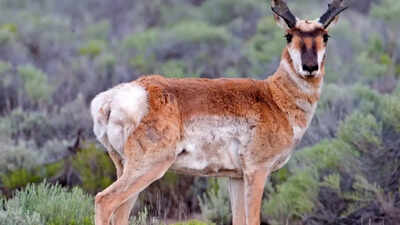
Scientists fitted 75 female pronghorns, the fastest land animals in the Americas, with GPS collars in 2024, and the animals have been sending back location data ever since. The project, led by conservation group Wildlands Network near the San Juan Solar and Storage Project in New Mexico, is helping researchers understand how large solar farms affect wildlife movement. Early findings suggest that while solar energy projects help replace fossil fuels, fences around the facilities could be disrupting ancient migration routes used by pronghorn for thousands of years.
GPS collar data tracks pronghorn movement
As mentioned above, researchers began the project in 2024 by fitting GPS collars on 75 female pronghorn near Farmington, New Mexico. The collars record the animals’ location every hour, developing one of the most detailed datasets ever collected on large mammals living near a solar energy project.By early 2025, the collars recorded more than 700,000 location points, allowing scientists to compare movement of animals before and after construction of the 1,100-acre San Juan Solar and Storage Project. The facility was built near a retired coal-fired power plant and includes multiple fenced solar panel arrays.
Solar farm fences emerge as major obstacle for pronghorn
Unlike deer, pronghorn rarely jump over fences. Instead, they usually try to crawl underneath them. Researchers say this makes the six-foot chain-link fences required around solar facilities a significant barrier.Although the San Juan project includes gaps between fenced sections, scientists say the openings do not always match the routes the animals naturally use.Previous research published in the journal Ecological Solutions and Evidence also found that pronghorn activity declined near a solar farm in Wyoming, with the effects extending beyond the fenced area itself.
Researchers say simple fence changes could help wildlife
Scientists say the findings do not argue against solar energy. Instead, they suggest that small design changes, such as raising the bottom of fences high enough for pronghorn to crawl underneath, could allow the animals to continue using their traditional migration routes.Researchers hope the long-term data will show how renewable energy projects can be built while reducing their impact on one of North America’s fastest and most unique animals.