
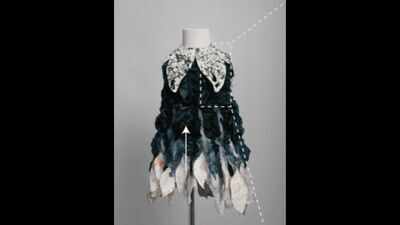
Researchers in China have created a textile made from living fungal mycelium that can heal its own cuts, grow new surface layers on command, and biodegrade completely within weeks. The material, built from Cordyceps militaris fungus, keeps its cells alive throughout the manufacturing process, unlike most fungal textiles, which are dried, heated or chemically treated in ways that kill the organism. According to a new study published in Science Advances, titled ‘A programmable fungal platform for engineered living textiles’, reports that this approach allows the fabric to respond to damage and environmental cues long after it has been shaped into a finished product. The team demonstrated the material’s abilities by building a full prototype dress with a self-pigmented body, a self-cleaning hem and a patterned collar, before showing that the same fabric breaks down almost entirely in soil within 41 days.
How researchers created a living fungal textile that can repair itself
PC: Study: A programmable fungal platform for engineered living textiles
Most fungal materials used in fashion and packaging are produced by killing the fungus during processing, through drying, heat or chemical cross-linking. This makes the material stable, but it also removes any biological activity, so the fabric cannot grow, repair itself or respond to its surroundings once it is made.A research team led by the Shenzhen Institutes of Advanced Technology avoided this by cultivating Cordyceps militaris as small, dense hyphal pellets in liquid culture, then moulding and drying them into flexible pellicles without killing the fungus. Glycerol was added to the dried pellicles to stop them cracking, and testing showed that a 10 per cent glycerol treatment gave the best balance of flexibility and strength while keeping the underlying mycelium metabolically active.Because the fungal cells inside the material remain alive, damaged sections of the textile can be mended using fresh mycelium rather than glue or synthetic patches. When the team cut into dried pellicles, they pressed fresh, hydrated fungal pellets into the damaged area and left it to dry. The new pellets bonded to the surrounding material through hydrogen bonding as they dried, restoring physical continuity without any external adhesive. Repeated testing found that repaired samples kept around 68 per cent of their original stiffness even after ten separate repair cycles, showing that the mending process can be carried out multiple times on the same piece of fabric.
How this living fungal fabric grows new layers and patterns on demand
Beyond patching cuts, the living fungus can also grow an entirely new surface layer when supplied with nutrients. Dripping a nutrient solution onto specific areas of the pellicle triggers the fungus to sprout aerial hyphae in that exact location, allowing the researchers to grow shapes and patterns directly into the fabric. The team used this technique to grow an institute logo, along with mushroom, snowflake, honeycomb and leaf patterns, by confining the nutrient droplets with adhesive tape around the target area. This same growth process was also used to refresh damaged or worn sections of the aerial hyphae layer, with the regenerated surface matching the hydrophobic properties of the original material even after ten repair cycles.
Scientists use engineered yeast to colour self-healing fungal fabric naturally
The fabric’s colour comes from engineered yeast rather than synthetic dye. The researchers modified strains of Saccharomyces cerevisiae to bind directly to the chitin in the fungal cell walls and produce pigment, giving them four separate colour strains that produced pale blue, red, orange and deep purple hues, which could be blended to create intermediate shades. Separately, the team sprayed a different fungus, Aspergillus niger, onto the pellicle surface to grow a melanin-rich hyphal layer. According to the study, this coating gave the fabric measurable UV-shielding properties and antioxidant activity, and it also left the surface hydrophobic enough that water droplets rolled off without leaving residue, giving the material a self-cleaning function without any chemical coating.
Researchers build a self-healing fungal dress that biodegrades in just 41 days
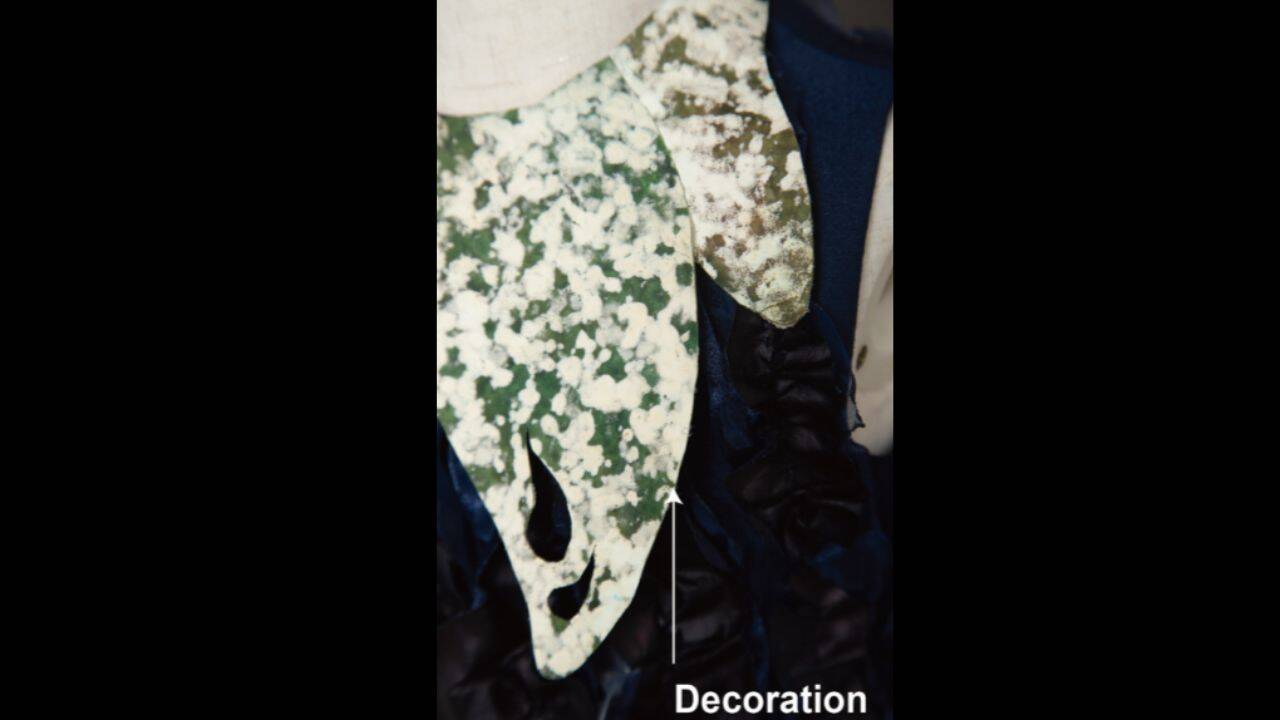
To test the material at a practical scale, the researchers assembled a full dress from separate fungal fabric modules, each finished for a specific purpose. The collar used leaf-shaped pieces with a speckled pattern, the main body used around 20 self-pigmented blue modules, and the hem used petal-shaped pieces covered in aerial hyphae for a textured, self-cleaning finish.The same material was also tested for biodegradability by burying a small fabric box in soil, which showed near-complete degradation within 41 days. A life cycle assessment of the production process found that the pretreatment and glycerol-treatment stages accounted for most of the water use and land-use impact, pointing to areas the researchers say could be optimised before the material is scaled up further.