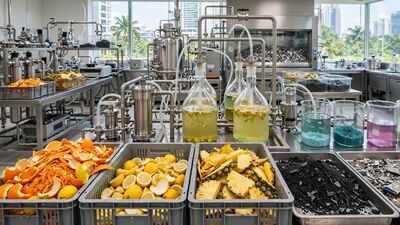
Discarded fruit peels could help recover valuable materials from used lithium-ion batteries at a pilot recycling plant in Singapore. Researchers from Nanyang Technological University (NTU) developed a process that uses waste from oranges, lemons and pineapples to dissolve battery material and extract metals needed for new batteries. The facility, operating near Pioneer since late 2022, can process up to 2,000 litres of shredded batteries at a time. The approach brings together two waste streams, that is, food waste and spent batteries. NTU says the process could help move its earlier laboratory work towards commercial use. Earlier tests showed that batteries made with the recovered metals had a charge capacity similar to that of commercial batteries.
How is fruit waste being used to develop a new battery recycling method
Researchers at NTU have partnered with Se-cure Waste Management (SWM) to take their fruit-based battery recycling method beyond the laboratory. SWM processes 18 tonnes of spent batteries each day, while the pilot facility near Pioneer can handle up to 2,000 litres of shredded batteries at a time. The project builds on NTU’s 2020 proof-of-concept study, which showed that orange peels could help recover materials from batteries. Further work found that lemon and pineapple peels could also be used. This wider choice of fruit waste makes it easier to source the material needed for the process. The pilot facility gets the peels from a partnering supplier. The research is supported by Singapore’s National Research Foundation and National Environment Agency.
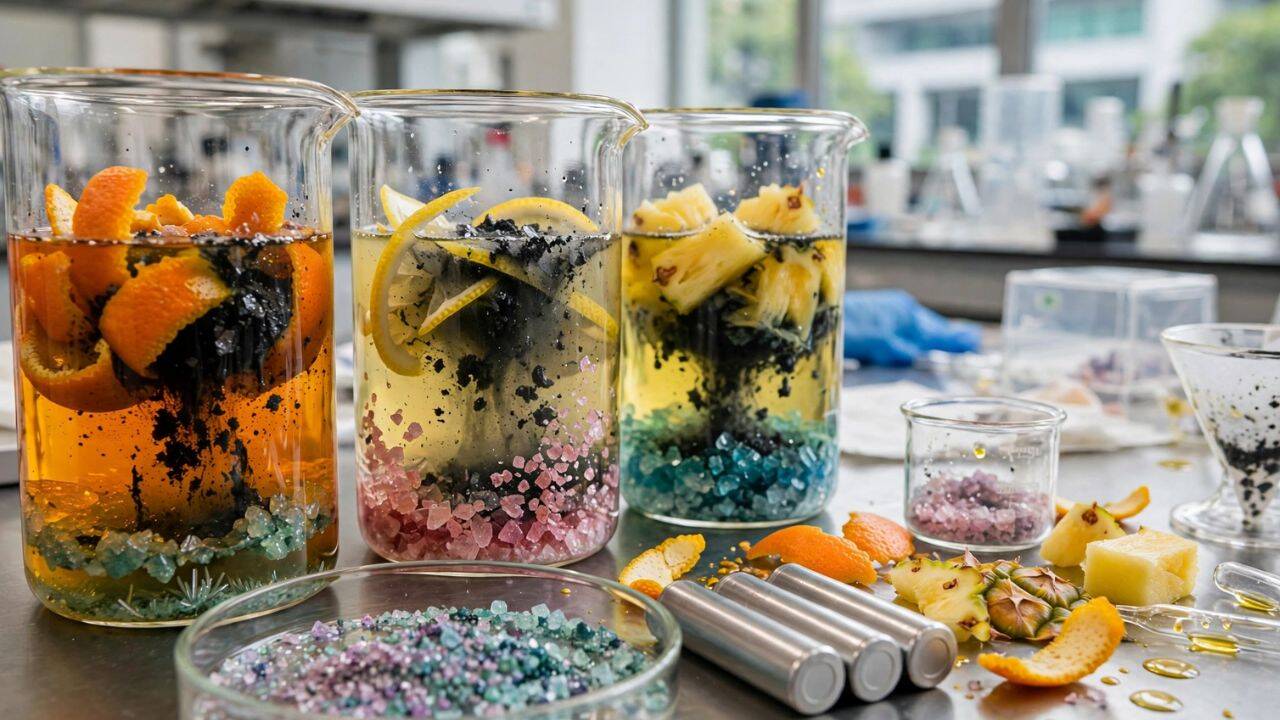
PC: AI Generated
Fruit peel waste helps extract metals from old lithium-ion batteries
The process starts by shredding used batteries. Plastics and metals such as copper and aluminium are first separated from the battery material. Around 90% of the metals in lithium-ion batteries can then be recovered for reuse. The remaining material is known as black mass and contains metals used in the battery electrodes. Researchers dissolve this material using mixtures made from fruit peel waste. The natural acids in the peels help extract cobalt, lithium, nickel, and manganese at low temperatures. These metals are then turned into metal salts. The recovered salts can be used to make new batteries, creating a way to turn discarded batteries back into useful battery materials.
Why are orange, lemon and pineapple peels suitable for the process
The researchers first demonstrated the approach with oranges in a 2020 proof-of-concept study. They later found that lemons and pineapples can also be used for extraction. Fruit peels are useful because they contain sugars and natural acids that can help dissolve and recover metals from battery waste. Using several types of fruit waste gives the recycling process greater flexibility in obtaining the material it needs. NTU said the wider choice makes it easier to secure enough fruit waste for the pilot facility. The peels currently used in the process come from a partnering supplier. The use of several suitable fruit sources also means the method does not depend on a single type of waste. This could make it easier to maintain a steady supply of peels while recovering useful metals from spent batteries.
Recovered metals can help make new lithium-ion batteries
The metals recovered through the process are not separated and discarded. After extraction, cobalt, lithium, nickel and manganese are precipitated into metal salts. These materials can then be used in new lithium-ion batteries. Earlier tests gave researchers an encouraging result. Batteries made using the recovered metals had a similar ability to store energy as commercial batteries.The finding notes that materials recovered from spent batteries can be used in new battery production. The pilot plant is designed to do more than simply remove battery waste. It aims to recover useful materials that can be returned to the battery supply chain while also putting discarded fruit peels to use. Instead of treating spent batteries and fruit peels as separate waste problems, the researchers are using one to help process the other. The method therefore creates a way to recover valuable battery materials while making use of fruit waste.
How is the fruit-peel recycling method being developed for commercial use
NTU and SWM plan to commercialise the process by 2024 and sell the recycled materials to battery makers worldwide. However, the target was announced in 2023, and it is not clear whether the process was commercialised as planned. The project comes as rising battery demand is expected to generate more spent batteries and increase the need for recycling. NTU and SWM said less than 5% of lithium-ion batteries are currently recycled, while the amount of spent batteries is estimated to reach 11 million tonnes by 2030. The method is designed to tackle battery waste and food waste together. By using discarded fruit peels during the extraction process, researchers aim to recover useful battery metals while also finding a use for another waste material.