
Six of 27 skeletons buried at medieval monasteries in Denmark have been found to have radiocarbon dates suggesting they died before the buildings were constructed. According to the study published in Nature, titled ‘Words of warning about radiocarbon dating medieval human bones’, the authors have linked the discrepancy to diets rich in freshwater fish, which can make human remains appear hundreds of years older than their actual age. Researchers found that the freshwater reservoir effect may have significantly distorted the dates, with some differences reaching up to 1,000 years. The team is now warning archaeologists that dietary habits must be considered when using radiocarbon dating to establish the age of human remains.
How did freshwater fish make Danish monastery skeletons appear older
One of the most striking examples was skeleton III9B, recovered from the Franciscan monastery in Svendborg. Previous radiocarbon dating placed the individual’s death between AD 1100 and 1155. However, the monastery was not founded until 1236, meaning the estimated death date was inconsistent with the known history of the building. The researchers described the result as particularly unusual because the individual had been buried in a prestigious location associated with the monastery.Another example came from the Monastery of Our Lady in Viborg. Its skeleton, identified as 810C28C in the research paper, had a radiocarbon date whose latest estimated limit was AD 976, more than 200 years before the monastery was established. The same problem was identified in three burials at the Cistercian monastery at Øm in central Jutland. The research paper identified the affected individuals as A257, A260 and 6. K. Across the 27 skeletons, the researchers found six cases in which the dates appeared to predate the construction of the religious establishments.
Why can freshwater fish distort radiocarbon dating by hundreds of years
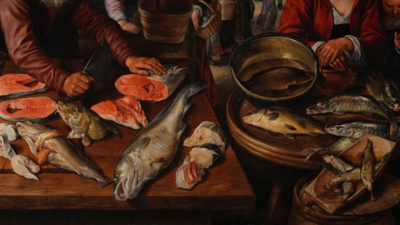
The researchers identified freshwater fish consumption as the likely explanation for the misleading dates. In medieval Catholic Europe, meat consumption was restricted during fasting periods, while freshwater fish was permitted. The research paper explains that freshwater fish was considered “cold” or “neutral” compared with meat from warm-blooded animals and marine fish. It was also regarded as a prestigious food in some Christian communities.The problem is linked to what scientists call the freshwater reservoir effect. Water in rivers and lakes can contain carbon-14 at lower levels than the atmosphere because of old carbon released from geological materials and sediments. Fish absorb this carbon through their environment, and when humans eat them, some of it becomes incorporated into their bones. Because radiocarbon dating measures the remaining carbon-14 in bone material, this reduced concentration can make a person’s remains appear older than they actually are. According to Professor Emeritus Kaare Lund Rasmussen of SDU, the difference can vary considerably. “It can range from zero to 1,000 years,” he explained. The researchers also noted that freshwater fish from the Rhine can appear up to 1,300 years older than a land-based organism that lived at the same time.
How did scientists identify freshwater fish diets in 27 Danish skeletons
To investigate the possible influence of diet, the research team examined stable isotopes in the collagen extracted from the 27 bone samples. Their analysis found that all the samples had elevated nitrogen-15 (δ15N) values above 8 per mille, indicating substantial freshwater protein consumption. The researchers identified six individuals whose dates appeared particularly inconsistent with the known construction dates of their monasteries. This represented 22% of the individuals included in the study. They also explained that stable isotope measurements can help researchers identify whether an individual’s diet included substantial amounts of freshwater or marine food.The team has urged archaeologists to assess the possibility of a freshwater reservoir effect before interpreting radiocarbon dates from human remains. In their paper, the researchers state that “the only viable way to establish a reliable radiocarbon age of a medieval skeleton is to start by measuring its δ15N value.” They explain that when this value is elevated, the radiocarbon result requires further interpretation and correction for the reservoir effect. Unlike the marine reservoir effect, which is relatively predictable in certain regions, the freshwater effect can vary significantly depending on the source of the fish. The researchers also cited earlier findings involving King Richard III of England and human remains from Dorestad in the Netherlands, where fish consumption has been linked to unexpectedly old radiocarbon dates. Their warning is therefore intended for archaeologists working with historical, prehistoric and medieval human remains, not just those excavating Danish monasteries.