
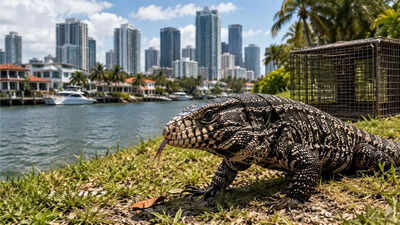
Florida, home to a growing number of technology billionaires including Amazon founder Jeff Bezos and Meta CEO Mark Zuckerberg, is facing a different kind of challenge this summer. Wildlife agencies across Florida and several other major US states are stepping up efforts to stop the spread of the Argentine black-and-white tegu, an invasive lizard that can grow up to 4 feet long. The warning comes as June and July mark the species’ main hatching season. Officials fear thousands of young tegus could emerge across affected areas, putting additional pressure on local wildlife and ecosystems in states that are increasingly attracting new residents, businesses and technology investments.
Florida remains the main hotspot for invasive tegu lizards
The Argentine black-and-white tegu is native to South America and is believed to have entered the United States through the exotic pet trade. Florida remains the center of the problem. According to records from the University of Georgia’s EDDMapS database, nearly 11,800 confirmed tegu sightings have been reported in the state.The reptiles have also been spotted in Georgia, Texas, South Carolina and Alabama. Wildlife experts say the species is spreading because it reproduces quickly and has few natural predators in the United States.Female tegus can lay around 35 eggs every year. Most of those eggs hatch during June and July.
Why officials are worried
The lizards eat bird eggs, reptile eggs, fruits, vegetables and small animals. They are known to target nests belonging to species such as wild turkey, quail, American alligators and gopher tortoises.Experts say their growing population could disrupt local ecosystems and create new challenges for wildlife managers and landowners. Adult tegus can weigh more than 10 pounds and reach lengths of up to 4 feet.While they generally avoid people, officials warn they can defend themselves with sharp teeth, claws and powerful tails if threatened.
States ask residents to report sightings
Wildlife agencies are encouraging residents to report tegu sightings as quickly as possible.Officials say early detection is critical to preventing the reptiles from becoming permanently established in new areas.The warning comes as Florida continues to attract major technology investments and wealthy business leaders, making the state one of the fastest-growing centers for tech, finance and AI-related development in the United States.