
5 min readMumbaiMay 29, 2026 06:02 PM IST
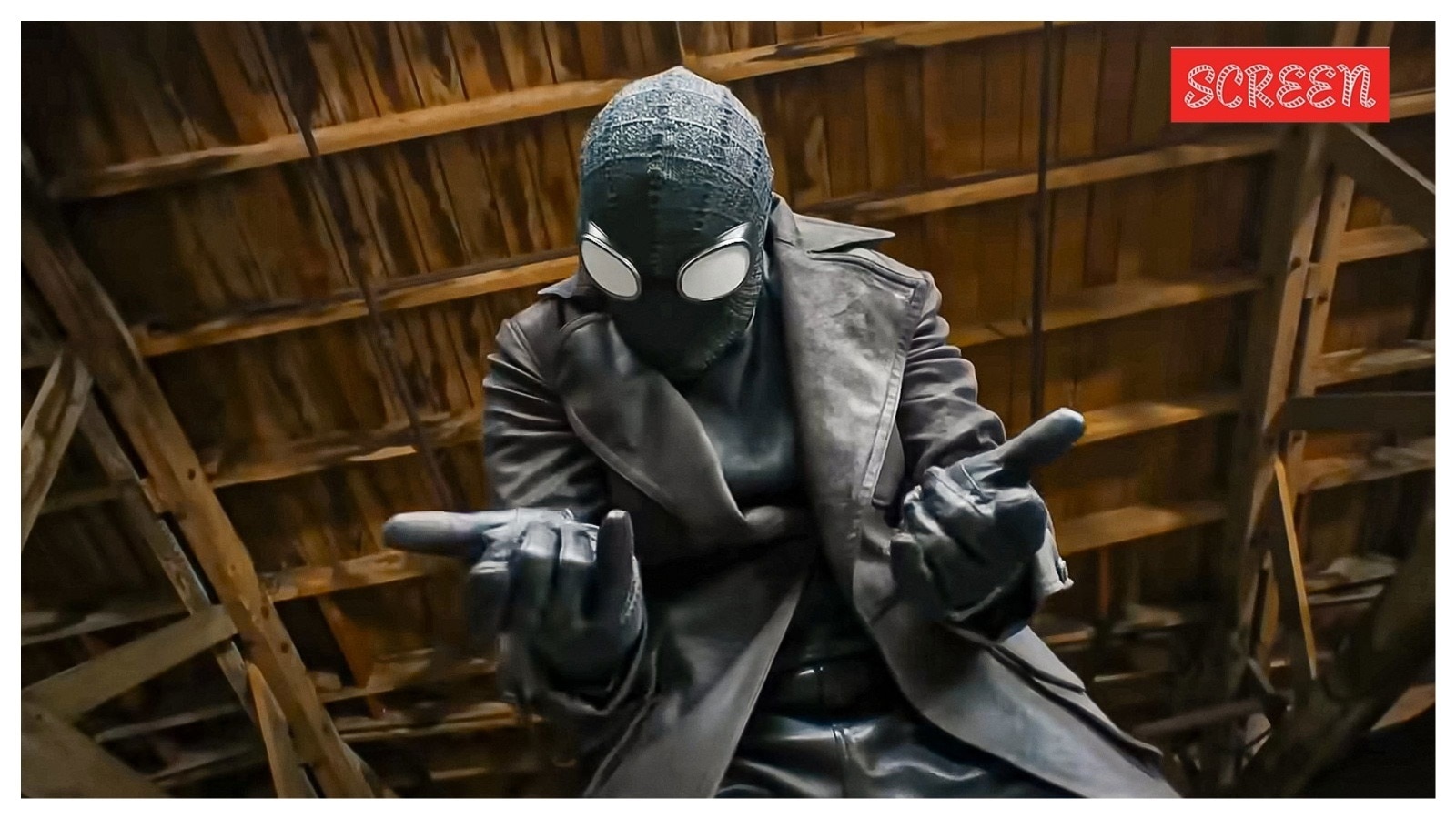
When Nicolas Cage first voiced Spider-Noir in Phil Lord and Christopher Miller’s 2018 Oscar-winning animated Marvel movie Spider-Man: Into the Spider-Verse, he wouldn’t have known that he’d be playing the same character in a full-blown live-action world, eight years later. It’s developed by Oren Uziel, best known for his collaboration as a screenwriter with Lord and Miller on 22 Jump Street (2014). Right at the outset, Cage’s voiceover makes it clear that the spin-off series on Spider-Noir is not a stepping stone in the expanding Marvel Cinematic Universe (MCU), but a world unto its own: “Years ago, somebody asked me which universe I belong to. This is the only one I know.”
Since New York City of the 1930s is the only dimension he knows, Cage’s ageing and jaded Ben Reilly doesn’t go about trying to erase the whole world’s collective memory to conceal his identity as Spider-Man. Because the only mind that he wants to wipe the Spider out of is himself. “With no power, comes no responsibility,” Ben Reilly maintains, a rather cynical spin on his namesake Ben Parker’s golden words.
He would ideally love where Tom Holland’s Peter Parker is at in the upcoming Spider-Man: Brand New Day. He doesn’t want even his closest confidants to remind him of his alter ego. Why? Like Andrew Garfield’s Peter Parker in Spider-Man: No Way Home, he feels terribly guilty about not being able to save his love interest. But unlike his counterpart from that dimension, Ben Reilly doesn’t cry at the drop of a hat. Instead, he shields his aching eyes with a detective hat and his guilty conscience with a sleuth’s day job.
That part of his identity lends the best to the show’s noir setting. Cage nails that Humphrey Bogart drawl along with that vintage stance and stealthy body language. Spider-Noir is available in both the coloured and the black-and-white versions on Prime Video, but I’d recommend the latter only for a more visually compelling experience. The play with shadows and light, bleached to perfection, serves as an avid hat-tip to the monochromatic era. Between transporting us to that era with his retro histrionics, Cage also slides in a few moments of piercing honesty, especially when he confesses to fellow heartbroken lover Cat Hardy (Li Jun Li) that he feels very “alone”.
In one of the show’s mostly oddly romantic scenes, Hardy doesn’t ask Reilly to confess his superhero identity to him. All she does is take a literal leap of faith, jumping back-first from his apartment’s window — only to be pulled back up by the web strings for a kiss. She knows that he can’t let another love interest die in front of his eyes. This might not be as iconic a lip-lock as the rainy, upside-down one between Tobey Maguire’s Peter Parker and Kirsten Dunst’s Mary Jane in the first Spider-Man (2002) movie, but it tells everything we need to know about the inherent goodness of Ben Reilly.
Of course, he plays an ageing Spider-Man with the jadedness of Batman, but the cynicism isn’t as cold-blooded or steely as the Caped Crusader. Despite his monochromatic world, there’s enough light in Reilly’s life that he retreats to a bat cave. Like Bruce Wayne, he also wants to erase his past and the gnawing pain of losing a loved one, but he hasn’t turned himself into a superhero by his own volition. Like most Spider-Men, he got his superhero powers through an accidental bite, but unlike Batman, the steeliness of a reluctant superhero is more of a self-defence mechanism than a grave consequence of his traumatic past.
Also Read — Ranveer Singh ‘ban’ an ‘ugly conspiracy’ against Dhurandhar, Aditya Dhar: Shobhaa De
Story continues below this ad
That’s why when he gets that life-altering bite, it doesn’t lead to a liberating swinging-across-the-city montage of a young Peter Parker. On the other hand, it causes hallucinations and deep-seated trauma, much like the adamantium being injected through Wolverine’s body in X-Men. His metamorphosis is more body horror than coming-of-age. Like how Wolverine has to split open his regenerative knuckles every time he unleashes the adamantium claws, Ben Reilly’s Spider-Man has to endure the involuntary, nerve-pulling Spidey sense every time at the sign of imminent danger. It’s almost like a painful reminder of his latent goodness which doesn’t let him hang up his Spidey suit for good.