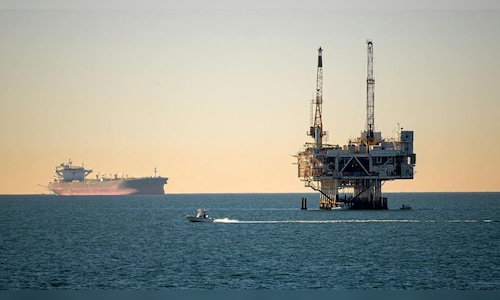
Equities dropped from all-time highs, and Brent crude jumped 5% to around $114, with the US and Iran exchanging fire in the Persian Gulf amid a flare-up of violence that also drew in the United Arab Emirates. With oil prices not far from a four-year peak, the decline in Treasuries sent 30-year yields above 5%.
The US fought off Iran’s attacks as it facilitated the passage of two vessels through Hormuz. Meantime, the UAE blamed an Iranian drone strike for a fire at its Fujairah port and issued several missile alerts for the first time since a truce between Washington and Tehran took hold about a month ago.
Also Read: Iran unveils new map of Strait of Hormuz under armed forces control
The wave of violence came after a plan announced by President Donald Trump to help vessels through the critical waterway, with Tehran warning it would strike US forces if they came near Hormuz. Iran will be “blown off the face of the earth” if they attack American ships guiding vessels, Trump told Fox News.
A vital trade thoroughfare, Hormuz has become a focal point in the current conflict, as Iran exerts its ability to impose asymmetric economic pain and the US struggles to reestablish free transits. The strait has been virtually blocked since the US and Israel began strikes on Iran in late February.
“Even if the immediate conflict de-escalates, we expect the aftershocks will remain with us for some time,” said Darrell Cronk at Wells Fargo Investment Institute. “The effects — on energy prices, industrial activity, and geopolitical risk premia — are unlikely to fade quickly.”‘
Also Read: Iran warns US Navy to stay clear of Hormuz after Trump says US to help stranded ships
“A diplomatic solution to this conflict remains the most likely outcome,” said James McCann at Edward Jones. “However, the risk of a more prolonged or larger disruption to global energy markets remains important to monitor, in our view, especially with markets having rallied sharply in recent weeks.”
Judging by last week, the market’s recipe for near-term upside will be sidestepping negative surprises out of the Middle East to allow what has been a stronger-than-average earnings season to continue to dominate sentiment, noted Chris Larkin at E*Trade from Morgan Stanley.
Earnings revisions for the S&P 500 have moved higher across multiple time horizons over the past month, according to Michael Wilson at Morgan Stanley. Second-quarter estimates are up 2%, and forecasts for calendar 2026 and the next 12 months have risen 3% and 4%, respectively.
“Unless we experience a meaningful external shock, it will be hard to derail momentum and hand control back to the bears,” said Mark Hackett at Nationwide. “That is what is giving this rally a more durable and credible foundation than what we saw just a few weeks ago.”
Also Read: US warns shipping firms they could face sanctions over paying Iranian tolls in Strait of Hormuz