
For generations, Native American women have fought to have their voices heard in a political system where representation has remained limited. The 2026 US midterm elections have brought a significant change, with several Indigenous women securing historic leadership positions and dozens of others winning elections across the country.Among the biggest milestones, voters elected the first Native American woman governor and the first Native American woman senator. Women also made history in two tribal nations, with the Navajo Nation and Seneca Nation of Indians choosing their first women leaders. According to election figures reported by The Guardian, at least 75 Native women, non-binary and Two Spirit candidates won races across the country. The results mark an important moment for Indigenous representation in American politics, where access to voting and political participation has a long and difficult history.
14 Oct 2026 | 11:30
Is financial independence essential for Indian women to make their own life choices?
Deb Haaland and Peggy Flanagan break new ground
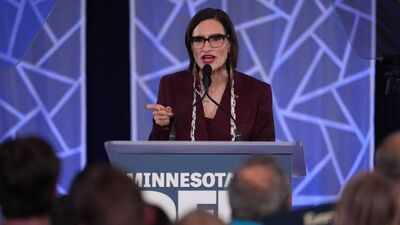
Two of the most significant victories came in state and federal politics. Deb Haaland, a citizen of Laguna Pueblo and former US Interior Secretary under President Joe Biden, was elected governor of New Mexico. Her victory makes her the first Native American woman to lead a US state. Haaland had previously made history in 2018 when she and Sharice Davids, a member of the Ho-Chunk Nation, became the first Native American women elected to the US House of Representatives. Her latest victory adds another milestone to a political journey that has helped increase Indigenous representation at the national level.Meanwhile, Peggy Flanagan, a member of the White Earth Band of Ojibwe and Minnesota’s serving lieutenant governor, won the state’s Senate race. She will become the first Native American woman to serve in the US Senate when she takes office in January. The significance of her victory is particularly striking considering that only four Native American men had represented their states in the Senate during its 237-year history. At her victory celebration in St Paul, Flanagan acknowledged the women who had supported her journey, saying, “I could not run for the US Senate without Native women. I could not exist in the way that I do without Native women.”
Two tribal nations elect women leaders for the first time
The historic victories were not limited to state and federal elections. Two major tribal nations also chose women to lead them. Crystalyne Curley was elected to lead the Navajo Nation, becoming its first woman leader. The Navajo Nation is the largest tribal nation in the US by geographical area, covering approximately 27,000 square miles across parts of New Mexico, Arizona and Utah. Curley was already an important figure in Navajo politics. In 2022, she became the first woman to serve as speaker of the Navajo Nation Council. Her election as leader marks another significant step in her political journey.However, her campaign was not without challenges. Speaking to the Associated Press, Curley said women in Navajo politics often have to work much harder than their male counterparts. “As women, we have to work twice or triple as hard, especially within Navajo politics,” she said, adding that she had faced sexist comments during her campaign. Meanwhile, Tina Abrams was elected president of the Seneca Nation of Indians in western New York. She will become the first woman to lead the nation in its modern history.Reacting to her victory, Abrams acknowledged the generations of Seneca women who had paved the way for her. She said she hoped her achievement would encourage younger women to imagine themselves in leadership positions in the future.
At least 75 Native women and gender-diverse candidates win
Beyond these headline-making victories, the 2026 elections also brought broader gains for Indigenous representation. According to Advance Native Political Leadership and the news organisation ICT, at least 75 Native women, non-binary and Two Spirit candidates won elections across the country. The election cycle also saw a record 363 Indigenous candidates contest local, state and federal positions. At least 180 of them won their respective races.Among the winners was Claire Valdez, a citizen of Ysleta del Sur Pueblo and a Democrat from New York, who will join Sharice Davids in the US House of Representatives. Another important development was the possibility of a second Native American woman entering the Senate. Mary Peltola, who is Yup’ik, was still awaiting the outcome of her closely contested Alaska race when The Guardian published its report. Her result remained undecided at the time.For many Indigenous women, seeing political leaders from their communities succeed has also made public office seem more accessible. New Mexico state senator Angel Charley, who is Laguna, Zuni and Diné, told The Guardian that seeing Haaland and Davids in national politics helped her imagine a future in public service.
A long road from limited voting rights to political representation
These victories carry added significance when viewed against the history of Native American political participation in the US. Native Americans were not allowed to vote across the entire country until the 1960s, despite being citizens. Their representation in elected offices developed gradually over the following decades. One important milestone came in 1985, when Wilma Mankiller became the first woman elected principal chief of the Cherokee Nation.In 2018, Haaland and Davids broke another barrier by becoming the first Native American women elected to Congress. Two years later, Haaland made history again when Biden appointed her as the first Indigenous person to serve as a US cabinet secretary. New Mexico also took steps to strengthen Indigenous political participation. In 2023, it became the first and only US state to implement an updated Native American Voting Rights Act, giving tribes greater input into decisions involving polling locations and redistricting.For Haaland, the latest victory is about more than becoming the first Native American woman governor. It is also about showing people who have rarely seen themselves represented in positions of power that leadership is possible regardless of their background or financial circumstances. The 2026 results, therefore, represent more than a collection of individual election victories. From state government and the US Senate to tribal leadership, Native American women are entering positions that were once largely inaccessible to them. Their success is also creating new examples for younger generations who may now see public leadership as a possibility.