
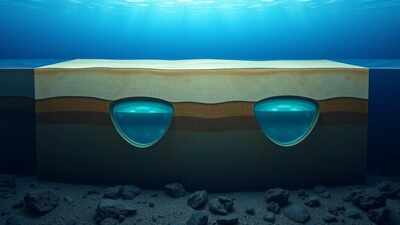
The moment we peer into the expansive Atlantic Ocean, it is usually taken for granted that all the water below the surface is salty. But nature often holds its secrets close to its chest. Buried deep within the ocean floor of the U.S. Atlantic seaboard, scientists have discovered a huge network of fresh water that surpasses all previous expectations. This is a secret universe of low-salinity water locked away beneath the ocean floor as a testimony to the Earth’s past.This discovery wasn’t just a lucky guess. Scientists used advanced marine technology to “see” through the ocean floor, revealing a continuous aquifer that stretches from the New Jersey shoreline all the way out into the deep sea. It is an enormous body of water that spans hundreds of kilometres. For coastal residents, this finding changes the conversation about how we view our most precious resource: water.The discovery that there is a gigantic body of freshwater beneath the ocean floor represents a paradigm shift in the field of Earth Science. It means that the interface between the two is far from being as straightforward as it may seem. This is no mere scientific discovery but a resource of great magnitude, which will have implications on how coastal resources will be managed in the future as global warming advances and raises sea levels.Detecting the hidden water giant below the ocean surfaceIn order to locate the water, the team of researchers used their expertise and skills in detective work through the use of electromagnetic waves that would reveal the difference between saltwater and freshened groundwater in the sediment layers under the ocean surface. They discovered a huge amount of continuous underground water bodies that extend up to 90 kilometres from the coastline in certain regions.A key study published in the journal Scientific Reports provides the technical backbone for this discovery. The researchers estimated that the system contains approximately 2,800 cubic kilometres of low-salinity groundwater. This makes it one of the largest offshore freshwater bodies ever physically mapped. The study highlights that this water is likely a mix of ancient “trapped” water from the last Ice Age and modern runoff that is still pushing its way out from the mainland.It is hard for one to conceptualise the scale of such a formation because this is not a collection of several small puddles but an extensive system with a structure based on that of the continental shelf. With the knowledge of how such formations store their water reserves, it becomes easier to determine how the coastal aquifers on land will behave under different forms of pressure, such as pumping.
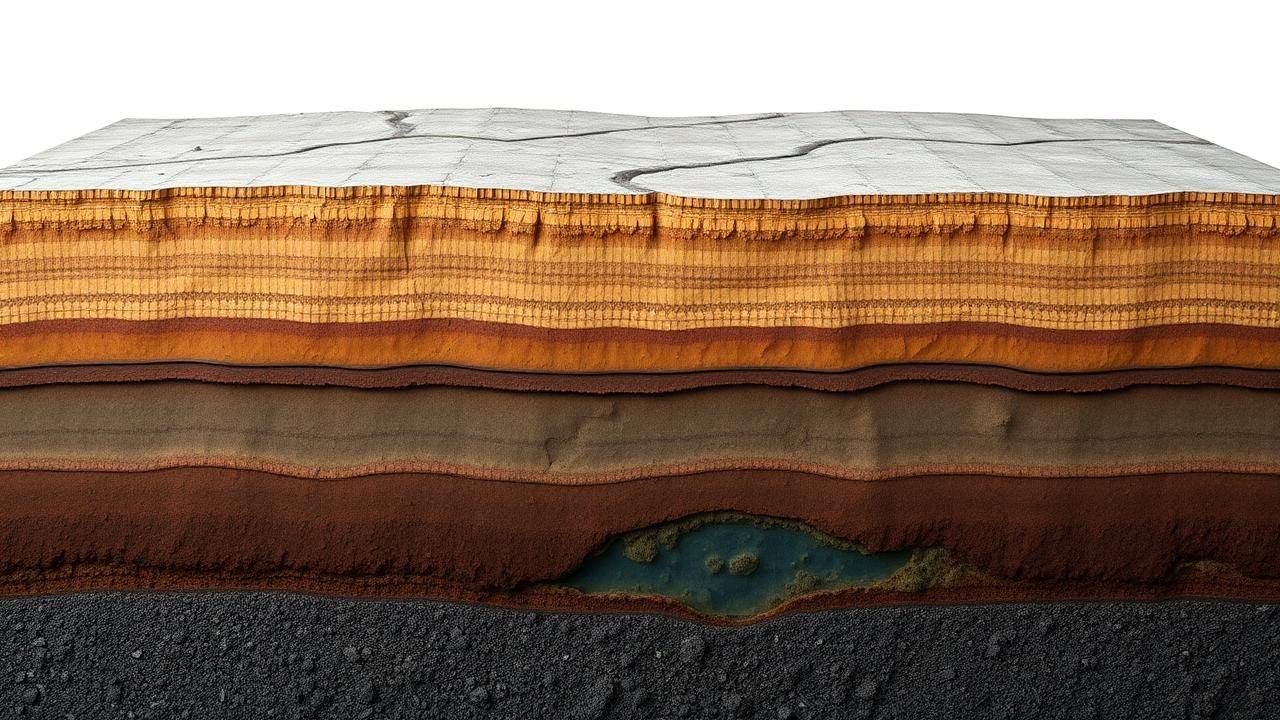
This immense discovery, stretching hundreds of kilometers, holds an estimated 2,800 cubic kilometers of low-salinity water, a mix of ancient glacial melt and modern runoff.
How does the seafloor store fresh water?One question that can be asked is how freshwater survives on the seafloor surrounded by salt? This can be explained by going back far into geological history. Back then, during the last Ice Age, there was no ocean covering these lands. Due to the lowered levels, the ground received a lot of rain and melting snow, which penetrated deeply into its soil and formed extensive deposits of water. Later, when the glaciers melted, raising sea levels, this water became covered by thick layers of sediment that isolated it from the rest.This phenomenon isn’t unique to the United States. According to research published in the journal Nature, these hidden aquifers are a recurring feature along continental margins worldwide. The study suggests that as we map more of the ocean floor, we are likely to find that these “submarine” freshwater sources are much more common than we ever suspected.Although this water is an interesting find, it is by no means a ‘quick fix’ to our problem of water supply. Obtaining the water which lies underneath many miles of seawater and soil requires significant engineering efforts. Nevertheless, the find proves to be quite beneficial for gaining knowledge about coastal systems. The water may provide the oceans with nutrients and minerals, thus impacting our coastal marine ecosystems. The find illustrates how the Atlantic Coast of America is not only the boundary between land and sea, but is also a meeting point between two worlds.Finally, the discovery of the Atlantic margin aquifer is a testament to how much more there is left to learn about our planet. What is clear, however, is that what we know of the limits of our resources may only be a question of perception, with the Earth continuing to conceal its mysteries beneath the waves and beneath the sands until we can discover them.