
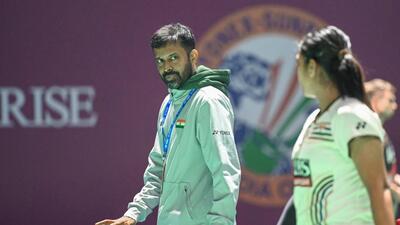
Having had the opportunity to be part of two Chintan Shivirs, I can say with conviction that this is one of the most timely and impactful initiatives in Indian sport today. We find ourselves at a significant moment in our nation’s sporting journey—one where intent, investment, and inspiration are converging like never before.
Over the past decade, under the leadership of Narendra Modi, sport in India has moved from the margins to the mainstream. There is a palpable national awareness about its importance—not just as a competitive pursuit, but as a vehicle for health, discipline, and national pride. Today, we see an ecosystem that is both vast and diverse: state governments, NGOs, corporates, federations, and grassroots institutions are all actively contributing to the growth of sport.
What makes the Chintan Shivir particularly valuable is its ability to bring all these stakeholders onto a common platform. Sport, by its very nature, intersects with multiple sectors—manufacturing, entertainment, fitness, media and education. The Shivir helps align these moving parts, creating a shared vision that is essential for long-term success. It brings the country’s collective perspective to the forefront while also showcasing best practices from different states, encouraging replication and innovation.
More than just a conference, the Chintan Shivir is a learning ecosystem. It allows stakeholders to exchange ideas, understand challenges, and collaboratively build solutions. It also serves as a powerful motivator—highlighting success stories and reinforcing the idea that sport in India is not limited to elite medals alone, but is about participation, inclusivity, and nation-building.
Initiatives like Fit India Movement, the celebration of International Day of Yoga, and community-driven activities such as cycling events have helped redefine how we view sport. The emphasis is now on “sport for all” alongside excellence at the highest level. Medal aspirations and mass participation are no longer separate conversations—they are part of the same continuum.
Hosting the Shivir in Srinagar added another layer of significance. The city’s serene beauty provides not just a picturesque backdrop, but also a sense of calm reflection—something that is essential for meaningful dialogue.
A particularly important outcome of this Chintan Shivir was the adoption of the Srinagar Khel Sankalp. This Sankalp is more than a statement of intent—it is a unifying framework that binds together the aspirations of all stakeholders in Indian sport. By clearly outlining shared goals, priorities, and responsibilities, it creates a roadmap that encourages collaboration rather than fragmentation.
The true strength of the Srinagar Khel Sankalp lies in its ability to bring diverse partners—governments, federations, the private sector, and civil society—onto the same page. It reinforces the idea that India’s sporting rise cannot be driven by isolated efforts. Instead, it must be powered by a coordinated, collaborative approach where resources, knowledge, and expertise are pooled together.
This alignment is critical if India is to achieve its long-term ambition of becoming one of the top 10 nations at the Olympic Games by 2036. Building world-class athletes requires not just talent, but a seamless ecosystem—grassroots identification, scientific training, infrastructure, coaching excellence, competition exposure, and sustained financial and institutional support. The Sankalp provides the strategic glue that can connect all these elements into a cohesive system.
What stands out most from these interactions is the optimism across the ecosystem. There is a shared belief that India’s sporting future is bright, and that through collaboration, we can build a robust, inclusive, and high-performing sporting culture.
The Chintan Shivir is, in many ways, a unique experiment—but one that is already proving to be successful. It underscores the importance of dialogue, alignment, and mutual understanding. For a country as diverse as India, such platforms are not just beneficial—they are essential.
If we are to truly realise our ambitions on the global sporting stage, these conversations must continue—and be backed by collective action. The Srinagar Khel Sankalp gives us that direction. The Chintan Shivir gives us that platform. Together, they provide India with a powerful foundation to transform its sporting aspirations into sustained Olympic success.