Clothespins have been a household essential for generations, yet few people give much thought to their design. At first glance, the small holes found on either side of a traditional wooden clothespin appear to serve no real purpose beyond holding the spring in place. In reality, these openings are part of a practical design that can make drying clothes more secure and, in some cases, help reduce visible peg marks and wrinkles. Although many people simply clip the two jaws of a clothespin together over a garment, using each side separately can distribute pressure more evenly and improve stability on the washing line.
Why clothespins have two separate gripping jaws
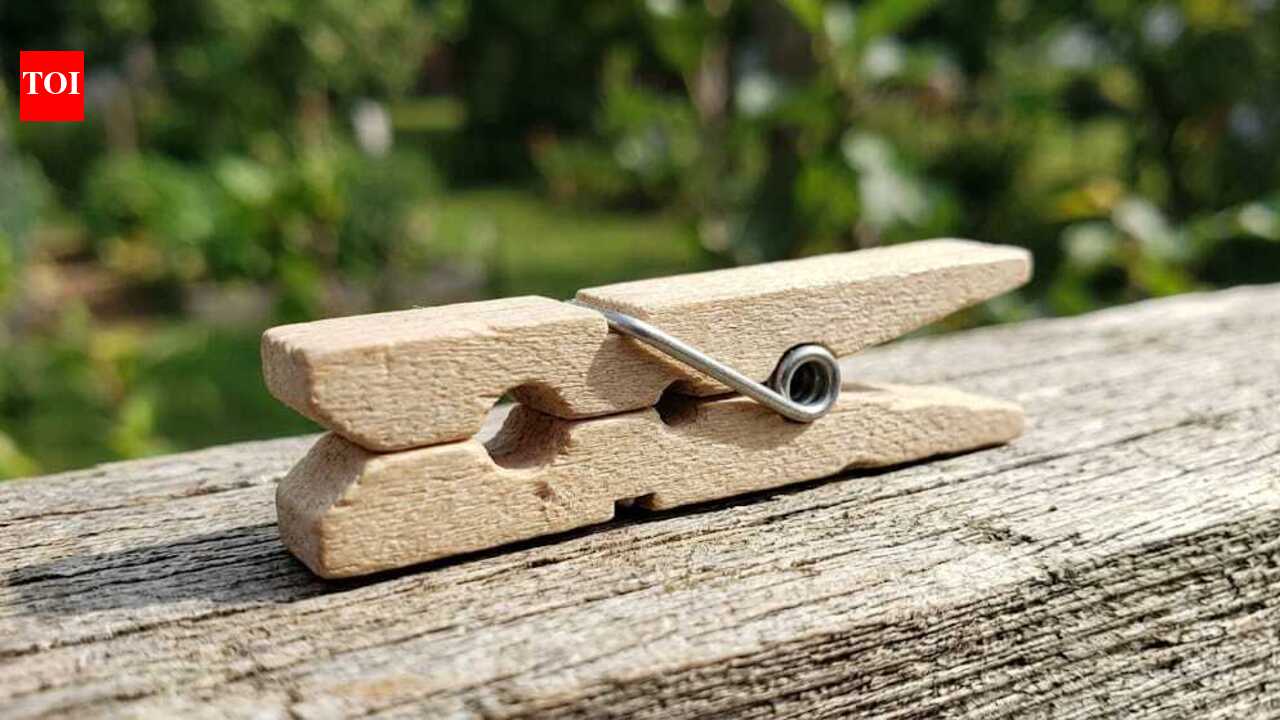
A traditional spring-loaded clothespin consists of two wooden arms joined by a coiled metal spring. Each arm forms an independent gripping surface, allowing the clothespin to apply balanced pressure when squeezed shut.Instead of treating the clothespin as a single clamp, each jaw can grip a different section of fabric or washing line. This spreads the holding force across a slightly larger area, making delicate or lightweight garments less likely to slip during windy conditions.The design also enables the spring to maintain consistent tension, ensuring the peg remains firmly attached without requiring excessive pressure.
A simple trick that may reduce peg marks
Many people clip both jaws directly onto the same section of clothing. While effective, this concentrates pressure in one small area, sometimes leaving visible indentations or sharp creases, particularly on lightweight fabrics.An alternative method is to place one jaw over the washing line while allowing the opposite jaw to grip only the edge of the fabric. By reducing the amount of fabric compressed between the two jaws, pressure is spread more evenly, which may lessen noticeable peg marks once the garment has dried.Although this technique cannot eliminate wrinkles, it can help minimise the deep impressions often left by tightly clamped clothespins.
Better support for heavier garments
Using the two gripping surfaces strategically can also improve support when drying larger items such as towels, jeans or bed linen.Rather than relying on a single clothespin at each corner, positioning multiple pegs so they distribute weight more evenly reduces strain on individual attachment points. This helps prevent garments from stretching under their own weight and lowers the chance of items slipping from the line during strong winds.For particularly heavy fabrics, placing clothespins near seams or reinforced edges further improves support because these areas are naturally stronger than thinner sections of material.
Small laundry habits can make a noticeable difference
While clothespins are simple tools, the way they are used can influence how clothes dry and how much ironing they require afterwards. Shaking garments before hanging them, smoothing out folds by hand and positioning pegs along seams rather than across the centre of fabric can all help reduce wrinkles.Likewise, allowing enough space between garments improves airflow, helping clothes dry more evenly and reducing the likelihood of damp patches.
A classic design that has stood the test of time
Despite the arrival of electric dryers and modern laundry accessories, the traditional spring-loaded clothespin remains largely unchanged because its design is both simple and effective. Every feature, from the coiled spring to the opposing wooden jaws, serves a practical purpose.The small openings many people overlook are not merely decorative or accidental. They reflect a carefully engineered design that allows the clothespin to grip securely while offering flexibility in how it can be used. Sometimes, understanding a familiar household object a little better is enough to make an everyday task just that bit easier.