
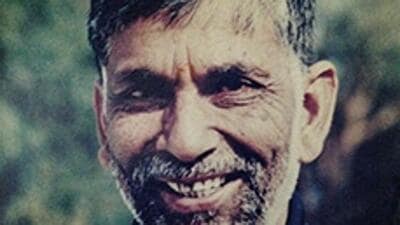
New Delhi: “They are approaching 28 km and (Waldemar) Cierpinski, the East German, is tucked right in there with Frank Shorter, (Shivnath) Singh is closing up again as well…,” the animated voice from an old video of the 1976 Montreal Olympics marathon crackles. Spectators line both sides of the Montreal streets, cheering the runners and holding umbrellas as rain pelts down. Wearing a blue jersey, the short-statured Shivnath can be seen pushing himself hard in third place, with just 14 km to go.
Before Montreal, Shivnath had established himself on the Asian circuit in track events, winning two medals at the 1974 Asian Games in Tehran (10,000m and 5,000m); however, the marathon was new to him. An Indian grinding it out with the world’s best and keeping pace in the toughest of races felt surreal and stirring. Singh maintained his pace for a few more kilometers before dropping off. He finished 11th with a time of 2:16:22.
Cierpinski beat defending champion Shorter, the American great, and set an Olympic record of 2:09:55. Shivnath had shown he belonged on the same stage. His Montreal run caught the world’s attention.
“They were all surprised to see an Indian right up there with the best,” recalls Sriram Singh, his compatriot at the Montreal and Moscow Olympics.
“Shivnath was world class. He was not far off from world record timing and he believed that he could catch up with European and US athletes. In India, he had no competitors in the marathon; he was far ahead of others,” says Singh, who himself had an outstanding 800m race in Montreal, making it to the final.
Two years after that race came Shivnath’s biggest moment on a hot May day (May 28, 1978) in Jullundur (now Jalandhar) when he set a national record (2:12:00); a record that has tested Indian marathon runners for close to 50 years. Last week, Sawan Barwal shaved just two seconds (2:11:58) at the Rotterdam Marathon to break the longest standing Indian national record
That day, Shivnath pushed himself while carrying the pain of a personal tragedy. His father had passed away a few days earlier, and Shivnath was in camp. “It was a crucial national meet and he could not go for his father’s last rites. He felt gutted and wanted to do something for his father. After setting the record, he told us that he would like to dedicate it to his father,” says Sriram.
Before the Montreal Olympics too, he was impacted by a personal tragedy. His elder brother, who played a key role in getting him into sport that eventually helped him secure a job in the Bihar regiment of the Indian Army, had passed away. Shivnath was persuaded by people around him and his coaches to get back to training for the Olympics.
Shivnath was born into a family of seven brothers and two sisters in Majharia village in Buxar, Bihar. He was the third among them. His humble beginnings made him toil hard.
Shivnath’s rise coincided with one of the best phases of Indian athletics, when the likes of Sriram, Hari Chand, Gopal Saini and many others broke through their limitations by sheer talent and hunger.
“There were no facilities, no synthetic tracks to train on, no good running shoes, no masseur, no sports medicine experts. Even in the Asian Games and Olympics, we would help each other recover after races. But we had the determination and hunger to succeed on the world stage,” says the mild-mannered Sriram, a two-time Asian Games gold medallist.
When it came to grit, Shivnath had plenty of it. Despite his success in track races, he shifted his focus to the marathon after the Montreal Olympics. It would not be an exaggeration to say that Shivnath chose to be a pathbreaker. In long-distance races, his rivalry with Hari Chand is legendary. Chand had the speed; Shivnath was gifted with endurance. Shivnath emerged as a star from the 1974 Tehran Asian Games, winning gold in the 5000m and silver in the 10000m, but national coaches insisted he take on the uncharted journey of the marathon.
Hardly any runners in India had the heart to run 42 km, let alone qualify for the Olympics. Shivnath not only made it to Montreal but also put up a show in front of the world.
“Shivnath and Hari Chand were excellent runners and both were from the Army. There were a few other Army runners in that group who were good, but these two were strong competitors. Coaches felt Shivnath could be good in the marathon and tried him out. He surprised everyone,” says Sriram.
Hari Chand went on to win double gold medals at the 1978 Bangkok Asian Games, where Shivnath competed in the marathon and finished fifth.
“Shivnath was stubborn. If he set a goal for himself, he would go all out to achieve it. It was his strong will that helped him do so well in marathons,” says another of his contemporaries, Gopal Saini, whose steeplechase national record stood for 37 years before Avinash Sable broke it.
Shivnath’s last big race was at the 1980 Moscow Olympics, where he pushed himself so hard that he fainted after around 35 km and could not finish, said Sriram. “He was in the front and kept pushing himself before his legs gave up, and he had to be hospitalised.”
Shivnath’s efforts are partly responsible for the country’s strong marathon culture. “None of us believed that we could be fast in the marathon until Shivnath showed us. It was only because of his feat that marathons became popular. Marathons began to be organised in Pune, Allahabad and other places.”
Shivnath participated in those races even in the early 1980s. He was also invited by Japan to compete in meets. After his career in the Army, he joined Tata Steel and moved to Jamshedpur, where he passed away from an illness in 2003 at a relatively young age. His name and his record, however, endured.