In 1995, a young online bookseller operating from a Seattle garage put a simple sign on its office wall: “Get Big Fast.” To a casual observer, it looked like a typical Silicon Valley promise of rapid growth. But inside the company, founder Jeff Bezos was quietly building infrastructure around a very different timeline. He warned investors early that creating a truly lasting company would take decades, not quarters. When Wall Street demanded quick profits, Amazon continued investing in long-term infrastructure, accepting short-term losses to build a position that could eventually lead to dominance.Bezos was drawing on a reality expressed centuries earlier: “The success of most things depends upon knowing how long it will take to succeed.”Written by Charles-Louis de Secondat, Baron de Montesquieu, this observation goes straight to the heart of why ambitious projects fail. Most efforts do not fail because the basic idea is wrong, or because the people involved lack talent or determination. They fail because the timeline was wrong. Misjudging how long a goal will take creates unnecessary panic, causes people to abandon good strategies just before a breakthrough, and uses up important resources before the finish line is visible.Knowing the timeline is not simply about managing expectations or learning to be patient. It is an active strategic skill. It determines how money is used, how much emotional energy is needed, and when a setback should be seen as a serious problem rather than a normal part of the process.
The philosopher in his tower
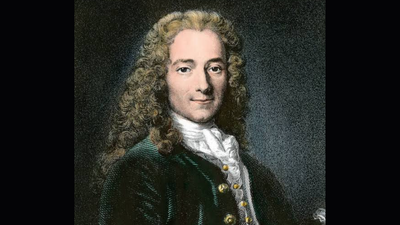
The man behind this insight understood delayed gratification well. Born in 1689 at the Château de La Brède near Bordeaux, Montesquieu was a French Enlightenment judge, historian, and political philosopher. The quote appears in his Pensées Diverses (Miscellaneous Thoughts), a private notebook where he wrote about human nature, government, and the way power works.Montesquieu wrote these notes during a period of major political change in Europe. The strict absolutism of King Louis XIV was beginning to give way to the new ideas of the Enlightenment. Montesquieu spent more than twenty years researching and developing his most important work, The Spirit of the Laws (De l’esprit des lois), which was published in 1748.He understood that lasting changes to institutions could not be forced through quickly. His intended audience was not the passionate revolutionary demanding immediate change, but the statesman, lawmaker, and strategist who wanted to build systems that would last. Montesquieu understood that societies, much like physical structures, cannot always handle rapid change. Trying to force political reform or cultural change faster than society can absorb it can lead to instability, collapse, or an authoritarian reaction.For Montesquieu, getting the timing wrong was a serious failure of political judgment. A wise leader did not only ask what needed to be done. The leader also needed to understand how long society would need to accept, adapt to, and maintain that change.
The psychology of getting the timeline wrong
From a philosophical point of view, Montesquieu’s idea connects closely with cognitive biases that modern behavioral science would identify centuries later. One of the most important is the planning fallacy, first identified by psychologists Daniel Kahneman and Amos Tversky in 1979. People naturally tend to underestimate how much time, money, and risk future projects will require while overestimating the benefits they will produce.When we imagine a goal, our minds often create a simple and ideal path from preparation to completion. We picture the best possible outcome. But real-world systems are rarely simple. They are complex, unpredictable, and full of delays and problems.When reality does not follow our shortened timeline, mental and emotional fatigue begins to grow. This can lead to what cognitive scientists call the “sunk cost fallacy” in reverse: people abandon useful long-term plans too early because they interpret normal delays in a difficult process as evidence that the entire plan has failed.Ancient Stoic philosopher Seneca made a related point in On the Shortness of Life. He argued that people often suffer not because they have too little time, but because they fail to understand how they use it. Montesquieu extended this personal lesson into a broader principle for collective human action. Real mastery of any field requires an accurate understanding of how much time the process actually takes.
Managing time horizons in a fast-moving world
This idea remains highly relevant in 2026, when digital technology has trained people to expect immediate results in almost every area of life. Software can be released in seconds and algorithms can provide instant feedback. As a result, the slower pace of real-world development can become difficult to accept.Consider deep technology and the transition to clean energy. Nuclear fusion startups, battery research laboratories, and quantum computing companies often face what industry analysts call the “valley of death.” Millions of dollars can disappear not because the underlying science is impossible, but because investors often work on three-to-five-year venture capital cycles while basic materials science may require fifteen to twenty years. Companies that survive are often those whose leaders correctly understand the long timeline from the beginning and build their funding systems around it.The same principle applies to professional mastery. Author Malcolm Gladwell popularized the idea that mastery requires thousands of hours of deliberate practice, building on earlier research by psychologist K. Anders Ericsson. Yet many people who want to master a skill quit after only a few hundred hours. They give up not necessarily because they lack talent, but because they expected real ability to develop much faster than it actually does.In political leadership, the consequences of getting the timeline wrong can be just as serious. Programs designed to reduce generational poverty, improve public education, or rebuild cities often struggle because political terms encourage leaders to demand clear results within two-to-four-year periods. When major structural changes take a decade to produce measurable results, short-term governments may label the program a failure and cancel it. This resets the process and wastes resources that have already been invested.Montesquieu’s insight asks us to treat time as a basic part of planning rather than as an unexpected obstacle. Before beginning any major effort, the most important question is often not whether the destination is worth reaching, but whether we have enough resources, patience, and commitment to survive the true length of the journey.