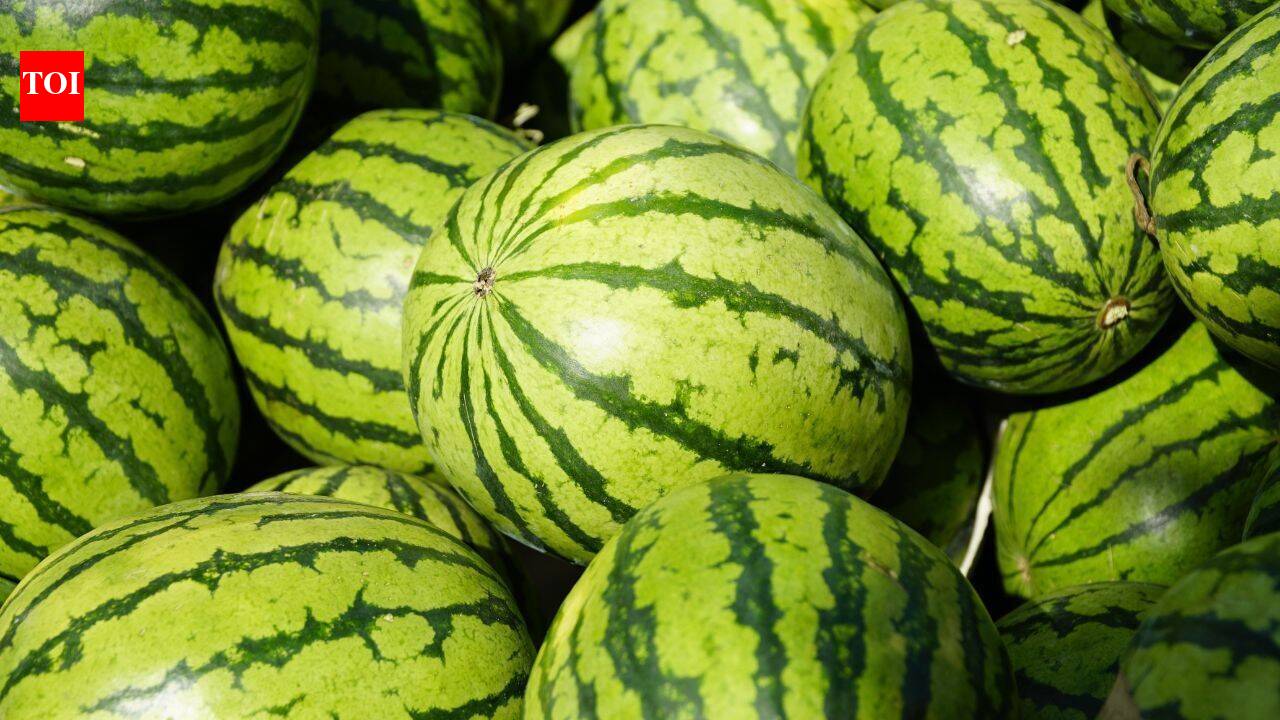
A watermelon can look perfect on the outside and still disappoint once it is cut open. Smooth skin, an even shape and a bright green colour often attract shoppers first, yet those features do not always say much about what is happening inside. Experienced growers and market sellers tend to pay attention to different clues. According to USA Today, the sweetest melons are often the ones that appear slightly rough around the edges, carrying marks and blemishes that many people would normally avoid. A few small details on the rind can reveal how the fruit developed in the field, how long it remained on the vine and whether it had enough time to build up its characteristic sweetness. Knowing where to look makes choosing one far less of a guessing game.
7 signs to pick the sweetest watermelon
1. Yellow spotOne of the easiest signs to find is the field spot, the patch where the watermelon rested on the ground while growing. This area should not be white or pale green. Instead, a rich creamy yellow or even slightly golden patch is usually a better sign.That colour develops as the fruit spends time maturing in the field. A pale spot can suggest the watermelon was harvested before it had fully finished ripening. The deeper yellow patch often points to a melon that remained attached to the vine longer, giving it more opportunity to develop flavour and sweetness before being picked.2. Dull Many shoppers instinctively reach for the brightest watermelon in the pile. In reality, a glossy surface can be a sign that the fruit is not yet at its best.A mature watermelon typically has a more muted appearance. The rind tends to look dull rather than shiny, almost as though it has lost some of its polish. That subtle, matte finish is often associated with a fruit that has completed more of its natural growing process. While colour alone cannot guarantee sweetness, a less reflective rind is generally considered a more promising sign than a highly glossy one.3. WebbingThose rough brown lines, scars or net-like patches on the skin often cause people to put a watermelon back immediately. They may not be attractive, but they are not necessarily a defect.These markings are commonly linked to pollination activity while the fruit was developing. A watermelon with visible webbing has often received plenty of pollinator visits during its growth. Many growers view these textured patches as a positive indicator because they frequently appear on melons with stronger flavour. The surface may look imperfect, yet the fruit inside can be surprisingly sweet.4. Brown stem endIf the stem is still attached, it can offer another useful clue. A stem that remains green and fresh-looking may suggest the watermelon was removed from the vine relatively early.A dry, brown stem end tells a different story. It usually indicates that the fruit had reached a more advanced stage of maturity before harvest. The vine naturally begins to dry as the watermelon finishes developing, leaving behind a stem that looks older and less vibrant. It is a small detail that many shoppers overlook, but it can help separate a ripe melon from one that still needed more time in the field.5. Matte skinA ripe watermelon usually has a dull, matte rind rather than a shiny surface. Glossy skin can be a sign that the fruit was picked too early and may not have reached its full sweetness.6. Solid stripingLook for strong, well-developed dark-green stripes. Clear, distinct striping is often associated with proper ripening, while excessive yellowing may suggest the fruit is overripe.7. Rugged ridgesSubtle raised ridges or veins running along the watermelon’s surface can indicate maturity. If they are easy to see or feel, the melon is more likely to be ripe.