Former HCL Technologies CEO Vineet Nayar believes the industry’s response is fundamentally flawed. Instead of resorting to mass layoffs, companies should use AI as an opportunity to reinvent themselves and invest in new businesses, he said in an interview with CNBC-TV18’s Young Turks Reloaded.
The comments come as India’s IT sector and global technology companies continue to trim workforces amid growing AI adoption.
HCL Technologies reduced its workforce by 3,292 employees during the June quarter — its steepest quarterly decline in a year — even as it reported strong earnings and stable attrition. The company ended June with 223,889 employees, down from 227,181 three months earlier, while fresher hiring slowed to 1,056 recruits from 1,712.
Staffing firm TeamLease Services estimates India’s IT sector could lose 25,000-35,000 jobs in 2026 as companies reshape their businesses around AI, while recruitment firm CIEL HR Services has projected 18,000-21,000 technology job losses this year.
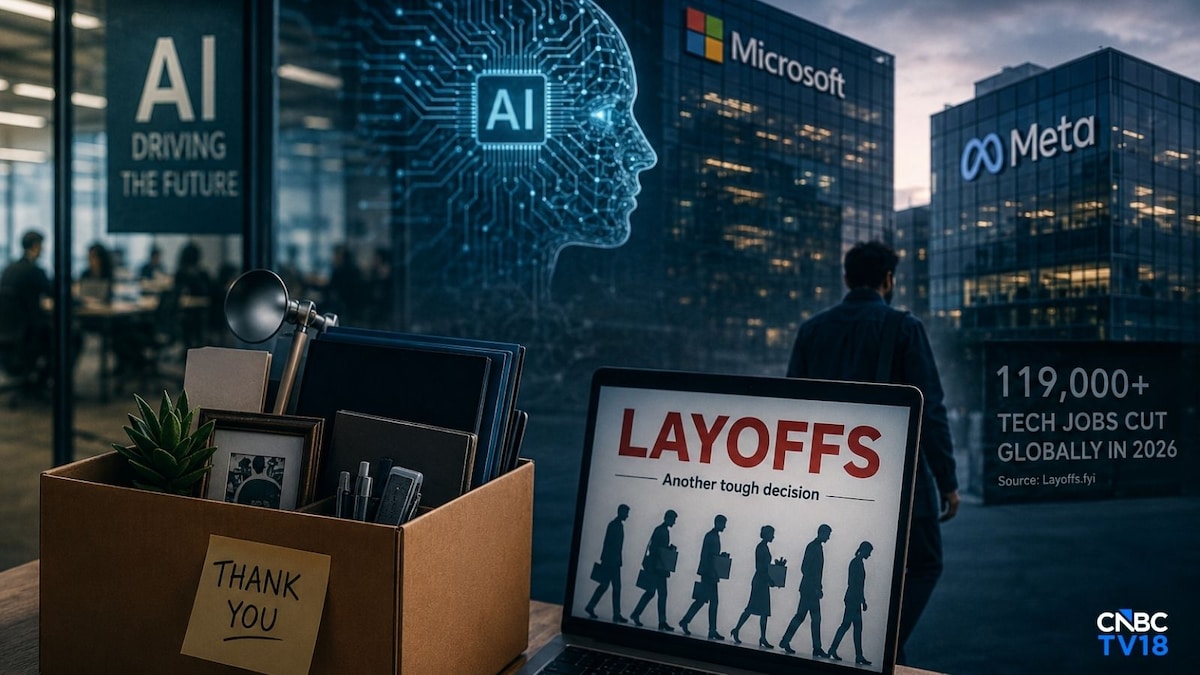
The trend extends well beyond India. Microsoft recently announced 4,800 job cuts, including about 3,200 roles at Xbox, while Meta has also reduced headcount as it ramps up spending on AI infrastructure and talent. According to the layoff tracker Layoffs.fyi, more than 119,000 technology jobs have been cut globally across over 220 companies so far this year.
‘Layoffs destroy trust’
Against that backdrop, Nayar said companies have normalised layoffs in a way that undermines employee confidence.
“Your whole nonsense about… 13,000 people fired — that nonsense has to stop,” he said, referring to the growing practice of announcing layoffs through emails. “There has to be some amount of respect… You’re dealing with people with families, aspirations and emotions.”
Nayar argued that companies often focus only on employees who lose their jobs, overlooking the impact on those who remain.
“You fired 13,000 people… but all the people who stayed back, what are they thinking? ‘Is my number next?’ Do you think they’re going to work hard for your success? The answer is no.”
Rather than relying on abrupt workforce reductions, companies should communicate openly, prepare employees for business changes and create a clear transition roadmap, he said.
“I’m not saying don’t get rid of people… but there has to be some amount of respect, some amount of thought.”
AI will eliminate jobs, but also create opportunity
Nayar believes around 50% of the work currently performed by India’s IT services industry will eventually be automated. But he argues that automation should not be viewed purely as a threat.
Instead, companies should disrupt their own business models before customers force them to do so.
“The opportunity AI offers is far more significant than anything else,” he said. “The issue is how you respond to the opportunity. Are you willing to kill your revenues faster than the market kills them and invest in AI capabilities, or are you going to lie back and wait for the inevitable to happen?”
While Nayar believes automation will inevitably eliminate a significant share of today’s IT services work, he argues that the industry’s future will depend on how aggressively companies reinvent themselves rather than how quickly they reduce costs.
Investor sentiment reflects those concerns. The Nifty IT index has fallen more than 25% so far in 2026 and is down about 20% over the past 12 months.
Kotak Institutional Equities CEO and Co-Head Pratik Gupta recently told CNBC-TV18 that global investors remain underweight on Indian IT stocks despite the correction, as concerns over AI-led disruption continue to weigh on sentiment. Gupta added that job losses are likely to be “significantly higher” among US-based IT employees than in India.
AI’s jobs impact remains hotly debated
Chief Economic Adviser V. Anantha Nageswaran recently said AI will affect the IT sector, but noted that “the numbers are hard to come by”, adding that “the fear of job losses dominates right now.”
The discussion is also gaining momentum globally. More than 200 economists, including 16 Nobel laureates, former Google CEO Eric Schmidt, Anthropic co-founder Jack Clark, and the chief economists of OpenAI and Anthropic, signed an open letter urging governments and businesses to prepare for AI’s impact on employment.
The signatories warned that AI could reshape the global economy faster than the Industrial Revolution and cautioned that, while the technology could deliver significant productivity gains and higher living standards, it also posed the risk of large-scale job displacement unless governments and businesses put appropriate safeguards in place.
‘Invest in tomorrow, not protect yesterday’
Rather than defending legacy businesses, Nayar said companies should accept disruption early and redirect capital towards building new AI-led opportunities.
“If something is inevitable, prepone it,” he said. “This is a mega opportunity… not saving today, but investing for tomorrow.”
He also called on large IT companies to reinvest a portion of their profits into incubating startups within their organisations, providing entrepreneurs with capital, customer access and mentorship.
“Put 5% of your profit back into startups… Give them customer access, capital and mentorship. Fire the imagination of young people.”
‘Humans first, machines second’
For Nayar, AI should augment human capabilities rather than become a justification for cutting costs.
“The future belongs to creating value by the use of technology — not the technology alone.”
He argued that companies built on trust, purpose and innovation would outperform those focused primarily on reducing headcount.
“A motivated, trusted employee is my answer to making more money. You have to treat people as people.”
Nayar’s message echoes that broader debate: the challenge is not whether AI will reshape work, but whether companies choose to use it to replace workers or reinvent themselves.