
Kolkata: Michel Platini, Zico and Socrates scored six international penalty goals each. Platini and Socrates never missed from the spot during regulation time for France and Brazil. Neither had Zico before that steamy afternoon in Guadalajara. At different points in that World Cup match, three of the greatest attacking midfielders of their generation failed from 12 yards.
In regulation time, Zico won a penalty with the 1986 quarter-final poised at 1-1. His effort came at a good height for Joel Bats who saved diving to his left. In the shootout, Socrates’s shot, after a one-step run-up, looped in the air and Bats kept it out. With the tie-breaker at 3-3, Platini, who had scored from open play to equalise after Antonio Careca had put Brazil ahead, blazed over.
Since they were introduced in 1982, the World Cup has had its share of dramatic tie-breaker misses and moments. Roberto Baggio blazing over in the 1994 final or Emiliano Martinez’s mind games and shoulder rolls in the cauldron of noise that Lusail stadium in 2022 are but two. In 2006, neither France nor Italy managed a save but the latter became world champions because David Trezeguet’s blast hit the underside of the crossbar and bounced out.
With the knockout rounds having begun, it is that time of tournament again. A time to let go of grudges like it was with Germany’s Oliver Kahn in 2006, for goalies to stare down kickers and instructions on water bottles that are towel wrapped as it was for Netherlands’s Bart Verbruggen on Tuesday.
It is not luck, not a lottery, Luis Enrique said in Doha before his Spain were eliminated by Morocco in the round of 16.
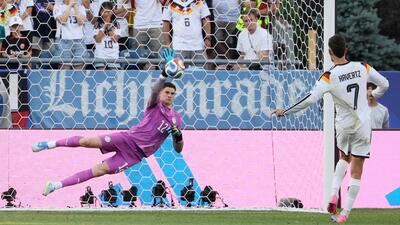
Till Tuesday, Germany would agree with Enrique. They had never lost a tie-breaker since Antonin Panenka’s dinked one over Sepp Maier in the final of the 1976 European championship. But like Ernest Hemingway and bankruptcy, German invincibility fell, gradually and then suddenly.
The four-time champions, ranked 12th in the world, were eliminated by Paraguay who are 33rd in FIFA rankings and had lost 1-4 to USA. Twice finalists Netherlands followed, losing to Morocco though here the higher ranked team won.
For all its theatre, trauma, delight and dejection, deciding a match through penalties has been contentious. Is it the right test of skills? Should a contest between teams be reduced to one between two? So, silver goal (where the match ended when the 15-minute extra-time half in which a goal was scored ended) and golden goal (where the match ended as soon as a goal was scored in extra-time) were tried. Major League Soccer experimented with a 35-yard with-the-ball run that had to be completed in five seconds and where the goalie could leave his line.
But teams resorting to defensive play led to the first two being abandoned. And MLS did away with its shootout in 1999 to align with conventional rules and avoid injury. So, penalties it is.
For author Geir Jordet, a professor of football and psychology at the Norwegian School of Sports and Science, it’s a fair way to decide outcomes. Penalties are one of the ultimate tests of mental strength and preparation, he says. For a better outcome, Jordet advocates recreating the pressure of an actual match as much as possible so that players train with anxiety. He also says players need to take control of the situation. “For example, re-starting the routine if the goalkeeper becomes extra volatile or hostile, or make sure to take a little pause with a few breaths after the referee signal has been given,” he told Reuters.
After studying more than 100 shootouts, Jordet wrote a book on the subject. Every player who has stepped up to take a penalty in a World Cup match deserves respect for being brave enough to try it, he said.