
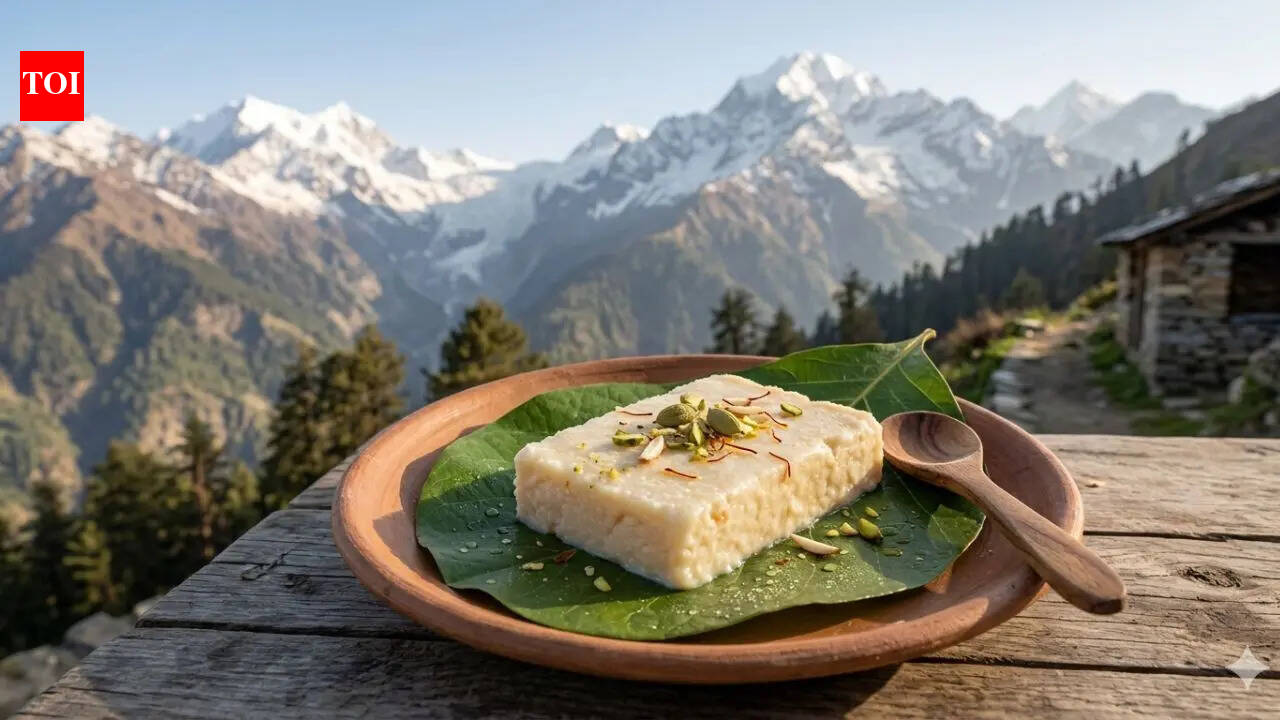
Cold desserts from the Himalayan belt rarely travel far in their original form. By the time they appear in city sweet shops, many have already been altered to suit commercial kitchens, stronger refrigeration or broader tastes. Malai baraf sits somewhere in that shift. The name itself sounds deceptively simple, cream and ice, yet the dessert carries traces of older mountain food habits shaped by altitude, long winters and limited ingredients. In parts of northern India, especially around Himalayan foothill towns, versions of it still appear during weddings, fairs and religious gatherings where milk-heavy sweets remain tied to hospitality. What reaches the plate is neither quite kulfi nor traditional ice cream. The texture is denser, softer at the edges, with the flavour depending almost entirely on the quality of milk rather than flavouring syrups or elaborate additions.
Traditional Malai Baraf: Ingredients and slow cooking method used
Most recipes become complicated only after leaving their place of origin. Traditional malai baraf depends on very few ingredients, which means poor milk cannot be hidden behind flavourings.Full-fat milk forms the entire structure of the dessert. Buffalo milk is still preferred in some regions because of its higher cream content, though cow’s milk creates a lighter texture. The slow reduction is what gives the dessert its character. Rushing that stage usually produces something closer to condensed milk fudge than malai baraf.Cardamom appears frequently, though lightly. Saffron is common during festive preparations, especially in tourist hill towns, where presentation has become more elaborate over time. Nuts are added mostly for texture rather than decoration.
Key ingredients:
- 1 litre of full-fat milk
- 1/2 cup condensed milk
- 3 tablespoons sugar
- 2 tablespoons milk powder or crumbled khoya
- 1/4 teaspoon cardamom powder
- A few saffron strands soaked in warm milk
- 2 tablespoons chopped pistachios
- 2 tablespoons chopped almonds
Recipe to make the creamy Malai Baraf
- Pour the milk into a wide heavy-bottomed pan and place it over medium heat. Once it reaches a boil, lower the flame and allow it to simmer. The milk should reduce gradually rather than cook rapidly.
- As cream gathers around the sides of the pan, scrape it back into the milk using a spoon. This gives malai baraf its layered texture instead of a completely smooth consistency. Stir occasionally to prevent sticking at the bottom.
- After about thirty to forty minutes, the milk will appear thicker and reduced to nearly half its original quantity. Add the sugar, condensed milk and milk powder or khoya. Stir gently until everything dissolves fully.
- Mix in the saffron milk and cardamom near the end of cooking. Leaving them too long on the heat tends to dull the flavour.
- Remove the pan from the heat and let the mixture cool slightly. Pour it into a shallow steel tray or rectangular container. Scatter chopped pistachios and almonds across the surface.
- Place the tray in the freezer for five to six hours, or until the dessert becomes firm but not completely solid. Traditional versions were often softer than modern frozen sweets, so avoiding excessive freezing helps preserve the texture.
- Cut into squares or thick slices before serving. Malai baraf softens quickly once removed from the freezer, which is part of its character rather than a flaw.
History of malai baraf : The slow-cooked dessert from North India
Before refrigeration became common, dairy preservation in colder Himalayan regions depended on reduction rather than storage. Milk was boiled for long periods over slow heat until it thickened naturally. Cream gathering at the sides of wide pans would be folded back repeatedly, creating layers within the liquid instead of a completely smooth mixture.Malai baraf developed from that style of cooking. The dessert was never designed as a polished confection. It belonged more to household kitchens and temporary winter stalls than formal sweet-making traditions. In older settlements across Himachal and Uttarakhand, reduced milk desserts were often cooled outdoors during colder months, where temperatures assisted the setting process.The word “baraf” suggests ice, though the dish itself is not frozen solid in the way modern packaged desserts are. Properly made malai baraf remains slightly yielding when cut. The centre should soften quickly once served.
Why does this dessert still survive
Many regional desserts disappear quietly once commercial sweets replace labour-intensive cooking. Malai baraf has managed to survive partly because it occupies an unusual middle ground. It feels familiar enough to people accustomed to kulfi or rabri, yet distinct enough to avoid becoming interchangeable with either.Hill stations have also helped preserve it. Tourist demand often reshapes traditional foods beyond recognition, though in this case, the dessert’s simplicity has limited how much alteration is possible. Even modern versions still rely on the same slow reduction process that defined earlier preparations.Its appeal remains tied to restraint. There is very little in the dish besides milk, patience and cold air.