
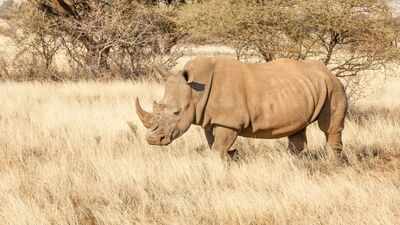
White rhinoceroses are generally native to Africa, so the news of two of them being born two days apart at The Wilds in Cumberland, Ohio, became a cause for celebration. The Wilds is a conservation and safari spot located in Ohio. The spectacle involved one of the rhinos, which is the first sixth-generation southern white rhino ever born outside Africa.
A family story, decades in the making
As reported by the Columbus Zoo, the first calf, a male, was born early on Thursday, November 12, 2026, to a rhino named Scout. Scout herself was born in a pasture at The Wilds on October 23, 2019, and the staff have watched her grow up. Giving birth has now made her a mother for the first time. The crew that has been with her through every stage is now with her for this special moment.As per the Columbus Zoo, Cody Cseplo, an Animal Management Specialist at The Wilds, says Scout’s first calf is especially special for the team. The little male was up and moving soon after birth, which is exactly what keepers hope to see. Even so, the team is watching the mother and calf closely during these early days.The conservation of the Southern white rhinos is crucial as they are already in the Near Threatened category of the International Union for Conservation of Nature (IUCN) list.
So, what does “sixth generation” actually mean?
Generations are counted by following an animal’s lineage back to wild-born ancestors. In Scout’s case, one of her great-great-great-grandmothers and one of her great-great-great-grandfathers were born in South Africa and came to the United States in 1975. While she was the fifth-generation born outside Africa, her calf has now added one more generation to the family tree.That’s a lot of “greats.” It also shows how much patience conservation work demands. A rhino pregnancy is long, and a female has to grow up before she can have a calf of her own. Reaching a sixth generation means decades of successful births, specialized care, and careful planning.
A second surprise, two days later
Just as the staff were celebrating the first birth, a second one came along. On November 14, a female calf was born to a mother named Anan. When staff arrived that morning, the calf was already standing and doing well. Anan was born in 2009 as the center’s first fourth-generation southern white rhino. In 2014 she gave birth to Letterman, the first fifth-generation calf at the wildlife park. So this new female is part of a line that has been growing at The Wilds for years.The two newborns share a father, a breeding male named Bernard. According to the report, he came to The Wilds in 2022 after the recommendation by the Southern White Rhinoceros Species Survival Plan. It was also noted that Scout’s calf was his 18th offspring while two days later, Anan’s became his 19th. The two calves make the total number of his calves at the centre four.
Why it matters beyond Ohio
Southern white rhinos are classified as Near Threatened by the International Union for Conservation of Nature. In Africa, they still face poaching and habitat loss. A healthy, diverse population in professional care doesn’t replace conservation work in the wild, but it does complement it.The Wilds also took part in the American Institute of Rhinoceros Science, a research partnership funded by a National Leadership Grant from the Institute of Museum and Library Services. It studied rhino wellbeing and reproductive health. While data collection has finished, researchers are still analyzing the results. What they learn is shared across participating facilities, so it can improve rhino care well beyond Ohio.
A conservation success story
The southern white rhino is one of conservation’s great comeback stories. By the end of the 19th century, hunting had reduced their numbers to a small amount. A century of strict protection brought the population back into the tens of thousands, and rhinos were moved to reserves across southern Africa and to zoos around the world. The comeback is still fragile. Poachers kill rhinos for their horns, which are made of keratin, the same stuff as human hair and fingernails.They are smuggled to markets, mainly in Asia, where they are falsely believed to have medicinal value. A 2025 IUCN report found the poaching rate of African rhinos had dropped to its lowest level since 2011, yet white rhino numbers had still fallen 11.2% since 2023. Drought and policy shifts have offset the gains from reduced poaching.That is why calves born at places like The Wilds matter. They won’t be released into Africa, but they help sustain a genetically diverse population in human care, and they support research, education and fundraising for rhinos in the wild.
When at The Wilds
The Wilds welcomed its first rhino calf in 2004 and is now home to one of North America’s largest southern white rhino herds. The Wilds is also the only facility outside Africa where fourth- and now fifth-generation females are breeding. Its almost 10,000 acres along the Appalachian Byway offer plenty of room for that to continue.