Ramesh Khandelwal, who represents Madhya Pradesh on the government-constituted NTWB, said the decision was contrary to the government’s ease-of-doing-business objective and could affect business growth. He said he would raise the issue at the upcoming NTWB meeting.
“The decision to impose MDR on UPI transactions is against the government’s policies on ease of doing business. This will impact business growth and may lead to higher prices,” Khandelwal told PTI.
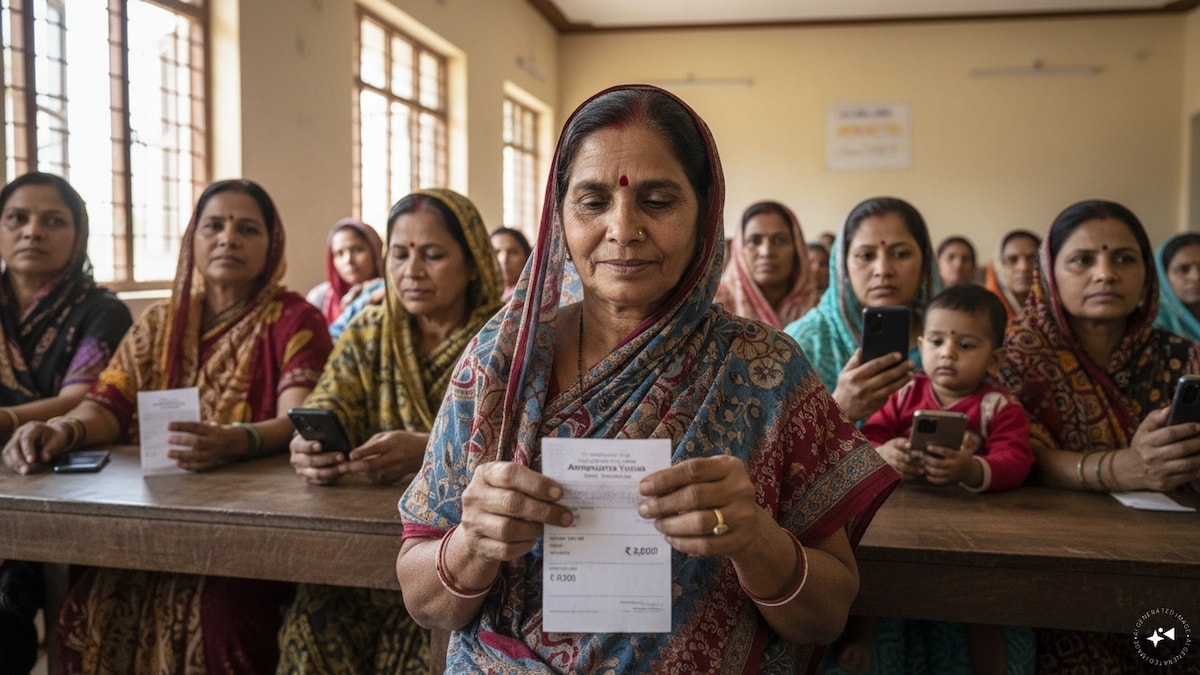
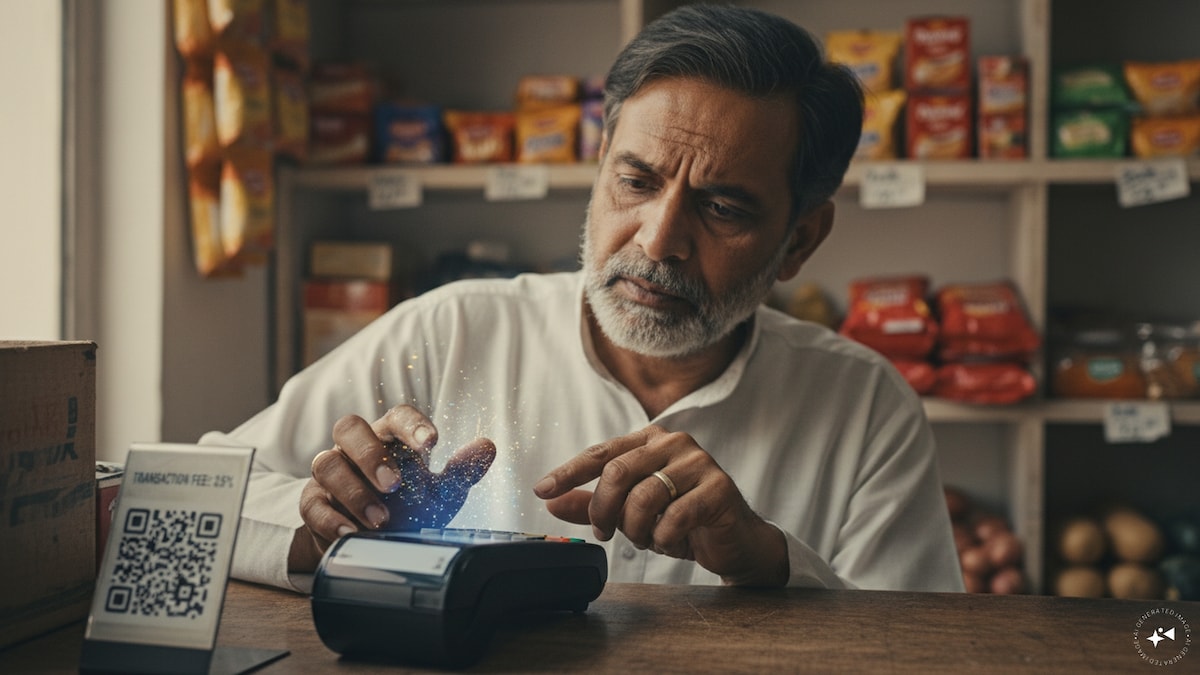
The National Payments Corporation of India (NPCI) has introduced a new MDR framework under which a 0.4% charge will apply from October 15 to person-to-merchant UPI transactions above ₹2,000, subject to a maximum of ₹300 per transaction. The MDR is to be borne by merchants, while person-to-person transfers and merchant transactions up to ₹2,000 will remain free.
The framework also provides differentiated rates for certain categories. Insurance, railways, telecom, fuel and some utility payments above ₹2,000 will attract a flat ₹5 MDR, while capital-market transactions will carry an MDR of 0.02%, subject to a ₹300 cap. Small merchants covered under the specified category and UPI AutoPay transactions will remain outside the standard 0.4% MDR framework.
Industry view: Sustainability versus merchant costs
The traders’ objection comes as payments and fintech companies broadly view the revised framework as a move towards creating a revenue model for an ecosystem that has operated under zero MDR for several years.
Dilip Modi, Founder and CEO of Spice Money, said a calibrated MDR on higher-value person-to-merchant transactions could help create sustainable economics for banks, payment providers and last-mile networks. He, however, stressed that transaction costs would need to remain manageable for small businesses operating on thin margins.
Bipin Preet Singh, Co-founder, MD and CEO of MobiKwik, said the framework could create a revenue pool from larger-value merchant payments while leaving everyday payments and person-to-person transactions free. He also pointed to the 0.4% rate being below the typical cost of accepting credit-card payments, particularly for larger merchants.
Harsh Vardhan Masta, CEO of PB Pay, similarly said the framework protects consumers by keeping P2P transfers and smaller-value payments outside the MDR regime. He said the change could support investment in infrastructure, cybersecurity and merchant acceptance as UPI scales further.
The new structure is also being viewed differently across sectors because the MDR is not uniform.
Hanut Mehta, CEO of BimaPay, said the flat ₹5 MDR for insurance payments was more suitable for the sector than a percentage-based charge, given the relatively high value and lower frequency of insurance premium payments. He said implementation issues such as merchant onboarding, billing readiness and clarity over who absorbs the fee across the payments chain would need attention before October 15.
Impact on investors and brokers
For capital-market payments, the impact is expected to be different. Parth Nyati, CEO of Swastika Investmart, said the 0.02% MDR applicable to payments linked to mutual funds, securities, stockbrokers and dealers is unlikely to materially change the cost for most retail investors.
At the same time, he said the cumulative impact could be more relevant for discount brokers and zero-brokerage platforms that process large numbers of UPI pay-ins. At 0.02%, a ₹1 lakh transaction would translate into an MDR of ₹20, although the charge is within the payment ecosystem and is not intended to be a direct customer fee.
Sustainability becomes the larger debate
The revised framework has also renewed discussion around how UPI’s scale can be supported financially without affecting its accessibility.
Sagar Agarvwal, Founder and Managing Partner of Beams Fintech Fund, said the introduction of MDR could provide greater visibility on sustainable monetisation for payment businesses and potentially support further investment and innovation, while stressing that accessibility should be preserved.
Paramdeep Singh, Founder of Long Tail Ventures, said the shift from zero MDR could address the economics of payment processing for newer players, which may find it harder to compete when transaction processing generates little or no direct revenue. He said the focus should be on creating sustainable economics while keeping consumers and smaller merchants protected.
Dharmesh Jadhav, Partner at Nangia Global, said the key implementation issues would include identifying eligible small merchants, preventing merchants from passing the cost to customers despite the rules, determining sector classifications and coordinating the distribution of MDR among banks, payment service providers and UPI apps.
Raj P Narayanam, Executive Chairman of Zaggle, described the 0.4% MDR as a shift towards a revenue model for sustaining UPI infrastructure, while noting that the larger issue would be how the resulting revenue is distributed among participants in the payments ecosystem.
The debate therefore now centres on whether the new MDR structure can provide a sustainable economic model for UPI while keeping transaction costs manageable for merchants and preserving the consumer experience that helped drive the platform’s adoption. The government and NPCI have specified that the MDR is a merchant-side charge, with UPI providers barred from passing it on to customers as an additional transaction or platform fee.
-With PTI inputs