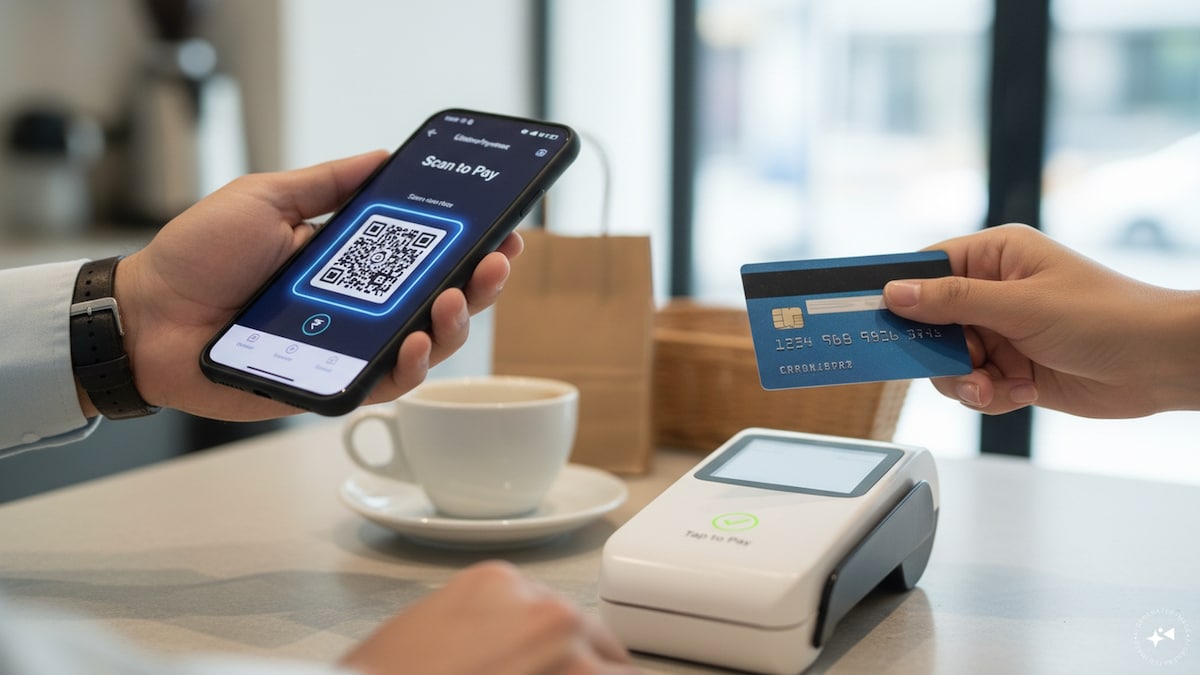
At the centre of this shift are the Unified Payments Interface (UPI) and credit cards. While both offer convenience, they work differently, and the right choice often depends on the type of spending and how consumers manage their finances.
Why are digital payments replacing cash?
According to Adhil Shetty, CEO of BankBazaar, a fintech platform, greater convenience, wider merchant acceptance and growing trust in digital payments have accelerated the shift away from cash.
“The shift from cash to UPI and credit cards is being driven by convenience, wider acceptance and growing trust in digital payments,” he said, adding that consumers are choosing the payment method best suited to a particular transaction rather than relying primarily on cash.
Shetty said UPI has emerged as the preferred option for everyday payments, while credit cards continue to be used mainly for larger or planned purchases.
Amrita Malik, Co-founder and President of Innoviti, a Bengaluru-based fintech company, said UPI now processes over 700 crore transactions every month.
She added that RuPay credit cards linked to UPI register up to eight times higher transaction frequency than traditional card usage, reflecting growing use of credit even for low-value daily purchases.
How do UPI and credit cards differ?
A credit card allows users to borrow up to a pre-approved limit and repay the amount later. If the outstanding balance is not cleared by the due date, interest is charged.
Credit cards also offer rewards, cashback, travel benefits and can help build a credit history when used responsibly.
UPI, on the other hand, is a real-time payment system that enables instant bank-to-bank transfers through a smartphone. It supports both person-to-person and merchant payments and is available round the clock across major payment apps.
Shetty said UPI’s rapid adoption has been driven by its speed, simplicity and interoperability. It processed 22.72 billion transactions worth ₹28.92 lakh crore in June 2026 alone.
He added that maintaining system reliability, strengthening cybersecurity and preventing fraud will be key as digital payments continue to grow.
Which payment option should consumers choose?
Experts say UPI and credit cards should be viewed as complementary rather than competing payment methods.
UPI is generally better suited for routine expenses such as groceries, transport and food delivery because payments are made directly from a bank account. Credit cards are often more useful for larger or planned purchases, offering rewards, purchase protection and an interest-free credit period if dues are paid in full.
Santosh Agarwal, CEO of Paisabazaar, a digital consumer credit marketplace, said consumers using RuPay credit cards linked to UPI should also understand their card’s reward structure, as many cards offer benefits only above a minimum transaction value and are subject to monthly reward caps.
Shetty cautioned that carrying forward unpaid credit card balances can result in interest charges that outweigh any rewards earned.
Malik added that RBI data places UPI’s average person-to-merchant transaction value at under ₹650, making it well suited for everyday purchases. She also noted that faster credit-reporting norms introduced in April 2026 mean missed credit card payments can now reflect in credit scores within seven to fourteen days, making timely repayment more important.
How are UPI-enabled credit cards changing payments?
The distinction between UPI and credit cards is becoming less pronounced as RuPay credit cards can now be linked to UPI, allowing users to pay through UPI QR codes while accessing their credit limit.
According to Agarwal, this has expanded card acceptance at neighbourhood stores and small merchants that typically do not support conventional card payments. Shetty said it also enables payments at any merchant accepting a UPI QR code without requiring dedicated card terminals.
Malik cited NPCI data showing that RuPay credit cards linked to UPI account for nearly 40% of credit card transaction volume, while about 16% of overall credit card spending is routed through RuPay.
With credit card penetration still below 10% of India’s adult population, she said UPI-linked credit could help expand access to formal credit.
What lies ahead?
Experts expect UPI and credit cards to become integrated rather than replacing one another.
UPI is likely to remain the preferred payment option for everyday, low-value transactions, while credit cards are expected to continue dominating larger purchases, travel and online shopping.
Features such as UPI-linked credit cards, recurring payment mandates, cross-border UPI, EMI-on-QR and embedded lending are expected to further blur the distinction between the two payment methods.
Malik said UPI transaction volumes are projected to reach around 379 billion annually by FY2026-27, accounting for nearly 90% of retail digital payments.
At the same time, credit card spending has grown to ₹23.6 trillion in FY2026, up nearly 12% year-on-year, suggesting both payment modes are likely to continue expanding alongside each other rather than competing for the same use cases.