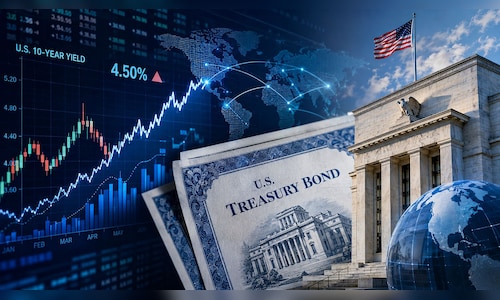
The 30-year rate increased six basis points to 5.18% on Tuesday, a level last seen on the brink of the global financial crisis in 2007, rising alongside US government yields across maturities.
The move represents a new high-water mark after a recent bond selloff pushed government yields around the globe to multiyear highs. Investors are seeking greater compensation to own longer-dated debt due to concerns over the war-driven surge in energy prices and worries over budget deficits.
“With debt rising faster than growth, worsening inflation profiles, and no political will for fiscal reform, there is little reason to reach for the long end,” Ajay Rajadhyaksha, Barclays Plc.’s global chairman of research, wrote in a note on Monday.
The 5% level for 30-year US yields had been a considered a “line in the sand” by some investors that would spark dip-buying. But the recent jump in long-term borrowing costs is challenging that assumption, potentially signaling a new era for the $31 trillion Treasury market, which heavily influences borrowing costs around the world.
The higher-for-longer narrative has seen investors reprice their outlook for monetary policy. Whereas before the war traders anticipated as many as three Federal Reserve interest-rate cuts this year, interest-rate swaps now imply growing odds that the Fed’s next move will be a rate increase.
While the US is far from alone — equivalent UK yields are approaching 6% and Germany’s long-term borrowing rate is trading at a 2011 high — Treasuries are the world’s premier safe asset. Sharp moves in US yields often reverberate across global financial markets.
Should the selloff persist, higher yields could lift US mortgage and corporate lending rates, threatening to slow down the world’s largest economy. The situation is sparking speculation of a policy response from officials, who are already shifting issuance toward shorter-dated maturities.
Also Read: India-EU trade deal done, bigger challenge is making it work: official
(Edited by : Navneet Singh)