
How Did The US Markets End On Wednesday?
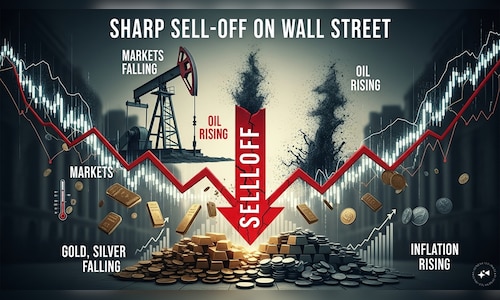
On Wednesday, the Dow Jones fell over 950 points or nearly 2% to close below the mark of 50,000. The S&P 500 and Nasdaq shed 1.6% and 2% respectively as chip and tech names barring Apple, continued to see selling pressure amidst the mega SpaceX IPO. Since it made its record high on June 2, the S&P 500 has shed more than $3.3 trillion in market cap.
Futures this morning are also trading with losses. The Dow futures are down between 150 to 200 points, the S&P 500 futures are down 30, while the Nasdaq futures are also trading with losses of close to 200 points.
Why Did The US Markets Fall On Wednesday?
A big factor behind the fall was the escalation in tensions between the US and Iran with US President Donald Trump threatening further attacks as Iran delayed too long in negotiation a deal.
In an interaction with reporters, the President said that “we hit them hard yesterday, we’re going to hit them very hard today.”
Soon after, the US Central Command launched strikes on select targets in Iran, without disclosing the location. The attacks began after market closing hours.
Another reason behind the soured sentiments has been the extended sell-off in the chip / memory / AI-linked stocks. From its intraday high of June 3, the S&P 500 is already down over 5%. For the Nasdaq, which made a high of 27,190 on June 1, the index is already down 7.5% from those levels.
All chip and AI-linked companies ranging from Nvidia to Broadcom, AMD, Micron, Qualcomm, fell between 4% to 7% on Wednesday.
Bullish analysts attribute this to be a healthy price reset among chip companies after the significant run-up they saw between April and June once the Iran ceasefire was first announced. Shares of AMD, Micron, had all gained between 100% to 200% already within the first five months of the year.
Part of the sell-off is also being attributed to profit booking by retail investors so that they can allocate those funds to the mega SpaceX IPO. The Elon Musk-led company has launched a $75 billion initial public offering, priced at $135 a share and that has already received demand for 4x the total number of shares on offer, according to reports.
“Investors had been banking on a quick peace deal in the Middle East,” said Bret Kenwell at eToro. “The trouble is, the longer it takes to find a resolution, the more likely oil prices remain elevated. And the longer energy prices stay elevated, the stickier inflation can get.”
Iran Troubles Overshadow Tame Inflation Figures
The US-Iran escalation overshadowed the US May Consumer Price Inflation figures which were released last evening. At 0.5% month-on-month and at 4.2% annualised, the inflation figures rose in-line with what economists had projected.
However, the core CPI figure stood at 0.3% month-on-month and 2.9% annualised. The month-on-month figure was below expectations, indicating that most of the inflation has been driven by the rise in energy prices due to the Iran war.
Even after the inflation report, the US 10-year bond yield remains at 4.55% as fears of the US Federal Reserve hiking rates have not eased, although it may not happen during this policy, according to estimates on the CME FedWatch tool.
What Next For the US Market?
After the CPI figures, the market participants will be monitoring the wholesale inflation figures that will be released later this evening, Indian time, and the initial jobless claims figure.
Developments around Iran and the subsequent reaction to crude oil prices will remain the key monitorable.