Born into the greatest era in men’s tennis history, Stan Wawrinka spent almost two decades competing alongside the Big Three — Roger Federer, Rafael Nadal and Novak Djokovic — as they dominated the sport.
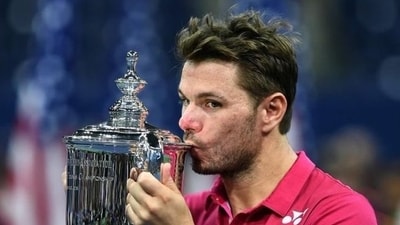
Yet Wawrinka managed to carve out a legacy of his own. In an era when the Big Three rarely left major titles on the table, the Swiss won three Grand Slam titles, the last of them coming at the 2016 US Open.
A decade later, with Wawrinka in the final year of his professional career, the US Open has surprisingly denied him a wild card for what could be his final appearance at a Grand Slam.
The USTA announced its 2026 US Open wild cards in stages. Wawrinka appeared to be a strong candidate for one of the main-draw spots, having received wild cards at the other three Grand Slams this year. He eventually made the Roland Garros main draw after Lorenzo Musetti withdrew.
Gaël Monfils, who is also in the final year of his career, and Alexei Popyrin were awarded wild cards through the USTA’s reciprocal agreements with the French and Australian federations. Popyrin subsequently entered the main draw directly, meaning his wild card went to fellow Australian Dane Sweeny.
The USTA has reciprocal arrangements that require it to allocate one wild card to a French player and another to an Australian. The remaining places went to American players Michael Zheng, Martin Damm, J.J. Wolf, Sebastian Gorzny and Jack Kennedy, before the final wild card was handed to another American, Patrick Kypson, who is ranked 116th in the world.
Wawrinka’s exclusion is particularly surprising given his record at the US Open and his performances this year. All five of his Grand Slam matches in 2026 have been played in front of packed crowds. He lost in the opening round at Roland Garros and Wimbledon, but reached the third round at the Australian Open before losing to Taylor Fritz in four sets.
The US Open has also been Wawrinka’s most successful Grand Slam by win percentage. He has won 74% of his matches in New York, a record that includes his 2016 triumph over Djokovic in the final. He also reached the semi-finals in 2013 and 2015 and made the quarter-finals in 2010, 2014 and 2019.
Currently ranked outside the top 120, Wawrinka would need a wild card to avoid the qualifying rounds. It remains to be seen whether he will enter qualifying, which begins next week. There has also been no official word from Wawrinka on the decision.
Why did this happen?
There are practical reasons behind the decision. Two of the wild cards were allocated through the USTA’s existing reciprocal agreements with Tennis Australia and the French federation. Others were reserved for American juniors, college players and Next Gen Accelerator entrants.
With only a limited number of spots available, Wawrinka was not the only established name to miss out. Grigor Dimitrov and Kei Nishikori were also left without main-draw wild cards, with Nishikori receiving a qualifying wild card instead.
Still, the outcome feels strange.
Wawrinka is a three-time Grand Slam champion, a former US Open winner and a player who has enjoyed some of his finest moments in New York. Yet, in what is his final season, he has been left without a direct route into the main draw of the tournament he conquered a decade ago.