Lee believes advanced economies will continue to attract capital from emerging markets, with private credit offering particularly attractive risk-adjusted returns. He also sees Japanese repatriation flows supporting the yen, while Japan faces rising fiscal demands from higher military spending and the need to keep pace with global AI and technology investment.
This is an edited transcript of the interview.
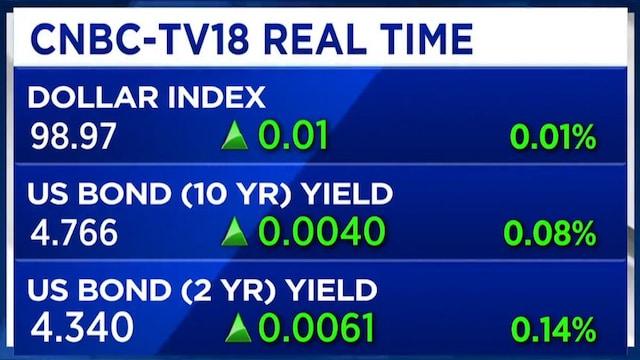
Q: For the last couple of trading sessions, we’ve seen US Treasury yields begin to decline, and this is after fears of a hawkish Fed following Kevin Warsh’s comments at Jackson Hole. Where do you see US yields headed from here? And as a result, what does this mean for the overall market situation, specifically in emerging markets?
A: The thing that’s caught my attention is the fact that the US yield curve is flattening. It’s come down a little bit on the long end, and the short end seems to be hovering at current levels and maybe looks like it’s pointing upward for fear of a Fed tightening.
So, I think that’s the direction I think the yields are going. And as I said on the show before, a lot of the movement on the long end is because of the liquidity maneuvers that Secretary Bessent has put in place.
He has made it very clear that during this time of year, liquidity is not very high, especially with the longer-dated off-the-run issues that are out there. And he has really made a message to markets: We are watching the pricing that’s going on in the 20-year especially, which is thinly traded at this time of year, and we want to make sure that no institutions or hedge funds are having fun with arbitraging the on-the-run and off-the-run calls.
And so, he himself has gone in there to try to add liquidity to those pockets.
Now, I think what stabilising the US yield curve means for emerging markets is that it’s going to be much harder to convince allocators to go to emerging markets for higher yields when the yield uncertainty in the United States is right there.
And especially since the deficits are not going to get any better, as there’s a global call on credit by the artificial intelligence (AI) trade and the capex buildup. So, what we have is a huge demand for credit right now, not just in the United States, but around the world, private sector as well as public sector.
And so, the upward pressure that’s on the long yields is clearly very present. And whatever moderation we’ve seen in the Treasuries today will be taken away very easily by this credit call. And I think that’s something that we should all be watching out for.
And emerging markets are probably going to be the suppliers of capital coming into the advanced economies, because as I’ve said so many times on this show before, if you have a choice as to place your money into the emerging markets or advanced economies, the place to put it is where money is used most effectively and most efficiently, and that’s in the advanced economies right now.
Q: So, money will flow into developed-market bonds, is that what you’re saying?
A: I think private credit is really the place that’s going to be sucking up a lot of the fixed-income investors. We have a situation where the private sector, in some ways, is crowding out the public sector.
Q: The exact instrument is fine, but you’re saying it basically is developed market (DM) bonds. That’s what you’re saying. Money will go into—
A: Private credit. I think there are a lot of other instruments other than just fixed-income bonds and asset-backed securities, and all sorts of things that private credit is offering right now. It’s offering a lot of attractive exposure to the AI trade through the fixed-income side, not necessarily through the equity side.
Q: DM fixed income is where money will go. Is that what you’re saying?
A: And equity. I think the equity markets are still pulling in, but certainly fixed income.
Q: You don’t think there is—if this is really the start of a big move from near 0% in 2020 to where we are now, 4.8% on the 10-year, and this goes higher? That’s not the base case of anyone. But when is it the base case of anyone, right? I mean, these kinds of things, unless and until it happens, actually.
A: In my base case, because I think that given the fiscal situation in the United States and the rest of the Western economies, that demand for credit is going to be really high going out over the next several years.
So, unless there’s a huge influx of savings available in the advanced economies, it’s going to be sucking in capital from the rest of the world.
So, I think the competition for capital right now is very intense, and a lot of it is taking place in the advanced economies, because when it’s risk-adjusted, we still find higher risk-adjusted yields in the Western economies and advanced economies than we do in the emerging markets.
Q: Do you think that we’re being a little too casual about the fear with regard to the yen carry trade unwind? The yields have moved up over there, and the markets seem to be ignoring that factor. How big a risk is that?
A: I think the markets are taking into account Japan the way it’s always taken into account Japan, which is to say most of the owners of Japanese securities are Japanese.
And a lot of repatriation is going on right now among Japanese investors, even including the Japanese housewife.
So, I think what we see, that global recall of foreign investments by the Japanese, is partly accounting for the strengthening yen and also the fact that, as part of that fiscal buildup, as I said before, the Japanese are not going to be facing a situation where their fiscal situation is going to be getting any better.
Watch the full conversation here

Especially given the demands on military spending that China presents right now and the demands for Japan having to catch up with the rest of the AI trade and the technologies that are innovating around the world.
The Japanese are really big on robotics, and they have to prove themselves as being a clear competitor to, say, the Chinese robots.
Catch all the latest updates from the stock market here