
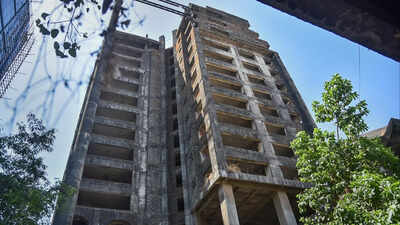
From deserted bungalows to crumbling apartment blocks, abandoned buildings are a common sight across Indian cities. But can the government simply step in and take over or demolish such properties? The answer is not straightforward.India has no single, comprehensive law governing abandoned buildings. Instead, the legal framework is spread across municipal laws, state legislation, building bye-laws, town-planning regulations, heritage laws and, in some cases, property and criminal law.An abandoned or long-vacant building does not automatically give the government the right to take possession of or demolish it. Under Article 296 of the Constitution, the government can acquire ownership of an ownerless property through the doctrine of bona vacantia.However, this applies only when there is no legally qualified person to inherit the property. Simply leaving a building abandoned or unoccupied for a long period does not make it government property.The exact procedure to deal with an abandoned building depends on the respective states. However, common powers given to municipal bodies include inspection and structural assessment, declaring or classifying a structure as dangerous, serving notice on the owner, ordering repairs, fencing or securing the property.The abandoned building can also be demolished in cases of imminent danger.According to Section 256A of the Maharashtra Municipal Corporations Act, 1949, buildings more than 30 years old are to be examined by a Structural Engineer registered with the Corporation to certify that they are fit for habitation.Here, a Structural Stability Certificate is issued, which is to be submitted to the commissioner within one year from the expiry of the thirty-year period, and every ten years thereafter, even earlier as the commissioner may determine.Similarly, Section 348 of the Delhi Municipal Corporation Act, 1957 declares that if a building is in a ruinous condition, likely to fall, or dangerous to people occupying, visiting or passing near it, the commissioner may order the owner or occupier to demolish, secure, or repair it.