
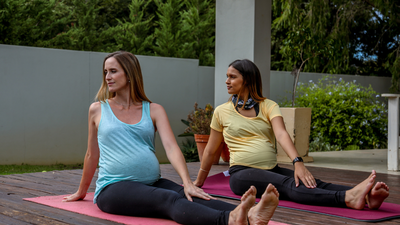
A heavily pregnant woman performing advanced yoga poses at 39 weeks has triggered a debate online. Some viewers called it inspiring. Others described it as reckless. A few argued that women have worked physically demanding jobs throughout history, while many worried about the baby’s safety.The truth, however, lies somewhere between these extreme opinions.Pregnancy is not an illness, and movement is often encouraged. But pregnancy is also a time when the body undergoes remarkable changes, and what is safe for one woman may not be safe for another. The question is not whether yoga is good or bad during pregnancy. The real question is: Which yoga practices are safe, for whom, and under what circumstances?Understanding that distinction is important before judging a viral video or trying to imitate it.
Pregnancy does not mean complete bed rest, but it does not mean unlimited physical activity either
For decades, many women were advised to rest extensively during pregnancy. Modern medical evidence paints a different picture.The American College of Obstetricians and Gynecologists (ACOG) states that for healthy pregnancies, regular physical activity is generally safe and beneficial. Exercise during pregnancy can help reduce back pain, improve fitness, lower the risk of certain pregnancy complications, and support overall well-being. ACOG recommends around 150 minutes of moderate-intensity physical activity per week for most healthy pregnant women. This is one reason why walking, swimming, prenatal yoga, and other forms of moderate exercise are often encouraged.However, medical experts also stress that pregnancy is not a competition. The goal is not to prove flexibility, strength, or endurance. The goal is to support maternal and fetal health.That distinction becomes especially important when social media enters the picture.
The viral video raises one important question: is advanced yoga different from prenatal yoga?
Yes, and the difference matters.Many people hear the word “yoga” and imagine gentle stretching and breathing exercises. But yoga covers a huge range of practices.Prenatal yoga classes are specifically designed for pregnant women. They modify poses to accommodate changes in balance, flexibility, blood flow, and the growing uterus. Certain positions are adjusted or avoided altogether.
Advanced yoga, however, may include:
- Headstands and inversions
- Deep backbends
- Intense twists
- Challenging balancing poses
- Positions that place pressure on the abdomen
For a trained yoga practitioner who has been practising these poses for years, some of these movements may still be performed under professional supervision and medical clearance.But that does not automatically make them suitable for every pregnant woman.What viewers see in a 30-second video is often the final result of years of training, not the entire story behind it.
Why some doctors may be comfortable with it while others remain cautious
One reason pregnancy advice often appears contradictory is that every pregnancy is different.
A woman who has:
- No pregnancy complications
- No bleeding
- No placenta-related concerns
- No high blood pressure
- No history of preterm labour
Strong fitness levels before pregnancy may be able to continue many activities that would be inappropriate for someone with a high-risk pregnancy.Medical organisations note that women who were physically active before pregnancy can often continue exercising, with modifications when necessary.
At the same time, doctors remain cautious because late pregnancy introduces several challenges:
- Balance becomes less stable.
- Ligaments become looser due to hormonal changes.
- The centre of gravity shifts.
- Falls can become more dangerous.
- Overexertion may place unnecessary stress on the body.
The concern is not always that a yoga pose will directly harm the baby. Sometimes the concern is much simpler: a loss of balance, a fall, or an unexpected complication.This is why medical advice is always individualised rather than based on viral trends.
What are the real risks of doing advanced yoga at 39 weeks?
Many comments under the video mention fears such as water leakage, emergency C-sections, or labour starting suddenly.While healthy exercise itself is not generally associated with miscarriage, low birth weight, or premature delivery in uncomplicated pregnancies, experts advise paying attention to warning signs and avoiding activities that increase the risk of injury.
Potential concerns with advanced yoga late in pregnancy include:
Increased fall riskAt 39 weeks, balance is significantly altered. A pose that feels easy before pregnancy may become much harder.Excessive stretchingPregnancy hormones loosen ligaments. While this helps prepare the body for childbirth, it also increases the risk of overstretching joints and soft tissues. Pressure on the abdomenCertain positions may place unnecessary compression on the abdomen and become uncomfortable or impractical as pregnancy progresses. Breath-holding or overexertionExercises that cause significant breathlessness or require prolonged breath-holding are generally discouraged because adequate oxygenation remains important for both mother and baby. The key issue is that pregnancy yoga should adapt to the body, not force the body to adapt to the exercise.
What does research actually say about yoga during pregnancy?
Research on prenatal yoga is generally positive.According to the US National Center for Complementary and Integrative Health (NCCIH), yoga during pregnancy may help reduce stress, anxiety, and depression. That said, researchers also note that yoga programs differ widely, and more studies are needed to determine which types of yoga are safest and most effective during pregnancy. The takeaway is clear: the evidence supports appropriately modified prenatal yoga, not necessarily every advanced pose seen online.
Before copying what you see online, ask these questions
A viral video rarely reveals:
- Whether the woman received medical clearance
- Whether she had a high-risk or low-risk pregnancy
- How long she had been practising yoga
- Whether a trained instructor was present
- Whether modifications were being used
Whether the video shows only a brief moment rather than a full sessionThese missing details matter.A pose that is perfectly safe for one experienced practitioner may be completely unsuitable for another pregnant woman.Disclaimer: This article is intended for educational and informational purposes only and should not be considered medical advice. Every pregnancy is different. Pregnant women should consult their obstetrician, gynaecologist, or qualified healthcare provider before starting, stopping, or modifying any exercise or yoga routine. If symptoms such as bleeding, dizziness, contractions, shortness of breath, chest pain, or fluid leakage occur, immediate medical attention should be sought.