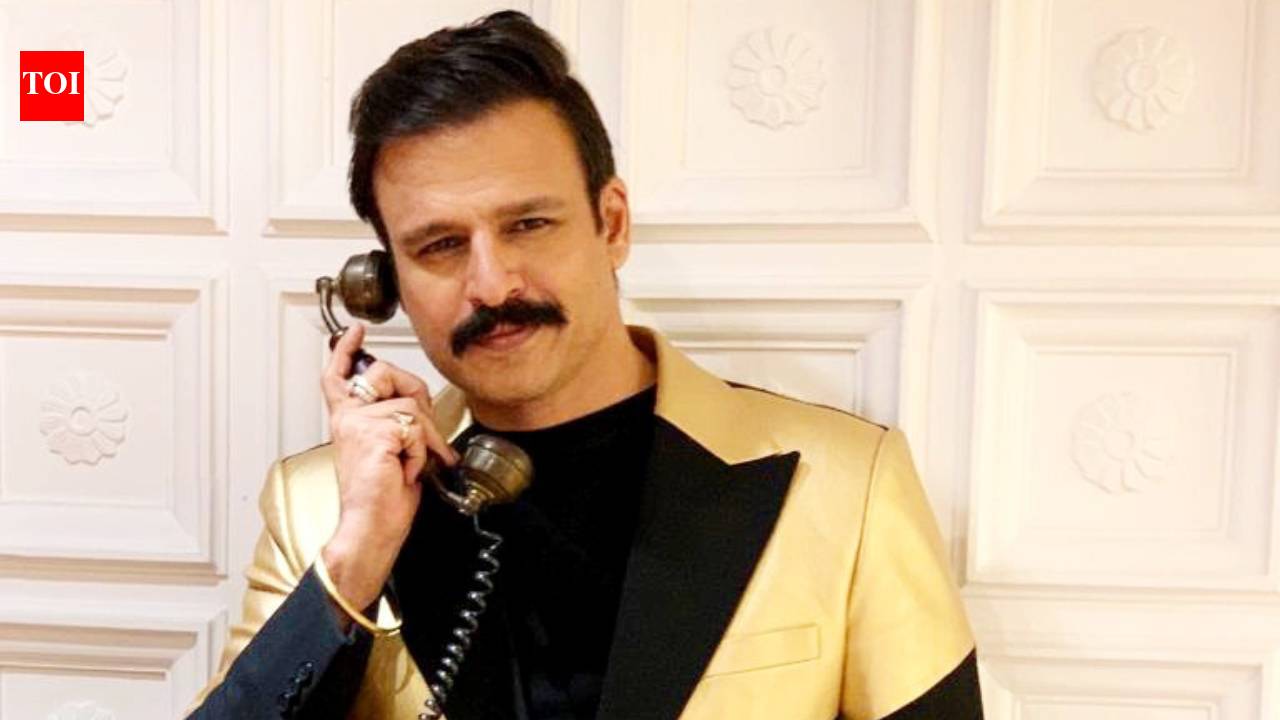
Actor-entrepreneur Vivek Oberoi, has an estimated net worth of approximately Rs 1,200 crore, has opened up about the setbacks that forced him to reinvent himself beyond acting, saying he refused to become a “victim” when opportunities dried up and instead chose to take control of his destiny.Speaking on News18, Vivek reflected on leadership, entrepreneurship, philanthropy and the life lessons that have shaped his journey, saying success and failure are both temporary, while purpose and values endure.
‘I had to move from being a victim to becoming a victor’
Recalling the difficult phase of his career, Vivek said circumstances beyond his control left him with little choice but to reinvent himself.“When challenges come into your life and circumstances beyond your control start shutting doors on you, you have two choices. You can become bitter, frustrated and depressed. Or you can reinvent yourself,” he said.The actor explained that he consciously chose to stop seeing himself as a victim.“I always believed I had to move from being a victim to becoming a victor. I asked myself, ‘How can I take control of my own destiny?’ If one path is blocked, what else can I do? I still have my mind, my hard work and the identity God has given me.”Sharing the mantra that guided him through the transition, he added, “Every day, in every way, I want to become better and better.”
‘A leader creates contributors, not employees’
Having built businesses alongside his acting career, Vivek said leadership is defined by the ability to carry people together rather than simply managing them.“A leader is someone who takes people along on the journey. That’s the biggest difference between a boss and a leader. A boss extracts work. A leader makes people feel like contributors and partners in a shared mission,” he said.Citing the example of his business partner at BNW Developments, Ankur Aggarwal, Vivek recalled how Aggarwal rebuilt his life after suffering financial losses exceeding Rs 100 crore.“He never gave up. He said, ‘Let’s build something together.’ I kept telling him that he had the qualities of a founder and a leader.”Vivek also revealed that during a recent business crisis, they decided against laying off employees despite the financial pressure.“During the recent crisis, when many companies laid off employees to protect their balance sheets, we decided we would try our best not to terminate even a single employee. Difficult times affect everyone, not just business owners. That’s what leadership means to me.”
‘I’m just the courier’
Despite his success in films and business, Vivek said philanthropy remains the most fulfilling part of his life because he views himself merely as a medium for helping others.“I don’t believe I’ve done anything extraordinary. I’ve simply been fortunate that a higher power chose me as a medium. I don’t own these good deeds. I’m just the courier. The blessings were meant to reach someone, and I happened to deliver them,” he said.
Mother changed his perspective on success
The actor admitted that early fame had once distorted his perspective before his mother transformed the way he viewed life.“Early success can be deceptive. When applause comes at a young age, its echo stays with you long after people have stopped clapping. That’s when you begin asking, ‘Why me?’ whenever life becomes difficult.”He recalled breaking down before his mother, who responded with a question that altered his outlook forever.“She said, ‘When you received fame, awards, money and recognition at such a young age, did you ever ask, ‘Why me?” That question changed everything.”His mother then took him to the paediatric cancer ward at Tata Memorial Hospital, where seeing children undergoing chemotherapy taught him gratitude and inspired his long-term association with helping children battling cancer.“I simply sat with the children, read them storybooks and tried to make them smile. That smile gave me more energy than anything else. That’s when I decided I wanted to dedicate myself to helping children with cancer.”
‘She is a living award’
Among the moments closest to his heart, Vivek spoke about meeting an eight-month-old baby named Sahara while shooting Saathiya. Diagnosed with acute lymphoblastic leukemia, her family could not afford treatment.With support from doctors and charitable organisations, Sahara recovered and is now a healthy young woman.“For me, she is a living award. Those moments mean far more than trophies, resumes or numbers in my bank account.”
‘Don’t live in success or failure’
Asked what legacy he hopes to leave behind, Vivek said he has no desire to be remembered for fame.“Honestly, I don’t have the ego of wanting people to remember me forever. Life is like an examination hall. Once you’ve written your paper, the results come later. What matters is what you do while you’re here.”Instead, he hopes to pass on values to his children, including one simple principle inspired by his own mother: “Whenever you’re unsure about something, ask yourself: ‘What would Mom say?'”Ending the conversation with advice for young people navigating failures, Vivek shared a lesson passed down by his father.“He said: ‘Don’t live in success. Don’t live in failure. Just keep working.’ Success is not permanent. Failure is not permanent either. Don’t panic during bad times. Don’t lose your head during good times. Listen to everyone—but ultimately, follow your own path.”