
Tata Steel’s proposed acquisition of APL Apollo Tubes‘ downstream businesses marks a major step in its strategy to expand its presence in higher-value steel products. However, the ₹28,000-crore transaction has raised questions around funding, leverage and the near-term earnings impact for both companies.
The deal has also triggered divergent reactions from brokerages, with analysts largely retaining a positive view on Tata Steel, while becoming more cautious on APL Apollo.
Here is a breakdown of the transaction, Tata Steel’s long-term ambitions and what brokerages are saying.
What is the Tata Steel-APL Apollo deal?
On November 23, Tata Steel acquired a 9.99% promoter stake in APL Apollo for approximately ₹5,820 crore.
Following approval from the Competition Commission of India (CCI), Tata Steel will acquire an additional 12% promoter stake at ₹2,100 per share for around ₹7,000 crore.
The steelmaker will also launch an open offer to acquire another 26% stake in APL Apollo at ₹2,301 per share. Subject to shareholder approval, APL Apollo will acquire Tata Steel’s tubes and colour-coated steel businesses for ₹28,000 crore.
The proposed sale comprises two businesses valued at ₹11,700 crore for the tubes division and ₹16,300 crore for the colour-coated steel business, according to the brokerage estimates.
Tata Steel could subsequently acquire the remaining 4.6% promoter holding in APL Apollo at ₹2,100 per share. However, the sale of this stake will be at the promoter’s discretion.
If the open offer is fully subscribed, Tata Steel’s holding in APL Apollo could increase to approximately 52.38%.
The transactions are expected to be completed simultaneously by March 31, 2028, according to Morgan Stanley.
Tata Steel’s five-year ambition: 15.5 MTPA capacity, ₹10,000 crore EBITDA
The acquisition is central to Tata Steel’s ambition to build a large global tubes and colour-coated steel business over the next five years.
The company is targeting: – Annual downstream capacity of 15.5 million tonnes. – EBITDA of ₹10,000 crore. – Higher return on capital employed (ROCE). – A debt-free balance sheet. The combined tubes and coated steel capacity is expected to increase to around 7.5 million tonnes following the proposed transaction, according to Macquarie.
APL Apollo is targeting EBITDA of ₹2,500-3,000 crore in FY28, while Tata Steel expects the larger downstream business to become earnings-per-share (EPS) accretive in approximately 3-3.5 years as higher-margin colour-coated volumes ramp up.
During its post-announcement interaction, Tata Steel management said the transaction accelerates its downstream expansion strategy. Managing Director TV Narendran expressed confidence that investors would understand the strategic rationale of the deal over time.
The management also indicated that the company’s upstream EBITDA could face pressure beyond 2030 due to rising iron ore costs, making the expansion into downstream products strategically important.
How will Tata Steel fund the ₹28,000-crore transaction?
The funding structure and the resulting impact on debt will be among the key factors investors track.
Of the ₹28,000-crore consideration for the tubes and colour-coated businesses, approximately ₹10,000 crore is expected to remain as external debt at APL Apollo. The remaining ₹18,000 crore will be converted into equity through instruments structured on terms considered fair to APL Apollo’s minority shareholders.
However, brokerage estimates on the potential equity requirement and recapitalisation differ.
Jefferies estimates that Tata Steel could need to infuse around ₹19,500 crore to bring APL Apollo’s net debt-to-EBITDA ratio down to 2-2.5 times.
JPMorgan expects Tata Steel may have to make an equity infusion of nearly ₹18,000 crore over 12 months to bring APL Apollo’s leverage down to around 2.5 times.
Meanwhile, CLSA estimates that APL Apollo’s pro-forma net debt-to-EBITDA could rise to 9.5 times, while Tata Steel’s FY26 pro-forma leverage could increase to 2.9-3.1 times.
During the earnings call, Tata Steel management indicated that it would initially rely on bridge financing and gradually reduce debt as the business scales up. The management broadly agreed with an indicative framework involving ₹10,000 crore of debt.
What are brokerages saying about Tata Steel?
Brokerages have largely maintained positive ratings on Tata Steel, although there are differences in their assessment of the acquisition’s impact on valuations, leverage and earnings.
Jefferies: Buy, target price ₹240
Jefferies believes the acquisition will strengthen Tata Steel’s downstream portfolio by adding higher-value and relatively less cyclical businesses.
The brokerage estimates that the transaction could dilute FY28-FY29 earnings by 3-4%, but considers the impact broadly neutral to fair value.
It expects Tata Steel’s downstream capacity to increase through the addition of 1.7 million tonnes per annum (MTPA) of tubes capacity and 0.8 MTPA of coated steel capacity.
Jefferies has retained its ‘Buy’ rating, citing attractive valuations. Tata Steel trades at 5.7 times its estimated FY28 enterprise value to EBITDA (EV/EBITDA), below its 10-year average of 6.4 times.
CLSA: Outperform, target price ₹225
CLSA believes the twin transactions will increase leverage at both Tata Steel and APL Apollo.
The brokerage considers the transaction valuation of around 25 times FY28 consensus EV/EBITDA expensive. It estimates that Tata Steel’s FY26 pro-forma net debt-to-EBITDA could rise to 2.9-3.1 times.
However, CLSA believes the deal could remain value-neutral for Tata Steel, provided there is no additional equity infusion beyond the assumed structure.
Macquarie: Outperform, target price ₹241
Macquarie expects the acquisition to become EPS accretive for Tata Steel over three to four years.
It estimates that APL Apollo could achieve EBITDA of ₹2,500-3,000 crore in FY28, while Tata Steel’s consolidated tubes and coated steel capacity could increase to 7.5 MTPA.
The brokerage noted that higher debt and a gradual improvement in earnings could limit near-term upside. It also identified JSW Steel as its preferred pick in the ferrous metals sector.
Goldman Sachs: Neutral, target price ₹215
Goldman Sachs believes the acquisition is consistent with Tata Steel’s strategy of expanding its downstream operations.
The brokerage expects the combined business to become EPS accretive in approximately 3-3.5 years, with net debt-to-EBITDA projected at around 2.5 times within a year of transaction completion.
However, it flagged limited clarity around APL Apollo’s recapitalisation and the potential implications for Tata Steel’s shareholding.
JPMorgan: Neutral, target price cut to ₹179 from ₹200
JPMorgan has lowered its target price on Tata Steel, citing the potential funding requirements associated with the transaction.
The brokerage estimates that Tata Steel could need to infuse nearly ₹18,000 crore into APL Apollo over the next 12 months to bring its net debt-to-EBITDA down to 2.5 times.
It expects APL Apollo to work towards its 15.5 MTPA capacity ambition over five to six years and increase EBITDA to ₹10,000 crore from the current level of around ₹1,200 crore.
JPMorgan believes the combined business could become EPS accretive in approximately 3.5 years. It also highlighted that Tata Steel will not be eligible to vote on the shareholder approval of the transaction.
Axis Capital: Reduce, target price ₹170 from ₹175
Axis Capital believes the two transactions could have a marginally negative impact on Tata Steel’s valuation.
The brokerage estimates that consolidated net debt could increase 33% to ₹1.22 lakh crore, with pro-forma FY27 net debt-to-EBITDA at 2.5 times, including APL Apollo.
It also flagged execution challenges and potential competition from JSW Steel. According to Axis Capital, the premium paid for APL Apollo could offset the benefits from monetising Tata Steel’s downstream assets.
Why are brokerages more cautious on APL Apollo?
While the deal is largely being viewed as a strategic expansion opportunity for Tata Steel, brokerages have raised concerns about the financial implications for APL Apollo following the transfer of its businesses.
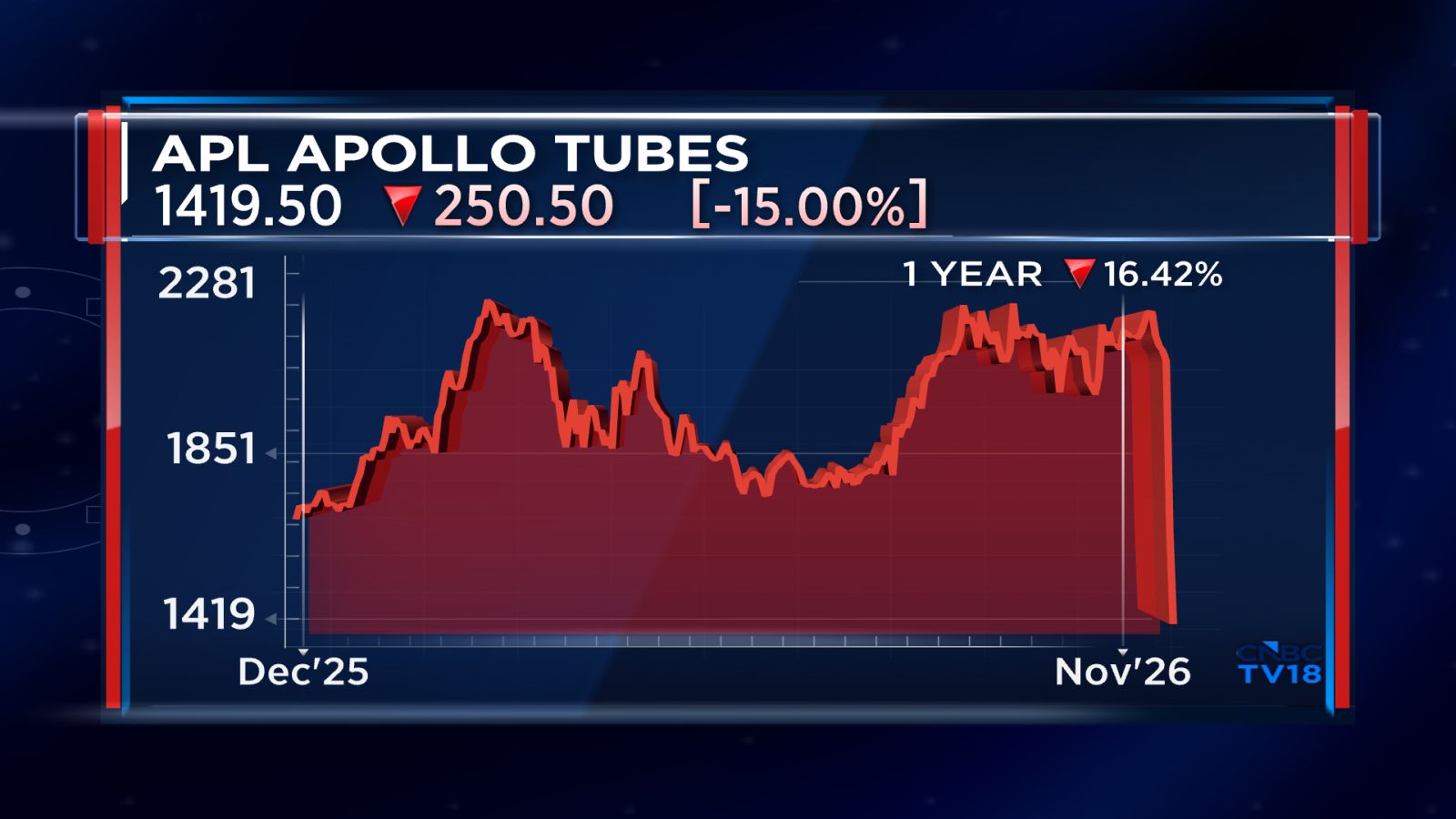
Axis Capital has downgraded APL Apollo from ‘Buy’ to ‘Sell’ and sharply reduced its target price by 59% to ₹1,420 from ₹2,400.
The brokerage considers the acquisition of Tata Steel’s downstream assets expensive at 24.8 times FY26 EV/EBITDA. Its revised estimates suggest that APL Apollo’s FY28 EPS could decline by 52%, primarily due to higher leverage and interest costs.
Nuvama has also downgraded APL Apollo from ‘Buy’ to ‘Hold’, assigning a fair value of ₹1,459 and a near-term target of ₹1,739, factoring in the open offer.
The brokerage has applied a valuation multiple of around 15 times, approximately 40% below its historical average.
Higher debt, the exit of erstwhile promoter Sanjay Gupta and near-term earnings dilution are among the key concerns highlighted by analysts.
What should investors watch?
The proposed transaction represents a major shift in Tata Steel’s downstream strategy, with the potential to create a larger presence in higher-value tubes and coated steel products.
However, the benefits will depend on how efficiently the businesses are integrated, the pace of capacity expansion and the company’s ability to manage the additional debt.
For Tata Steel, the key monitorables will include the funding structure, leverage trajectory, shareholder approvals and the timeline for earnings accretion. For APL Apollo, the focus will be on the impact of the business transfer on its earnings, balance sheet and future growth prospects.
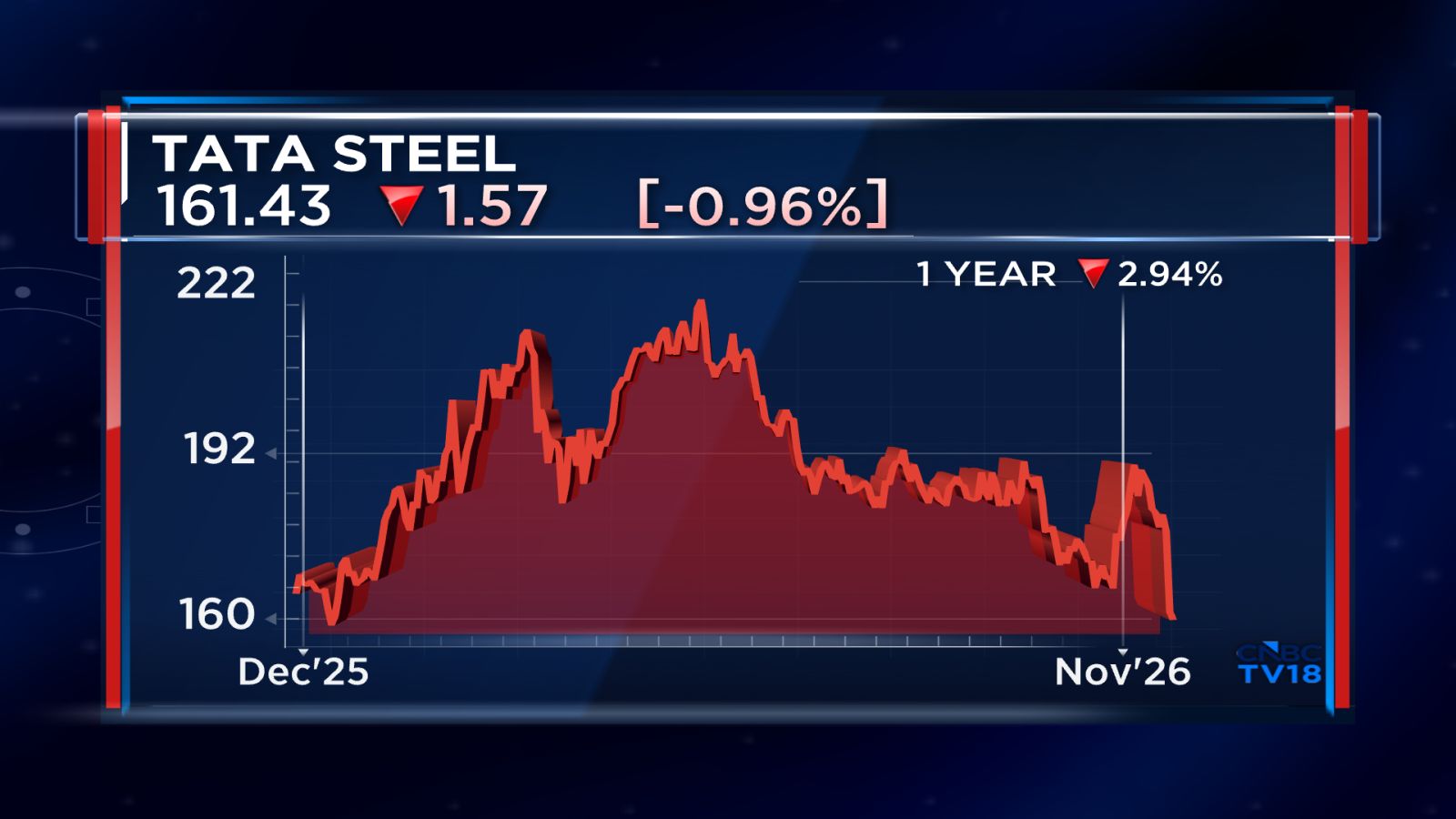
The initial market reaction on November 24 was sharply negative, with Tata Steel shares declining around 10% and APL Apollo falling nearly 22%. APL Apollo also faced multiple brokerage downgrades and substantial reductions in price targets.
NOTE TO READERS
Disclaimer: The views and investment tips expressed by investment experts on CNBCTV18.com are their own and not that of the website or its management. CNBCTV18.com advises users to check with certified experts before taking any investment decisions.
What lies ahead for Tata Steel after the mega APL Apollo deal? Here’s what analysts said