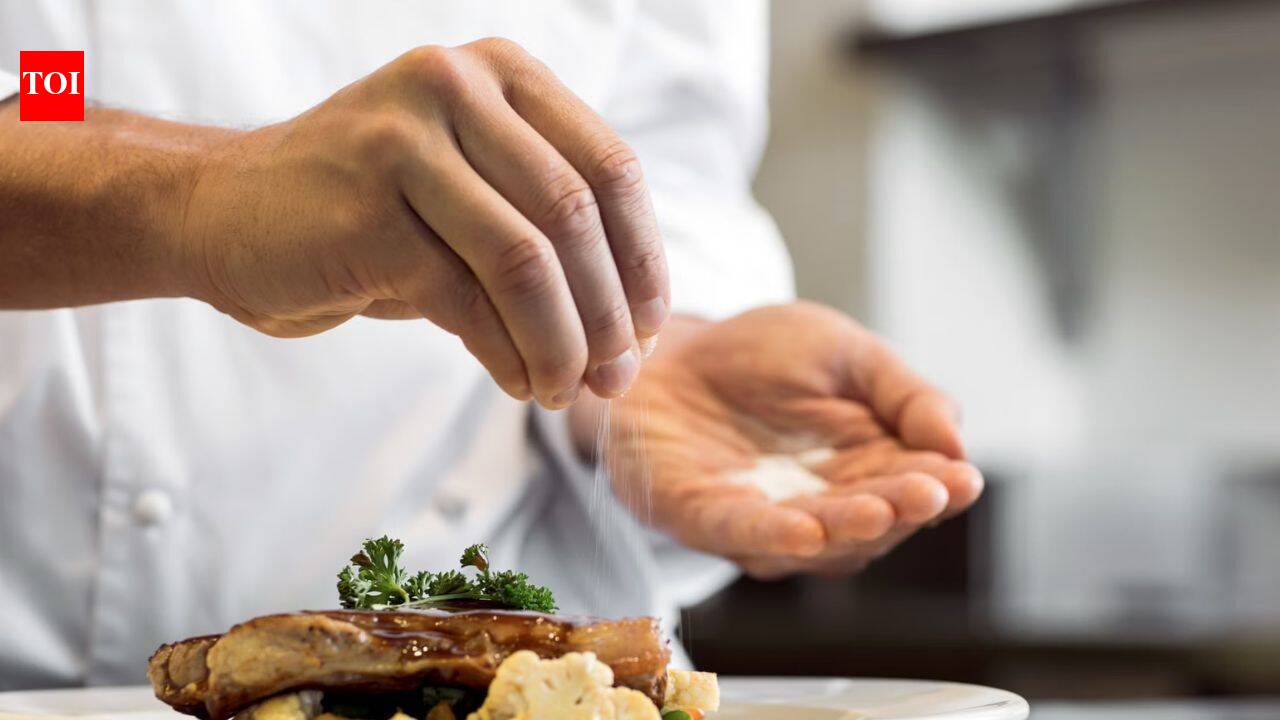
A pinch of salt can make a tomato taste more like a tomato. But dump the same amount into a pan at the wrong moment, and you may end up with a dish that tastes flat, overly salty or simply unbalanced. That is why professional chefs rarely treat salt as a one-time ingredient. They use it as the dish develops, tasting and adjusting along the way.Chef Thomas Keller has explained that he likes to salt at different stages. In a report by The Splendid Table, he says for proteins, he recommends salting before cooking and then using a little finishing salt at the end. He also points out that salt should be dispersed evenly rather than concentrated in one spot.
Salt is doing more than making food salty
The easiest way to understand the technique is to stop thinking of salt as something that simply adds a salty taste.Salt can make other flavours more noticeable. Chef Samin Nosrat whose cooking philosophy centres on salt, fat, acid and heat, has repeatedly described salt as a flavour enhancer. In a 2018 interview, she explained that salting a tomato can draw out some of its juices, making its aroma and flavour more noticeable while balancing its acidity and sweetness.That is why a properly seasoned dish does not necessarily taste “salty”. Instead, the vegetables can taste more like themselves, meat can taste fuller and sauces can seem more rounded.
So why not add all the salt at the beginning?
Because the food changes as it cooks.A pan of onions, for example, loses water as it cooks. A sauce reduces. Meat releases and absorbs moisture. Vegetables soften. The concentration of flavours can therefore be very different at the end from what it was at the beginning.If all the salt goes in at the start, you are seasoning a dish whose final volume and flavour you do not yet know.Adding smaller amounts at different points gives the cook more control.Keller has specifically recommended salting the foundation of a sauté, such as onions, carrots and celery, before building the remaining flavours. He also gives spinach as an example: seasoning it while the leaves are still fresh helps distribute the salt more evenly before they wilt and compress.
There is another reason chefs taste repeatedly
Samin Nosrat has a simple message for home cooks: taste as you go.In the same interview about Salt, Fat, Acid, Heat, she explained that different types of salt can vary considerably in how much saltiness they deliver. Her advice is to become familiar with your own salt and taste the food as it cooks.This is particularly useful at home, where recipes often say “add salt to taste” without explaining what that actually means.
What happens when salt is added at the end?
Finishing salt has a different job.A final sprinkle can sit closer to the surface of the food, giving the tongue a sharper burst of saltiness. That is why chefs may use salt early to season the food itself and then add a small amount at the end for contrast.The two steps are not necessarily interchangeable.
The simple rule to try at home
You do not need to turn every recipe into a complicated restaurant technique. The useful habit is simply to season, taste, cook, taste again and adjust.For a curry, soup, dal or sauce, you might add a modest amount while the ingredients are cooking and then check the seasoning after the liquid has reduced. For vegetables, seasoning at the right stage can help the flavour penetrate more evenly. For meat, salting ahead of cooking and making a final adjustment can serve different purposes.And if you are unsure, do not blindly follow the amount of salt in a recipe. Salt type, ingredient quantity, cooking time and reduction can all change the final result.The real chef’s trick, then, is not using more salt. It is learning when to use it, how much to use and when to stop.That tiny pause before reaching for the salt shaker may be one of the simplest ways to make home-cooked food taste more balanced.