
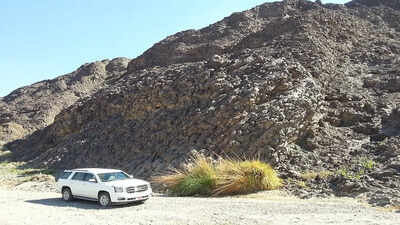
In Oman, geologists get to do something almost impossible anywhere else. They can walk straight across rock formations usually found kilometres below the ocean bed. According to researchers, the area, named the Oman ophiolite, provides the most extensive and well-exposed land example of oceanic crust and mantle ever known. The scientists don’t need expensive and risky drilling projects since the rocks are exposed to air for anyone willing to take a hike in the mountains.Researchers have praised the site as being revolutionary for studies concerning the formation of the oceanic crust, hydrothermal processes, and even natural carbon sequestration. In its publication, the USGS states that Oman is an exceptionally well-preserved example of an ophiolite exposure due to the completeness of the rock sequence.What is the Oman ophiolite?An ophiolite is basically oceanic crust, and mantle uplifted onto land through plate tectonic activity. Oceanic crust is usually covered by deep seas. But, in Oman, a large part of it was lifted above sea level through obduction. This unusual occurrence led to an unusual exposure of a stratified sequence of ancient seafloor rocks.The revealed sequence consists of mantle peridotites, layered gabbros, sheeted dikes, and pillow basalts. Collectively, they make up almost the entire section of the oceanic lithosphere. Researchers refer to the Oman ophiolite as one of the best natural examples of exposed oceanic crust.Why do researchers focus on these rocks?Oceanic crust makes up the majority of the planet’s surface area, yet scientists don’t have much opportunity to interact directly with it. Sampling the deep ocean floor requires costly and technologically complex operations. The Oman ophiolite solves this problem by exposing hidden geological layers to scientific observation.For instance, researchers can investigate the development of magma chambers under ancient oceans, the fracturing of the crust in the process of spreading, and the interaction of seawater with hot rocks. Geologists working on Oman drilling projects have stated that this is one of the best natural laboratories for studying the oceanic lithosphere. The Oman ophiolite has also allowed scientists to learn more about seawater circulation in oceanic crusts and its impact on mineral chemistry.
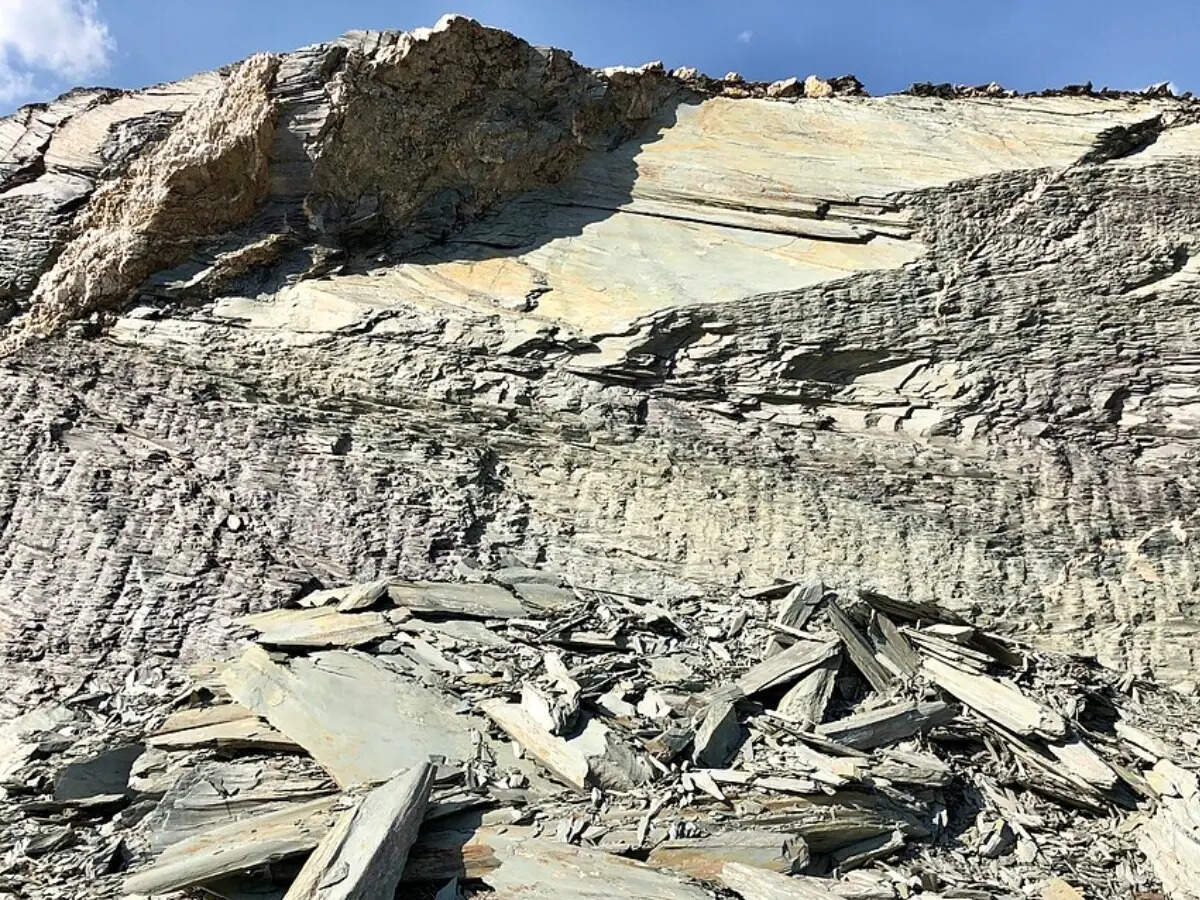
Scientists found exposed mantle rock where it should not exist. Image credit – Wikimedia
Chemical evidence in mantle rocks is invaluablePerhaps the most fascinating aspect of the Oman ophiolite is its mantle rock, known as peridotite. Peridotites form deep within Earth’s interior, far below the surface of its crust, making it impossible to observe them directly. Luckily for geologists, peridotites are exposed extensively in Oman.Studying such rocks gives insights into processes in which Earth’s mantle melts, forming new oceanic crust at spreading centres. Scientists examine the chemical composition of minerals, deformation features, and isotopic signals to determine the conditions in the old mantle. Interestingly, peridotites have become an asset for research on a completely different topic. The minerals in these rocks can undergo chemical reactions with carbon dioxide and produce carbonate minerals. In a 2004 paper published in Nature, that discovery became useful for studies focused on carbon capture and storage technologies.How did ocean crust end up in mountains?The geological process responsible for the unique features of Oman’s terrain is referred to as obduction. Oceanic crust usually moves under continental crust through the process of subduction. Yet, when it comes to Oman, a part of the oceanic lithosphere got pushed over the edge of the Arabian continental margin, rather than sinking down to become an integral part of the Earth’s interior.Thus, this unusual phenomenon resulted in preserving quite a substantial piece of the oceanic lithosphere at the surface level. In such a way, this geological object appears to be almost inverted: the rocks which once existed in the depths of oceans appear in desert mountains.Geologically speaking, the Oman area gives researchers an opportunity to explore the layers of the Earth’s crust, which are impossible to study using traditional methods.Relevance of the Oman Ophiolite TodayScientists keep researching Oman because it enables us to get knowledge about several major processes happening inside our planet. Specifically, in this area, one may study seafloor spreading, magma plumbing, hydrothermal system evolution, collision zone dynamics, and chemical reactions within the natural carbon cycle, etc.It should be noted that certain aspects of the ophiolite’s geological history are debatable, for example, whether it represents typical oceanic crust around the globe or not. Nevertheless, scientists consider this structure to be highly valuable for studying Earth’s geological features.