
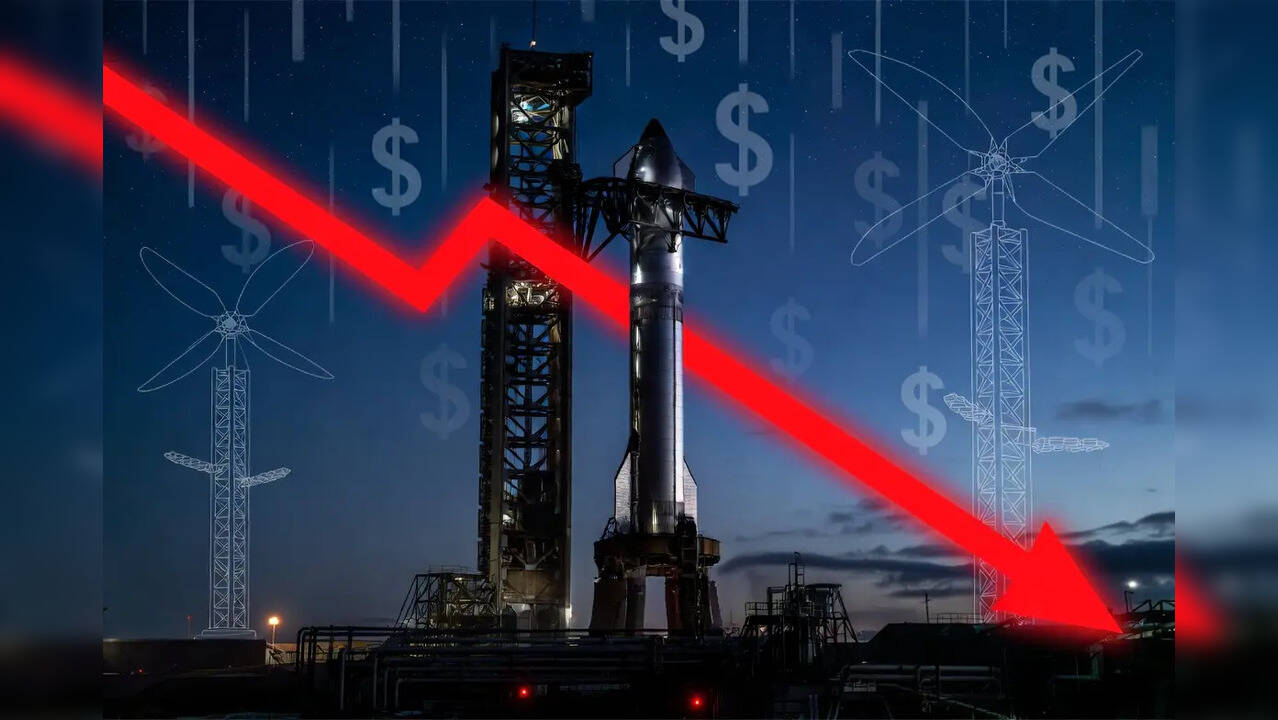
SpaceX stock drops for the third straight day, losing over USD 600 billion in value. If you’ve been following the markets or have any exposure to tech and space companies, you might have noticed SpaceX shares taking a hit recently. The Elon Musk-led company’s stock fell for the third consecutive trading day on Monday, June 22, 2026, wiping out more than USD 600 billion in market value over that short period.
According to a Bloomberg report, the shares dropped about 16 per cent on Monday to close at USD 154.60, the lowest level since its first day of trading. This brings the three-day decline to roughly 23 per cent. Even after the drop, SpaceX’s market capitalization remains just above USD 2 trillion, making it one of the world’s most valuable companies.
What triggered sell-off?
The decline comes after SpaceX announced plans for its first-ever investment-grade bond sale. The company is looking to raise at least USD 20 billion through bonds as part of a larger borrowing push to fund its ambitious artificial intelligence initiatives. This includes its earlier acquisition of xAI and new deals, such as a multibillion-dollar agreement to provide computing resources to an AI startup.
For many investors, this signal of heavy future borrowing may have raised questions about the company’s near-term priorities and capital needs, contributing to the pullback after a strong post-IPO run.
Context for everyday investors
SpaceX went public in mid-June 2026 with a record USD 75 billion IPO priced at USD 135 per share. The stock saw significant early enthusiasm, especially from retail investors, who bought heavily in the initial days. At one point, it climbed well above USD 200, briefly pushing the company’s valuation near or above USD 3 trillion and ranking it among the top global companies.
Even after the recent losses, the shares are still trading about 15 per cent above the IPO price. However, the sharp volatility is typical for newly listed stocks with a relatively low public float (only about 4.2 per cent of shares available initially).
Analysts have noted strong long-term potential in SpaceX’s core businesses, rockets, Starlink satellite internet, and AI-related ventures, but some believe much of that growth is already reflected in the current valuation. One early rating from KeyBanc described the risk/reward as balanced.
What this means for the investors
If you hold SpaceX shares (SPCX), this is a reminder of how quickly sentiment can shift in high-growth, high-valuation stocks. Retail investors remain active buyers, though at a slower pace than during the initial surge. Broader market conditions, interest rates, and AI sector sentiment are also influencing movements.
SpaceX continues to lead in space launch capabilities and has major plans ahead, but like any public company, its stock price will react to news, fundraising moves, and profit-taking. There’s no indication of any fundamental operational issues this appears to be a market-driven correction after rapid gains.
For most regular investors, SpaceX remains a long-term story tied to innovation in space and technology. If you’re considering exposure, it’s worth watching official updates and earnings closely, as more shares could become available in the coming months. Market swings like this are common with popular new listings, so staying informed helps in making sense of the ups and downs.