
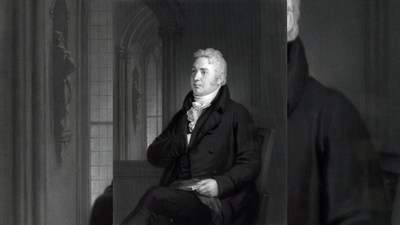
William Wordsworth was an English poet and one of the leading figures of the Romantic movement and nature stayed at the centre of his writing all his life. In 1798 he and Samuel Taylor Coleridge published Lyrical Ballads, a book that changed English poetry. He became Poet Laureate in 1843 and died in 1850. Many of his words of wisdom continue to resonate even today and remain relevant.He once talked about a profound idea that most of us learn early that being useful means being busy. We measure a day by what we finished and a person’s worth by how much they seem to be doing. Sitting still, staring out of a window, or just listening can feel like wasted time, even a little guilty.But try to slow yourself down for a minute right now, and we begin to notice even the smallest details around us.This is what living life by slowing down truly means, when each of our senses comes alive, and we enjoy the true beauty.Let us read further to know what Wordsworth exactly meant
Quote of the day
The eye–it cannot choose but see;We cannot bid the ear be still;Our bodies feel, where’er they be,Against or with our will.
William Wordsworth
What does the quote mean?
These words come from Wordsworth’s poem “Expostulation and Reply,” which is a short conversation with a friend named Matthew, who scolds the poet for sitting alone on an old grey stone for half a day, dreaming his time away. He asks why Wordsworth isn’t reading books and learning something. The four lines are William’s reply.He says the eye cannot help seeing, the ear cannot be told to stop hearing, and the body feels things whether we want it to or not. His point is that we are always taking in the world, even when we think we are doing nothing.Learning does not only happen through books and effort. It also happens quietly, through simply being present. So, resting our attention on the world is a form of learning, not laziness.These words belong to William Wordsworth, according to Goodreads, and originally come from his poem “Expostulation and Reply,” a short conversation with a friend named Matthew published in The Lyrical Ballads.
How are these words relevant today?
Our lives today are surrounded by screens, notifications, and productivity advice. We are expected to judiciously use every hour, yet many people feel more tired and distracted than ever.Wordsworth’s reply feels like a reminder that your senses are always working and that what you let in matters. If you scroll through noise all day, that noise is what influences you. If you give yourself time outdoors, in silence, or just looking around, that shapes you too. So, simply being human rather than indulging is a beauty in itself.