
After a natural disaster, the loss of life and property is often prioritised with focus on reconstruction of damaged assets. Environmental destruction is the last thing on anyone’s minds which may even lead to severe damage to the natural landscape of a region after a natural disaster. But this was not the case at the Biltmore Estate where people collected nearly 28,000 white oak acorns to help restore forests damaged by Hurricane Helene.Among all natural calamities, hurricanes are one of the most destructive because of the dual action of wind and water. So, Hurricane Helene swept through western North Carolina in September 2024. It brought torrential rain, destructive winds, flooding and landslides. Pisgah and Nantahala National Forests were among the most affected areas. Tens of thousands of acres of trees were knocked down in these regions, leaving parts of these ecosystems struggling to recover.According to the US Forest Service, mature oak trees suffered particularly heavy losses. Replacing them is important not simply because they are beautiful additions to the landscape, but because they help sustain the intricate web of life that makes a forest a forest.
How acorns will lead the forest restoration
In late October 2026, workers and volunteers gathered 27,744 white oak acorns at the Biltmore Estate in Asheville, North Carolina. The collection was organised with the involvement of the US Forest Service, Asheville-based environmental organisation EcoForesters and the Appalachian Trail Conservancy. As reported by WLOS, acorns were also collected from local churches, libraries and businesses, bringing the total across participating locations to an impressive 193,664 seeds.The collected acorns will not be directly planted in the forests. Rather, the seeds will spend one growing season at state nurseries in Tennessee and Georgia, where they will be nurtured into young trees before being transported to areas requiring restoration. The seeds are thoughtfully collected locally as trees grown from seeds gathered in the same region are better adapted to its environmental conditions. This gives the young saplings a stronger chance of establishing themselves once they are planted in the forests.
Oak matters, but why?
An oak tree is not just a towering trunk, its branches provide shelter and its leaves contribute to the forest ecosystem. The valuable acorns serve as food for the varied wildlife of the forest like squirrels, deer, wild turkeys and several other forest-dwelling animals. Losing mature oaks can therefore have consequences that extend well beyond the trees themselves.The challenge is also posed by fast-growing tree species that sometimes occupy the spaces of these more valuable tree species after a calamity. In the absence of deliberate restoration efforts, young oaks might not have a chance of surviving. This is why the acorn collection is particularly significant. Reintroducing native white oaks can help preserve forest diversity, rebuild wildlife food sources and encourage the return of a healthier woodland ecosystem.The US Forest Service describes seed collection as an important first step towards guiding restoration across damaged ecosystems in a healthier and more resilient direction.
The story behind the estate
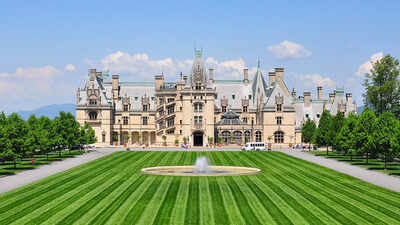
The Biltmore Estate became a natural choice for this mission because of its history associated with regional conservation. Built by George Vanderbilt, it was envisioned as more than an impressive private residence. The surrounding land was also meant to be managed thoughtfully and sustainably.In 1914, George Vanderbilt’s widow, Edith Vanderbilt, sold more than 86,000 acres of the estate’s forested mountain land to the federal government. This land helped establish what became the Pisgah National Forest.More than a century later, the same landscape is connected to another chapter in forest conservation. By opening its grounds for the acorn collection, Biltmore has helped contribute to the restoration of woodlands that are deeply intertwined with its own history.The estate has also been working through its own recovery following Helene, which damaged trees, landscapes and other parts of its property. Its environmental stewardship initiatives reflect a longstanding commitment to managing forests and protecting natural resources.