Football has grown into the world’s most popular sport, followed by millions across every continent. In the modern era, most conversations revolve around club football, transfer battles, league rivalries, and continental competitions. But as soon as the FIFA World Cup approaches, attention shifts instantly. No matter how big club football becomes, the World Cup continues to stand above everything else as the game’s ultimate prize.
The roots of international football go back well before the World Cup was created. Football first appeared at the 1900 Olympic Games in Paris as an exhibition sport, offering an early glimpse of the game’s international potential. It was later officially included as a medal event at the 1908 Olympics in London, giving national teams a recognised global platform to compete against one another.
However, it was the 1924 Olympic Games in Paris that truly transformed football’s international stature. Teams from different regions took part in the competition, and the tournament drew widespread global attention, underlining how quickly the sport had expanded beyond traditional footballing nations. The success of that event strengthened the idea that football deserved its own independent global tournament.
May 25 was later chosen to celebrate the anniversary of the 1924 Olympic football tournament, recognising the sport’s role in promoting unity, diplomacy, peace, and cooperation across nations. The United Nations officially marked the date as World Football Day. It also coincides with the decision taken at the 17th FIFA Congress in Amsterdam in 1928 to establish the FIFA World Cup.
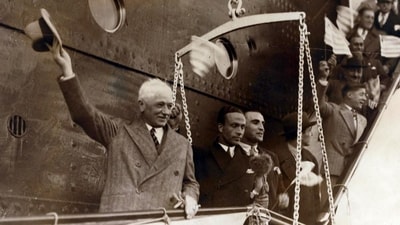
The man who truly recognised football’s global potential was Jules Rimet, who became FIFA president in 1921. Under his leadership, the 1924 Olympic Football Tournament in Paris turned into a landmark moment for the sport, with 24 teams participating from different parts of the world. The final attracted around 60,000 spectators as a brilliant Uruguay side defeated Switzerland 3-0 to lift the title.
The momentum continued four years later at the 1928 Olympics, where Uruguay once again emerged champions, this time overcoming Argentina in the final. Those triumphs marked the beginning of South America’s early dominance in international football and further strengthened the growing belief that the sport was ready for its own standalone global tournament.
He took the bold call to vision about an independent FIFA tournament, as many would have just been satisfied with its success in the Olympics, but he wanted something bigger.
Many would have stuck with the Olympic Football Tournament model that had proved so successful, but for the forward-thinking Rimet, it only intensified his desire to see an independent FIFA tournament.
It was on 28 May 1928, at the 17th FIFA Congress in Amsterdam, that Rimet tabled the extraordinary proposal for FIFA to stage its own world championship. The organisation agreed. After Uruguay offered to pay for all travel expenses, the Olympic champions were chosen as hosts for the inaugural 1930 tournament.
Uruguay hosted the first-ever World Cup
Organising the first FIFA World Cup in Uruguay was far from easy. Construction delays at the Estadio Centenario created major concerns, with the stadium only being completed five days after the tournament had begun. Travel was another significant challenge, especially for European teams. At the time, many footballers were not full-time professionals and risked losing their jobs if they travelled to South America for several weeks. As a result, several leading European nations chose not to participate. Eventually, only Belgium, Yugoslavia, Romania, and France made the trip, with Romania’s involvement reportedly encouraged directly by King Carol II. Despite the obstacles, the tournament successfully marked the beginning of a new era in football.