

(Photo Credit : Reuters)
 1 / 9
1 / 9Global financial leaders who have gathered in Washington for the IMF and World Bank summit, have one theme going around in conversations which is common – the markets are underestimating the fallout from the Iran war.
 2 / 9
2 / 9US markets hit record high levels on Thursday, even as oil prices remain at elevated levels in the futures market. Real world Brent prices still trade at a significant premium to the futures and even if there is a peace deal in the offing, the damage caused to energy infrastructure would be the next talking point.
 3 / 9
3 / 9The first warning came from Qatar’s finance minister Ali bin Ahmed Al Kuwari, who said that what the world is currently seeing is “just the tip of the iceberg.” He warns of huge economic impact as a result of the war, which will be felt in the next one to two months. He also said that it might take about five years to restore facilities and exports with Qatar also accounting for 30% of the world’s helium exports, a product significantly used in chipmaking.
 4 / 9
4 / 9“Every day that passes and every day that we have more disruption in energy, we are drifting closer towards the adverse scenario,” Pierre-Olivier Gourinchas, Chief Economist of the IMF said. What is that scenario? Global growth slows to 2.5% from 3.3% projected earlier. In an severe scenario, that figure drops to 2% and headline inflation jumps to 6% by 2027. All of this will result in the cost of energy-intensive goods going up such as fertilisers, chemicals, food, and transport, he warned.
 5 / 9
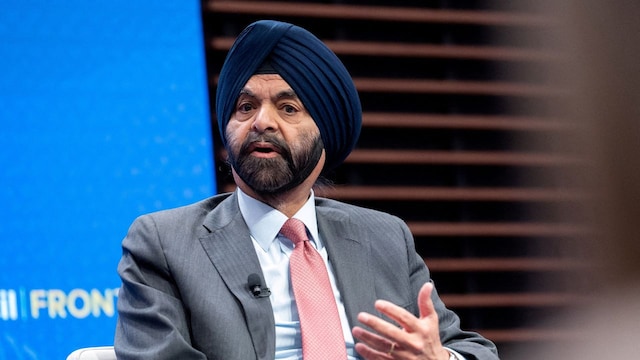
5 / 9A similar warning comes from World Bank President Ajay Banga, who says that this does not appear to be a one month pain. “Think of it as longer than that, because it will take time for the supply system to settle down, even assuming that there’s no more fighting and therefore no more structural damage to energy installations,” he said.
 6 / 9
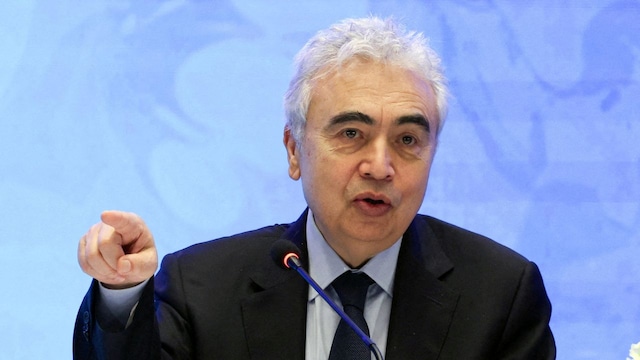
6 / 9Fatih Birol, the Executive Director of the International Energy Agency said earlier this week that oil prices are currently not factoring in the extent of the supply crisis that the world is likely to face. “March was a very difficult month for the world in terms of energy, in terms of the economy, and April may well be even worse than March,” he said, adding that the prices may converge in a month or two.
 7 / 9
7 / 9IMF Managing Director Kristalina Georgieva said that the relative health of the US economy as it now a net oil exporter, could be one of the driving factor behind the investor optimism. “But I can tell you, that is not the story of the rest of the world. In the rest of the world, already there is a lot of pain,” she said. When asked should markets be more wary, she responded by saying, “I would argue, yes, because what we see in supply chain disruptions is already quite significant.”
 8 / 9
8 / 9The hit to developing economies could not have come at a worst time, according to Nigeria Finance and Economy Minister Olawale Edun, who has appealed to the IMF and the World Bank to mobilize more resources, stating that the US and other rich countries have abruptly scaled back foreign aid and that the poor countries are paying more to service their debt.

(Photo Credit : U.S. Treasury Secretary Scott Bessent speaks during a press conference to unveil the official Trump Accounts website, at the Treasury Department in Washington, D.C., U.S., December 17, 2025. REUTERS)
9 / 9The only voice of optimism amidst all of these warnings comes from US Treasury Secretary Scott Bessent, who still maintains that prices will start to come down as soon as the war is over in West Asia. “This war will end. I don’t know whether it’s three days, three weeks, three months, but it will end. Markets will live in the future,” he said.