On artificial intelligence, Yardeni says rapid advances in hardware and software are creating uncertainty over whether the massive spending by hyperscalers will generate adequate returns. However, he believes the pace of technological innovation will ultimately separate winners from losers, even as today’s expensive AI investments risk becoming obsolete within a year.
This is an edited transcript of the interview.Q: Do you think what Palantir’s CEO said is what people are saying in closed rooms but didn’t have the courage to say publicly? The concern is that artificial intelligence (AI) tokens are creating no value because capex spending continues to rise. What’s happening in software names and even the hyperscalers?
A: I think clearly there is a lot of confusion about how AI is going to affect a lot of businesses. There is also a lot of confusion about whether all this money being spent is going to achieve an adequate rate of return.
I think this is going to be an ongoing issue. Some people will come up with reasons to be outraged about what is going on, but I think the markets are going to solve these issues over time.
We are already seeing token prices come down. That is partly because of competition among OpenAI and Anthropic. It’s also because companies are having some very interesting conversations about how much all of this is costing them.
The fact that Agentic AI can run on its own and tell itself what to do means these models keep running 24×7, constantly ringing up the bill. I think that is the problem companies are dealing with now.
Even Microsoft walked away from Anthropic and seems to be thinking about using a Chinese model, which is much cheaper.
Q: Have you heard of a company called Etched? It was started by two young founders in the US and claims to have developed an AI chip that’s 10 times more efficient. They have also raised funding from some of the biggest names.
A: That is right. This is creative destruction on speed. It’s extraordinary. Creative destruction is what happens in a capitalist system, particularly in the technology sector. The technology sector literally eats its young.
As soon as companies produce one version of new software or hardware, they are already working on another version that will make the previous one obsolete.
We see that with Nvidia. Nvidia will sell you a very expensive chip today that requires a lot of energy, while already working on solving the problem of those chips consuming too much power.
IBM has also come up with a chip that looks very interesting because it’s much more powerful while requiring less energy.
Q: We spoke to someone from BlackRock yesterday about this. Besides new hardware and more efficient chips, AI itself is evolving. Not every query needs to go to a hyperscale cloud data centre anymore. Some workloads can stay on personal computers. Are these risks that investors should worry about?
A: I wouldn’t describe it as risk. I would describe it as the nature of the beast. AI is potentially a monstrous programme that can do a lot of good and a lot of bad as well. We are simply seeing a rate of technological innovation that can make your head spin.
These hyperscalers are spending enormous amounts of money on today’s chips, but within a year or two they may regret those investments because waiting six to 12 months could have delivered better chips that are cheaper and consume less energy.
There are going to be a lot of winners and losers. It’s just very difficult to know who they will be because the game keeps changing.
Personally, I use AI throughout the day as a research assistant. I find it very helpful. It’s like Google Search on speed.
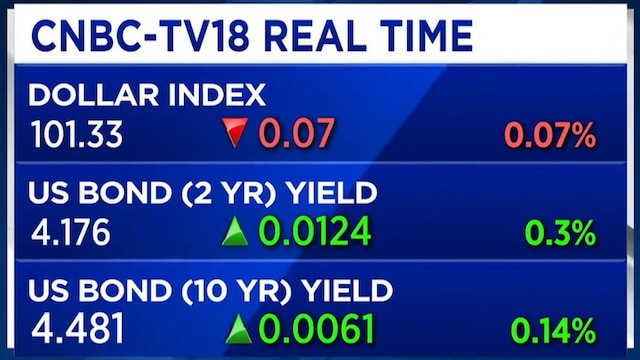
Q: Let’s move to the US Federal Reserve. Kevin Warsh said inflation is still a little too high and that inflation above 2% may not be tolerated. Bond yields also moved after those comments. What do you make of them? Is this just commentary or does it point to future action?
A: It’s all very interesting because Kevin Warsh has said he wants to reduce forward guidance. He doesn’t want markets to be polluted by what the Fed says. Instead, he wants the Fed to learn from markets. In effect, he’s saying he’s going to follow the bond market, so the bond vigilantes seem to be in control in terms of how Warsh is running monetary policy.
You are absolutely right. Both at his press conference and later in Portugal, he made it very clear that the Fed’s number one concern is price stability. He defined that very clearly as getting inflation back down to 2%.
So, despite all the talk about reducing forward guidance, every time somebody asks him a question he says they’ll have a task force study it. But the reality is they’ve already provided a lot of forward guidance. The Federal Open Market Committee (FOMC) statement was very hawkish, and Warsh has also been very hawkish. Either inflation miraculously comes back to 2%, or the Fed will, in fact, have to raise interest rates to make that happen.
Q: Just a couple of months ago, many expected Kevin Warsh to be very dovish. Instead, the Fed now appears much more hawkish. He also spoke about AI potentially affecting inflation. Commodity prices like crude have fallen, but AI-related costs are rising. Do you still maintain your $10,000-an-ounce gold target?
A: The Kevin Warsh Fed has surprised people with how quickly it has turned hawkish. I think that’s because the economy is actually doing quite well. The unemployment rate is still around 4.3%. It’s just that inflation remains too high. The Fed should be embarrassed, and Warsh himself says he is embarrassed that inflation hasn’t been brought back to 2% for more than five years.
With regard to gold, I have been half right. When gold moved above $2,000 an ounce a couple of years ago, I said I didn’t know much about gold, but I did know that if central banks were buying gold because they were worried about reserves being frozen by the United States during geopolitical crises, that would be bullish for gold. That helped take gold up to $5,500, and now we are back to around $4,000. I think $4,000 is a very important support level.
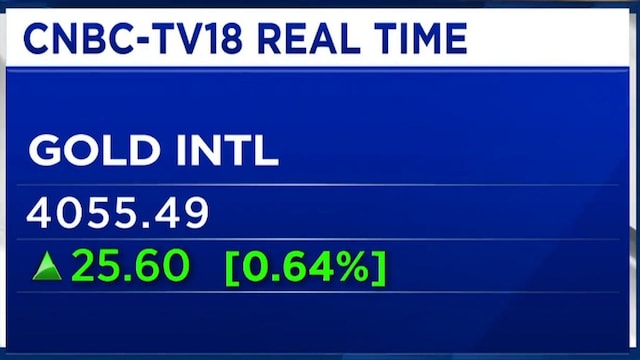
Yes, I am still sticking with my $10,000 target by the end of the decade. A lot of that will happen because I also expect the stock market to move higher. I have the stock market reaching 10,000 by the end of the decade.
Watch the full conversation here

When people make a lot of money in equities, they become a little nervous and rebalance into bonds and gold. I think gold will continue to benefit from that. I did lower my year-end gold target from $5,500 to $5,000, and I acknowledge that gold has been a sloppy trade ever since the war. Many people expected the conflict to push gold much higher. Instead, some central banks, such as Turkey’s, faced pressure on their currencies and sold gold to support them. So, it’s a tricky market.
Catch all the latest updates from the stock market here