Hidden in plain sight on Indian rupee notes are tiny engraved words and numbers known as micro-lettering, a security feature designed by the Reserve Bank of India (RBI) to make counterfeiting far more difficult.
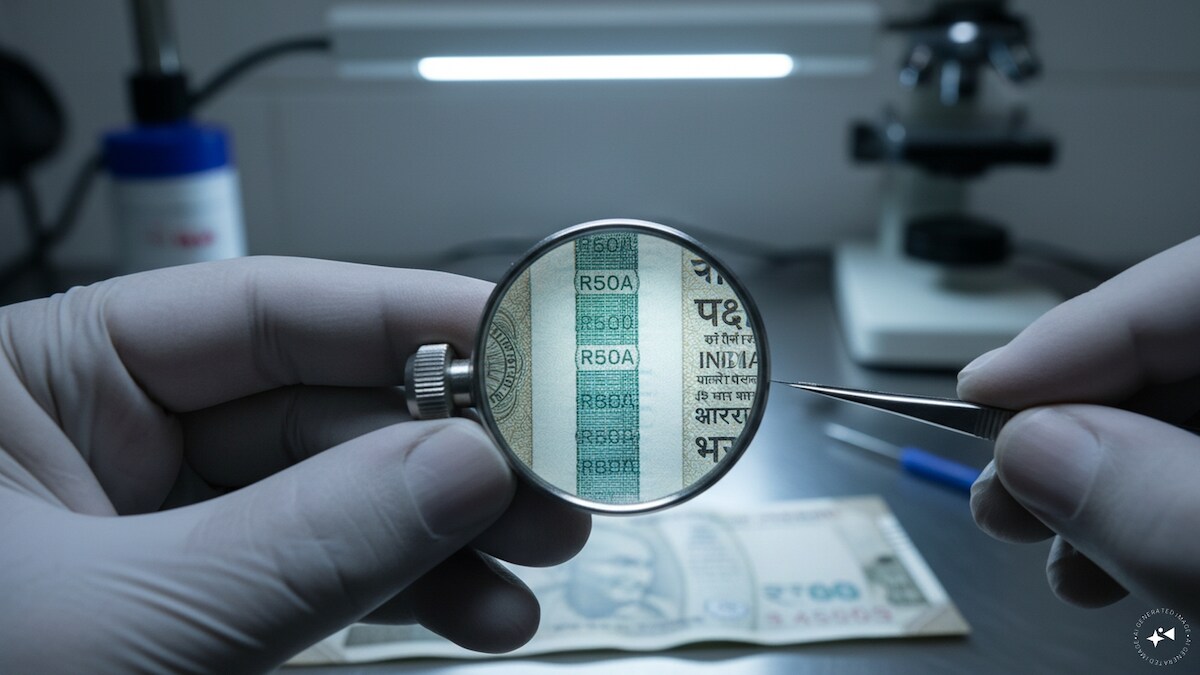
These miniature inscriptions are so small that they cannot usually be read with the naked eye and become visible only under a magnifying glass or microscope.
The feature forms part of the RBI’s multi-layered effort to curb Fake Indian Currency Notes (FICN) circulating in the market
Also Read: No more hidden tricks: RBI acts against misleading bank sales practicesWhat is micro-lettering?
Micro-lettering refers to extremely small printed text embedded into different parts of a currency note. On Indian rupee notes, these engravings typically include “RBI”, the denomination value, “India”, “Bharat” in Devanagari script, and combined text strings such as “RBI500INDIA”.
Because of their tiny size and printing precision, these markings are difficult for counterfeiters to reproduce accurately, making them an important layer in the RBI’s anti-counterfeiting framework.
Where are these hidden letters located?
On the current Mahatma Gandhi series notes, the microletters are placed around the portrait of Mahatma Gandhi in a standardised pattern across denominations.
Near Gandhi’s right spectacle frame, tiny Devanagari-script microletters spelling “Bharat” can be seen under magnification. Along the left side of the portrait, the denomination value and “RBI” are engraved in micro-text form. For instance, a ₹100 note carries “100 RBI”, while a ₹500 note carries “500 RBI”.
Additional microletters reading “India” and “Bharat” in Devanagari script are also engraved on the shawl fold towards the right side of Gandhi’s portrait. On the left side of the banknote, a combined text string such as “RBI100INDIA” or “RBI500INDIA” is embedded into the design.
The same pattern is followed across ₹10, ₹20, ₹50, ₹100, ₹200 and ₹500 denominations, with only the denomination number changing from note to note.
Why this tiny feature matters
Micro-lettering is one of several security features used to protect Indian currency from forgery. The feature allows banks, businesses and cash handlers to verify whether a note is genuine, since fake notes often fail to replicate the lettering clearly or accurately.
Apart from micro-lettering, the RBI also incorporates other security elements such as watermarks, security threads, latent images, intaglio printing and optically variable ink to safeguard currency notes.
Together, these layers make counterfeiting significantly harder and help protect the integrity of cash transactions in the country.
A feature most people never notice
Despite being present on nearly every commonly used Indian currency note, micro-lettering remains one of the least noticed security features among the public.
Most users never examine the note closely enough to spot it. But the next time you hold a rupee note, a magnifying glass may reveal a hidden layer of security embedded in text smaller than a grain of rice.
Also Read: India pushing rupee internationalisation through local currency pacts: RBI Governor