On US Treasuries, Lee agreed with Stanley Druckenmiller that yields will ultimately depend on the US fiscal trajectory, while saying the Treasury market measures are aimed at providing liquidity and limiting volatility. He expects short-term rates to fall if the Fed eases, but long-term rates to rise, making long-duration Treasuries unattractive.
This is an edited transcript of the interview.
Q: Your view of Operation Economic Outcast, what are the implications?
A: It’s a one-step in a whole maze of steps that are being taken by the Treasury Secretary, both vis-a-vis Iran as well as the Treasury market, and we have also heard him comment on the discussions with Canada. So, there’s a lot on the plate right now.
I would say the effectiveness of these sanctions is going to depend clearly on the most important patrons for Iran right now, which are China and Russia. I think one of the things that we have to keep in mind is that Iran would not be able to exist or do anything without the implicit support from these two countries.
I think as much as President Trump wants to preserve good relations prior to President Xi’s visit to the United States, and he still has some hopes of influencing the Russia-Ukraine conflict, they’re holding off on mentioning anything about sanctions with these two governments. But it’s going to be key to the effectiveness of this programme whether or not the Russians and the Chinese will cooperate.
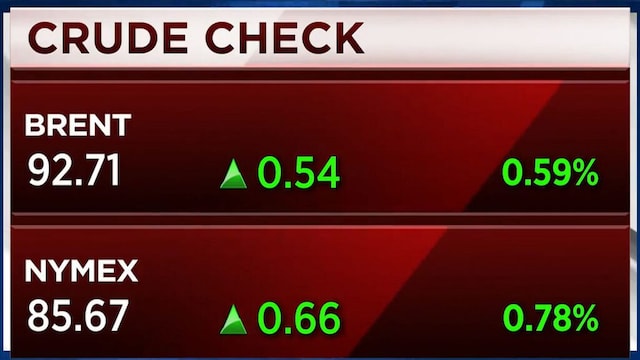
Q: So, without China and Russia being being sanctioned, at a government point of view, you don’t think this is going to be very effective anyway. The Iranian economy is in sort of collapse. The rial has plunged to historic low levels. Inflation is running high, so it’s already been choked. It’s been sanctioned for a very long time. What is going to be the incremental impact of this? We’ve not seen a reaction in crude prices. So, from an equity market point of view, what will be the impact, knowing what we know today?
A: The global equity markets are taking these statements essentially as statements. Right now, there’s not much reaction at all, as you saw all day today.
The key is going to be whether or not the Iranian population is going to be able to put up with the economic pain that it’s been bearing for decades now. The regime still has a very tight grip over the population, and any possibility of revolt or internal dissent seems still to be controlled by the Islamic Revolutionary Guard Corps (IRGC).
So, until somehow, we find some sign of domestic unrest appearing, these sanctions are just going to keep the pressure on until that happens, and that may be a while. As I said, I think the only other way to accelerate the process is to have the governments of China and Russia start to cooperate with us, and it doesn’t seem like that’s going to happen soon.
Q: The other one, of course, is what’s happening in US Treasuries, right? So, the Druckenmiller article in The Wall Street Journal warning against yield suppression getting a fair bit of press. Obviously, because he’s a practitioner, well-regarded. What’s your view? Will this just blow over? I mean, two weeks down the line, will we be talking about this?
A: I agree with Druckenmiller that, ultimately, the level of the US Treasuries is going to depend upon our fiscal solvency or insolvency and the path toward insolvency, how fast it’s going to take place.
The manoeuvres that Scott Bessent has put in place are typical of what a hedge fund manager does. If you remember the days of Long-Term Capital Management (LTCM), the on-the-run, off-the-run arbitrage was something where they made quite a lot of money.
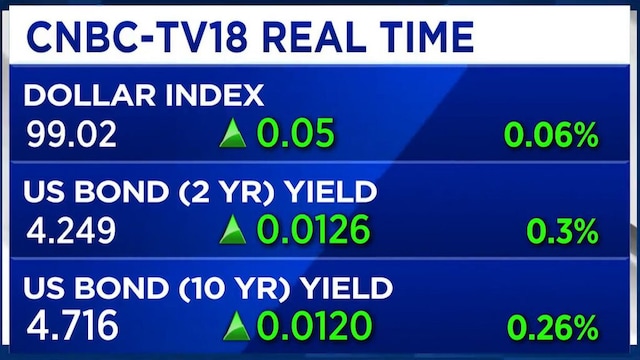
For Bessent, it’s not the purpose to make money, but rather to provide some liquidity and lower the volatility in that 20-year off-the-run, heavily discounted and relatively illiquid market.
But in terms of actually keeping the rates low, that’s going to have to depend upon the future tax trajectory and where the deficit is going, and that’s not going anywhere but up.
So, Druckenmiller is absolutely right to say that these are holding measures, a nice signal on the part of the Treasury Secretary to say, “I’m watching you guys. I’m making sure that whatever volatility is in this off-the-run market at the 20-year level is going to be moderate,” and, if anything, “I’m going to be supplying enough liquidity to insure against any kind of excess volatility.”
The key is the level, and right now the level is being pushed up by all the factors you mentioned earlier, and I think very, very much so the AI capital call that’s been made on the debt markets to finance a lot of the infrastructure.
Q: What about the Jackson Hole symposium? That’s what’s scheduled for later this week. What do you expect to hear? Positioning? Or do you expect him to give some indications? I think you’ve been in the camp that believes that there’s no hike coming.
A: I firmly believe that it would be a serious mistake on the part of the Fed to hike in the face of the kind of inflation we’re facing right now because it’s supply-side inflation, and everyone learns in Econ 101 that supply-side inflation is something you look past because it is a temporary bulge in prices.
Unless it changes inflation expectations, you should just leave it alone. And right now, there’s no evidence that medium-term inflation expectations, as measured by the breakeven, say for the five years, have changed at all. They’re stuck pretty much at the five-and-a-quarter level.
But I think what Chair Kevin Warsh is going to do is depend upon his committees to come in with some kind of recommendations as to how he might move forward with reforming the policy framework for the Federal Reserve.
What I expect to see at the Jackson Hole meeting is a hell of a lot of jockeying on the part of the dissenters.
As I said earlier, I am a firm believer that the presidents of Cleveland and Dallas are trying to establish their inflation-fighting credentials and their strategic thinking credentials because both of them come into the Fed as policymakers from positions of being traders. They were market tacticians, and they would be right with you in terms of talking about where the resistance levels are and where the support levels are for various interest rates.
But they have to demonstrate to the Federal Open Market Committee (FOMC) and to the world that they are strategic policymakers and that they are capable of thinking big picture.
And this dissent that they’ve been so vocal about, I think, is just a lot of bluster to establish their inflation-fighting credentials.
Q: If you’re a contrarian, what will you do? Go long bonds?
A: When you have the equity market doing so well, why would you allocate to bonds?
Watch the full conversation here

Q: I’m saying, if you’re trading, right? No one thinks they’ve got this under control, right?
A: That’s right. And if you are a fixed income house, you’re stuck with that portfolio.
But right now, I would be cashing in a lot of my fixed income stuff and going more toward where the true action is, especially with a horizon of, say, three to five years.
And so, for the short-term rates, they’re likely going to go down, I think, if the Fed does ease, and the long-term rates are going to be going up, so you’re going to be losing your shirt hanging on to long-term treasuries.
Catch all the latest updates from the stock market here