
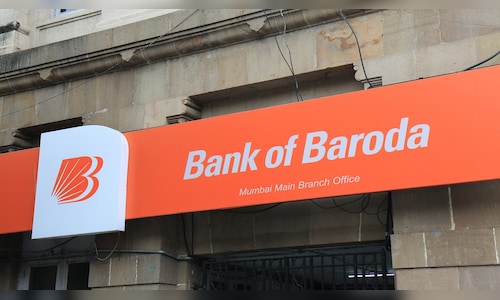
Bank of Baroda
As per the revision, the overnight MCLR has been increased from 7.80% to 7.85%, while the one-month MCLR has moved up from 7.90% to 7.95%.
The three-month MCLR has been revised from 8.15% to 8.20%, and the six-month rate from 8.45% to 8.50%. The one-year MCLR has been increased from 8.70% to 8.75%.
| Tenor | Existing MCLR (%) | Revised MCLR (%) |
|---|---|---|
| Overnight | 7.80 | 7.85 |
| One Month | 7.90 | 7.95 |
| Three Month | 8.15 | 8.20 |
| Six Month | 8.45 | 8.50 |
| One Year | 8.70 | 8.75 |
Canara Bank
The state lender has revised its Marginal Cost of Funds-Based Lending Rate (MCLR) with effect from June 12, 2026.
Also Read: Bank of India
The revision covers multiple tenors, with changes in short-term rates while longer-term rates remain unchanged. The overnight MCLR has been increased from 7.90% to 7.95%, the one-month rate from 7.95% to 8.00%, and the three-month rate from 8.20% to 8.25%.
| Sr. No. | MCLR Tenor | Existing Rate (%) | New Rate (%) |
|---|---|---|---|
| 1 | Overnight MCLR | 7.90 | 7.95 |
| 2 | One Month MCLR | 7.95 | 8.00 |
| 3 | Three Month MCLR | 8.20 | 8.25 |
| 4 | Six-Month MCLR | 8.55 | 8.60 |
| 5 | One Year MCLR | 8.75 | 8.75 |
| 6 | Two-Year MCLR | 9.00 | 9.00 |
| 7 | Three-Year MCLR | 9.05 | 9.05 |
The six-month MCLR has been revised from 8.55% to 8.60%. The one-year MCLR remains unchanged at 8.75%, while the two-year and three-year MCLRs also remain steady at 9.00% and 9.05%, respectively. The bank stated that the revised rates will be effective from June 12, 2026.
The increase means that borrowers with MCLR-linked home, vehicle and personal loans could see their equated monthly instalments (EMIs) rise or loan tenures extend when their next interest-rate reset date arrives. Loans linked to external benchmarks such as the RBI’s repo rate will not be directly affected by the revision.
Also Read: India Inc’s capex growth slows in FY26; telecom, power and auto remain cautious: Bank of Baroda
Yesterday, HDFC Bank increased its Marginal Cost of Funds-based Lending Rate (MCLR) by up to 10 basis points (bps) across select tenures, a move that is expected to raise borrowing costs for customers with loans linked to the benchmark.
What is MCLR, and why does it matter?
MCLR is the minimum lending rate below which banks generally cannot lend, except in certain cases permitted by the Reserve Bank of India. It serves as the benchmark for pricing several floating-rate loans, particularly older home and retail loans. Any increase in MCLR typically translates into higher borrowing costs for customers once their loan reset cycle is due.
Why are banks raising MCLR?
While the RBI recently kept the repo rate unchanged, banks can still revise MCLR based on their own funding costs, deposit rates and liquidity conditions.
Also Read: Bank of Baroda Q2 net profit declines 8% to ₹4,809 crore despite 3% growth in NII
Shares of Bank of Baroda Ltd ended at ₹269.55, down by ₹4.25, or 1.55%, and shares of Canara Bank Ltd ended at ₹133.50, down by ₹4.00, or 2.91%, on the BSE.
(Edited by : Jomy Jos Pullokaran)
First Published: Jun 10, 2026 6:50 PM IST