From 2012 to 2022, nearly 30,000 commercial vessel arrivals brought 430 sq km of submerged hull surface to Alaska; biofouling habitat grew 50%, increasing invasive-species risk

From 2012 to 2022, nearly 30,000 commercial vessel arrivals brought 430 sq km of submerged hull surface to Alaska; biofouling habitat grew 50%, increasing invasive-species risk

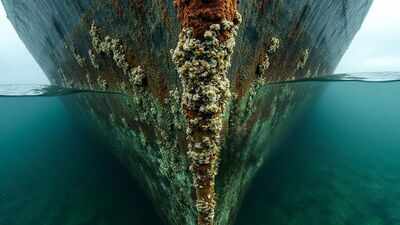
Biofouling happens when marine organisms attach to or occupy submerged parts of a vessel The submerged surfaces of nearly 30,000 commercial vessels arriving in Alaska over 11 years created more opportunities for marine organisms to hitchhike to new locations, according to a research.The study, published in Frontiers in Marine Science, examined 29,799 commercial vessel arrivals…
Read More
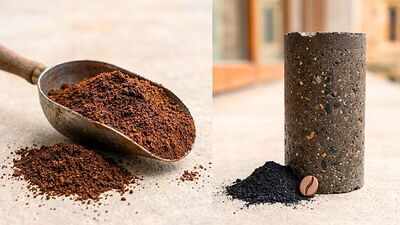
Australian researchers heated used coffee grounds to 350°C and turned them into material that made concrete 29% stronger, replacing part of the sand |

Australian researchers heated used coffee grounds to 350°C and turned them into material that made concrete 29% stronger, replacing part of the sand |

After a cup of coffee is brewed, the grounds left behind are often discarded as waste. But researchers have found a way to turn them into a useful material for concrete. A 2023 study examined whether spent coffee grounds (SCG) could replace part of the sand used in concrete after being converted into biochar through…

Read More
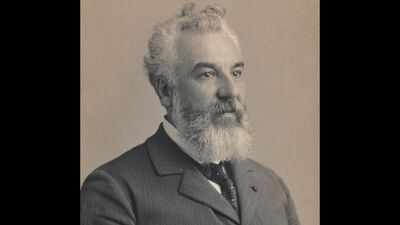
Quote of the day by Alexander Graham Bell: "Concentrate all your thoughts on the task at hand. The sun's rays do not burn until…" - lesson about turning potential into results |

Quote of the day by Alexander Graham Bell: “Concentrate all your thoughts on the task at hand. The sun’s rays do not burn until…” – lesson about turning potential into results |

Quote of the day by Alexander Graham Bell (Image: Wikipedia) In an age of constant notifications, endless open tabs and competing priorities, Alexander Graham Bell’s words feel genuinely surprising in how modern they still sound. “Concentrate all your thoughts on the task at hand,” he said. “The sun’s rays do not burn until brought to…

Read More
Volunteers removed nearly 100,000 sea urchins in Norway; the underwater deserts are now turning into forests with fish nurseries returning |

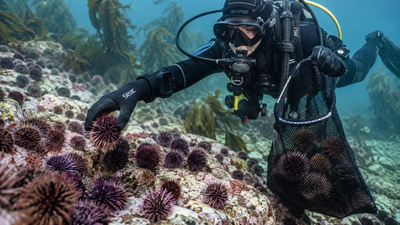
Volunteers removed nearly 100,000 sea urchins in Norway; the underwater deserts are now turning into forests with fish nurseries returning |

Nearly 100,000 sea urchins have been removed from three coastal sites in northern Norway by almost 500 volunteers working to bring back underwater kelp forests. Between April 2024 and May 2026, Rissa Citizen Science organised 23 restoration events at Sørsjetéen, Telegrafbukta and Øksfjord, with divers spending more than 20,000 minutes underwater clearing urchin barrens. The…

Read More
Singapore covered a reservoir with 122,000 floating solar panels; it now powers 5 water-treatment plants and cuts 32,000 tonnes of CO₂ every year |

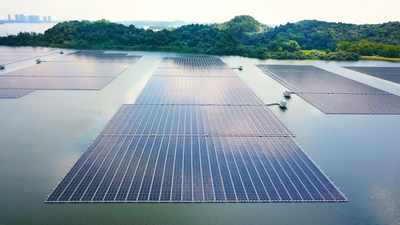
Singapore covered a reservoir with 122,000 floating solar panels; it now powers 5 water-treatment plants and cuts 32,000 tonnes of CO₂ every year |

Singapore has turned part of a reservoir into a giant renewable-energy installation, covering about one-third of Tengeh Reservoir with more than 122,000 floating solar panels spread across 10 floating islands. The 45-hectare Sembcorp Tengeh Floating Solar Farm has a capacity of 60 MWp and generates electricity used to support five local water-treatment plants. The project…

Read More
In 2026, researchers turned water-treatment waste into a filter for microplastics; real-water tests removed 86.9% to 97.1% of the particles

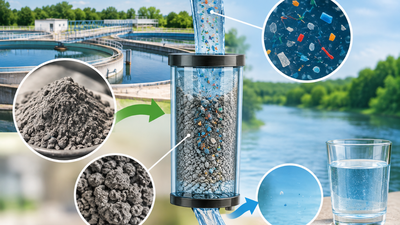
In 2026, researchers turned water-treatment waste into a filter for microplastics; real-water tests removed 86.9% to 97.1% of the particles

Representative Image (AI-generated) Microplastics are now found across aquatic environments, creating a difficult challenge for water-treatment systems that must remove tiny plastic particles without generating more waste. A new approach investigated in 2026 takes an unusual route: instead of treating water-treatment waste as something that simply needs to be discarded, researchers turned it into a…

Read More
A 240-million-year-old fossil disappeared for 20 years, then its rediscovery revealed a new reptile related to dinosaurs and crocodiles |

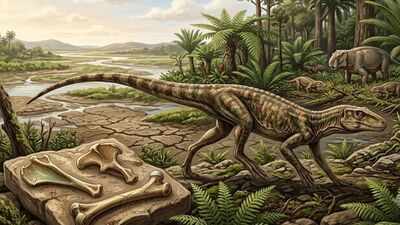
A 240-million-year-old fossil disappeared for 20 years, then its rediscovery revealed a new reptile related to dinosaurs and crocodiles |

A fossil found in southern Brazil is giving researchers a closer look at the reptiles that lived near the beginning of the archosaur lineage, the group that would eventually include dinosaurs and crocodile-line animals. The animal has been named ‘Silescelida acristata’ and is identified as an early-diverging eucrocopodan archosauriform from the Middle Triassic. A recent…

Read More
Australia brought digging mammals back to an 8,000-hectare sanctuary; 8 years later, scientists found they had reshaped underground insect communities |

Australia brought digging mammals back to an 8,000-hectare sanctuary; 8 years later, scientists found they had reshaped underground insect communities |

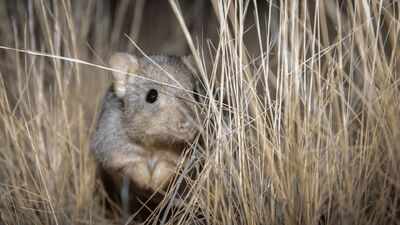
Image Credit: Brad Leue/AWC Australia’s effort to bring digging mammals back to an 8,000-hectare wildlife sanctuary has produced changes below the surface. Researchers studying Scotia Sanctuary in south-eastern Australia found that 8 years after reintroduced mammals were given access to areas, the communities of insects emerging from the soil had changed. The mammals, including greater…

Read More
Nepal’s farmers built terraces into steep Himalayan slopes; now growing macaque populations are making it harder to keep their harvests |

Nepal’s farmers built terraces into steep Himalayan slopes; now growing macaque populations are making it harder to keep their harvests |

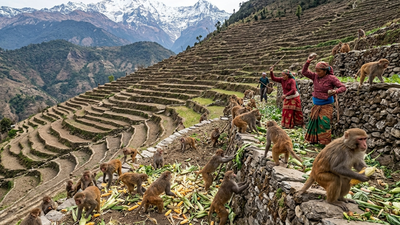
Nepal’s mid-hills are places where farming has long meant working with the landscape rather than against it. Terraces cut into steep slopes turn difficult ground into fields for maize, millet, rice and other crops, with generations of farmers maintaining the walls and soil that make cultivation possible. But the balance between people, farmland and wildlife…

Read More
Scientists found an unexpected second product while making cleaner hydrogen; the leftover material was high-quality graphite |

Scientists found an unexpected second product while making cleaner hydrogen; the leftover material was high-quality graphite |

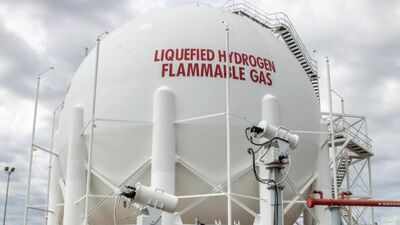
Liquid hydrogen Tank at NASA Kennedy Space Center. Image Credit: US Department of Energy Scientists working on a cleaner way to produce hydrogen have discovered an unexpected second product which is high-quality graphite. The finding emerged from research into methane pyrolysis, a process that splits methane into hydrogen and solid carbon instead of producing CO2…

Read More