
Can you crack these?
Sample questions that tested how students think
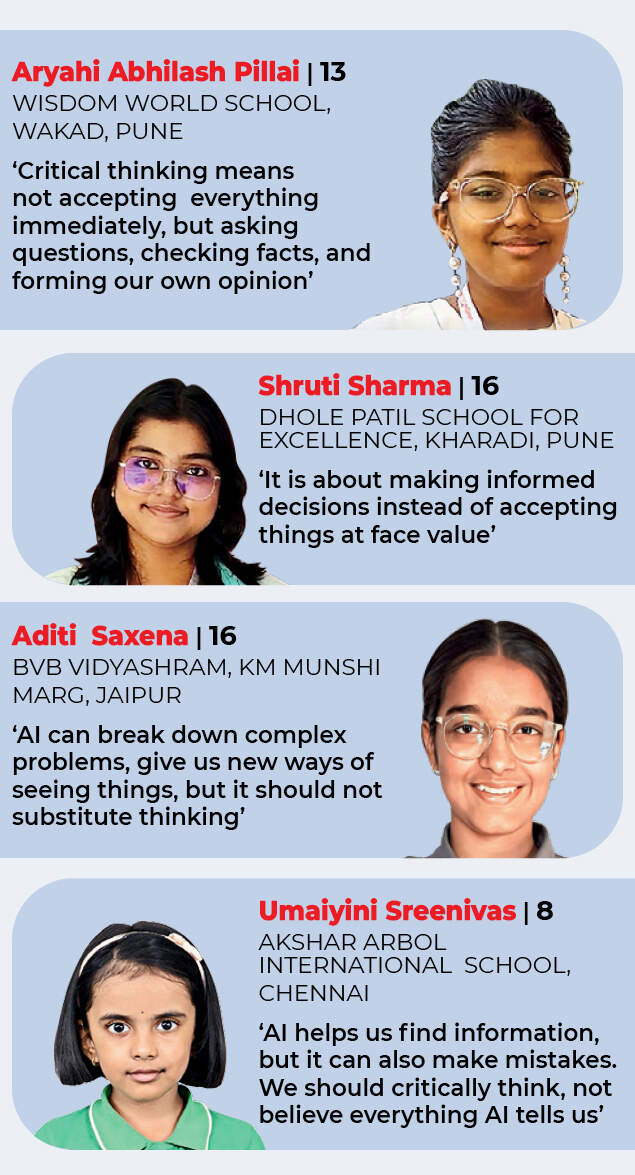
A massive meteorite crashes into the Moon, causing a huge explosion. How many seconds later will an astronaut 1,000km away hear the blast?Never, as sound cannot travel through the vacuum of space.An archaeologist discovers ancient coins stamped ‘44 BC’. An expert immediately declares them fake. How does he know?People living then could not have used the term “BC”, or “Before Christ”.In a vacuum chamber, a feather and a hammer are dropped together from nearly 100 feet. Which one reaches the ground first?Both land simultaneously because there is no air resistance.Six birds are sitting on a wall. A loud noise makes half a dozen fly away. How many remain?None. Half a dozen means six.Ravi is taller than Aman but shorter than Kabir, while Siya is shorter than Aman. Who is definitely the tallest?Kabir.What makes someone a critical thinker? The ability to question an accepted assumption, decide with incomplete information, diagnose why a machine has gone wrong, or simply have the confidence to say, “I may be wrong”? From classrooms and boardrooms to battlefields and AI, eight experts brought very different answers to that question at the AM/NS India Times Critical Thinking Championship 2026, an initiative conceived and conducted by Times Foundation.
.
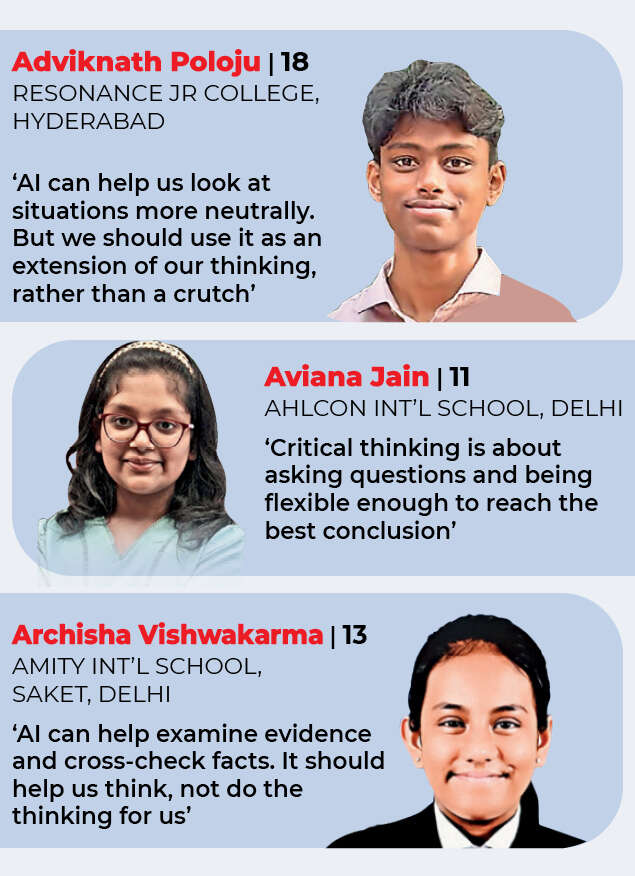
And increasingly, they argued, the challenge is not access to answers but what we do with them. AI can produce information and arguments within seconds, but outsourcing judgement to it can weaken rather than strengthen thinking. Knowledge, curiosity and the ability to ask the right question remain essential to evaluating whatever answer technology provides.
.
The discussion on ‘Critical Thinking, Pedagogy, Practice & Policy’ explored how AI could sharpen rather than weaken young minds. Panellists examined the role of curiosity in classrooms, independent decision-making at work and the challenge of training teachers, many themselves brought up on rote learning, to nurture questioning students.
.
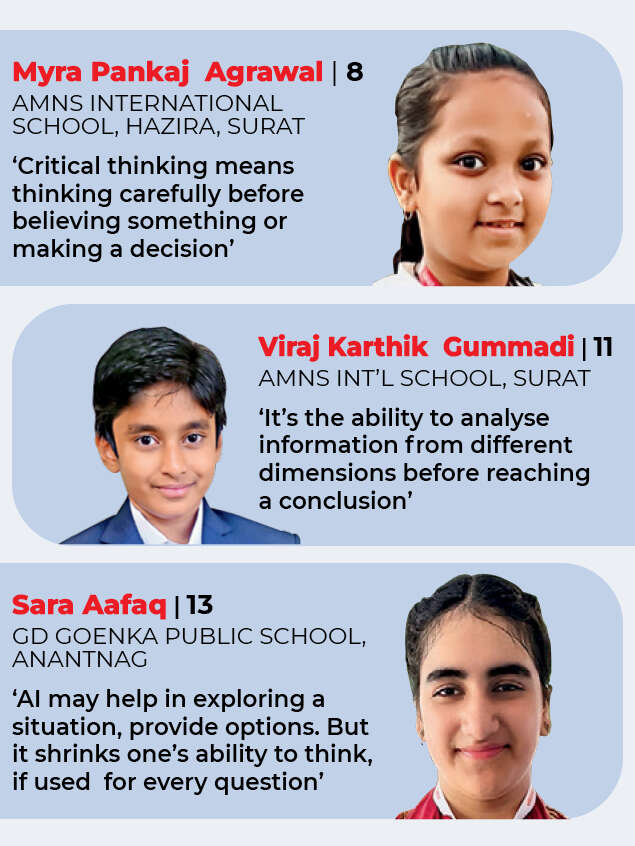
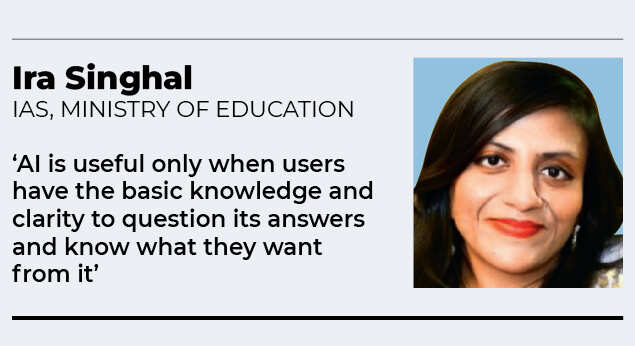
Setting out the risks of unquestioning dependence on technology, Ira Singhal, deputy secretary, department of school education and literacy, education ministry, spoke of her niece, who used AI to solve maths problems but returned with incorrect answers and no working steps. “AI is an amazing tool only when you know the subject and possess the basic knowledge needed to use it. Most assume they do not need knowledge because AI has it, and that is where the problem begins,” she said.
.
The need to question established assumptions, panellists said, extended well beyond the use of AI. Ruchi Ghanshyam, (retd) IFS, former High Commissioner of India to the UK, explained how such questioning could turn routine administration into meaningful action. While the instinctive bureaucratic response was often “Why should this be done?”, she said she learnt to reverse the question. “I learnt to ask, ‘Why not?’ If something is good, why shouldn’t we do it? That takes us to the more difficult question of how it can be done,” she said. Merely moving a file from the ‘in’ to the ‘out’ tray achieved little, she added. “Between the in-tray and the out-tray is a human mind.”
.
Returning to the role of technology in learning, former Delhi University vice-chancellor Professor Dinesh Singh urged students not to fear AI but engage with it intelligently and inquisitively. “Do not engage with AI mechanically. Be inquisitive, keep asking questions and, most importantly, do not be afraid to admit that you do not know something. Learn to say, ‘I don’t know, tell me’, and you can learn a great deal from AI,” he said. AI was advancing rapidly and would not disappear, he added, making it essential for teachers and students to know its capabilities.
.
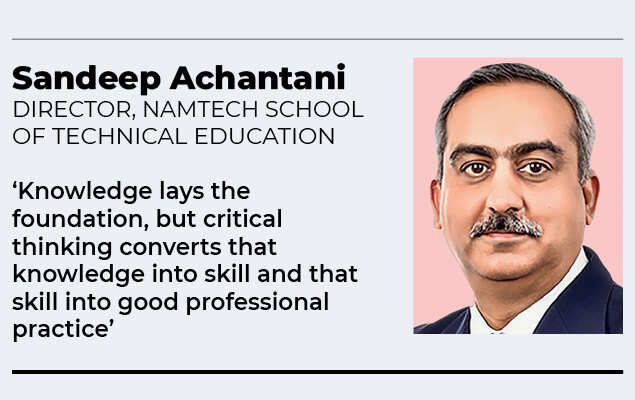
Taking the discussion deeper into the origins of independent thought, Gurcharan Das, thought leader and former CEO, Procter & Gamble India, placed curiosity at the heart of critical thinking. He contrasted adults cautiously walking around a puddle with a child jumping into it simply to discover what it felt like. “Critical thinking does not begin with intelligence, but with wonder. Wonder leads to question, question to doubt, doubt to evidence, evidence to judgement and judgement, ultimately, to independence of mind,” he said. That natural instinct to explore, Das said, was often weakened rather than encouraged in classrooms. He warned that education systems frequently suppress curiosity by rewarding repetition over inquiry.
.
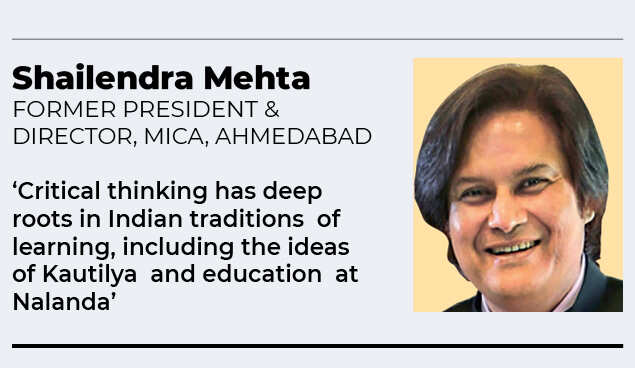
Rote learning, he said, created “a nation of parrots”, while students needed confidence to question teachers and authority.The discussion also located these ideas within India’s own intellectual history. Professor Shailendra Mehta, former president and director, MICA, Ahmedabad, traced critical thinking to the Sanskrit concept of Anvikshiki, which he described as the process of exam
.
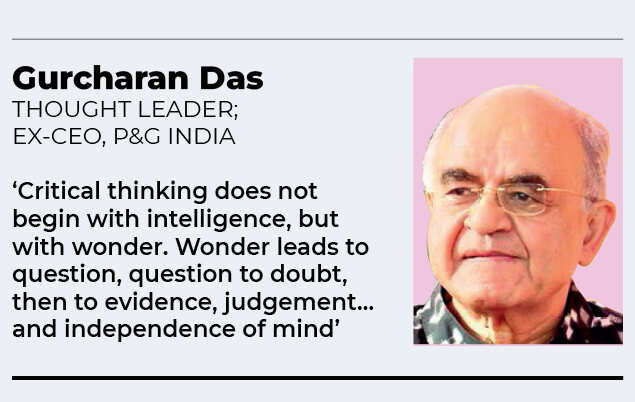
ining and interpreting what one observes. Referring to Chanakya’s mentorship of Chandragupta Maurya, he said Anvikshiki was regarded as the foundation of learning, action and right conduct. “For thousands of years, we have understood that critical thinking is what can make a pauper a prince,” he said.From intellectual traditions, the conversation moved to situations in which independent judgement could carry serious consequences. Maj Gen K Narayanan of NITI Aayog said critical thinking in the armed forces involved analysing information without becoming trapped in “paralysis by analysis”. At the operational level, personnel often had to act amid incomplete information and serious consequences. “The person on the ground cannot always look for orders. Decisions have to be taken in the absence of complete facts and amid the fog of war,” he said, describing the process through the cycle of observing, orienting, deciding and acting.
.
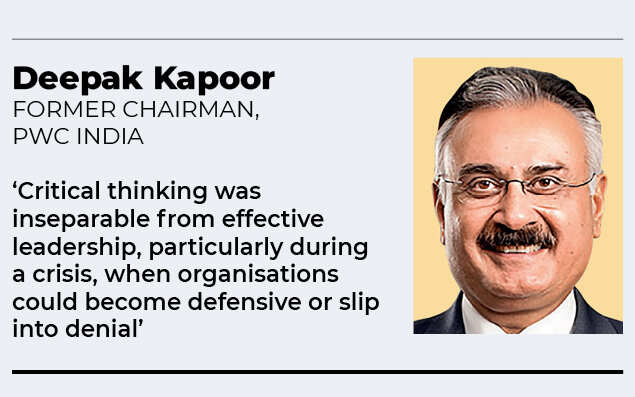
A similar need for clear judgement arose in organisational leadership, particularly when decisions had to be taken under pressure. Deepak Kapoor, former chairman, PwC India, said, “Critical thinking was inseparable from effective leadership, particularly during a crisis, when organisations could become defensive or slip into denial. Leaders needed to set aside biases, keep alternatives open and give colleagues the freedom to question decisions without fear or internal politics.” The same ability, he said, was required while using AI, as its usefulness depended on intelligent prompts, scrutiny of biases and consideration of multiple perspectives.
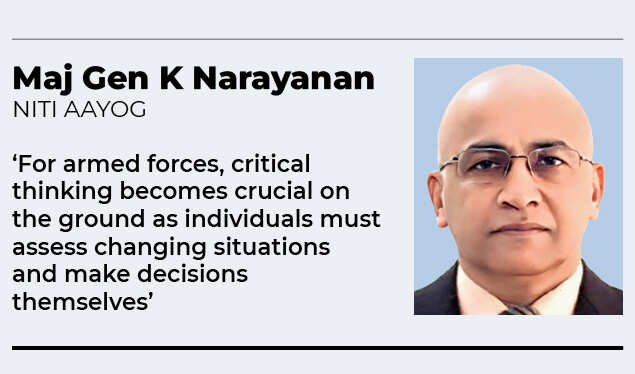
At the level of everyday work, critical thinking was presented not as an abstract idea but an essential part of applying knowledge. Sandeep Achantani, director, NAMTECH School of Technical Education, linked it with vocational skills, noting that real-world problems rarely arrived with all the variables marked out. A machine operator diagnosing faulty output or a mechanic tracing a glitch must test several possible causes before finding a solution. “Knowledge lays the foundation, but critical thinking converts that knowledge into skill and that skill into good professional practice,” he said.
.
Together, these examples brought the discussion back to the classroom and the environments in which young people form their habits of thought. The conversation also extended to how constant exposure to information is shaping the way young people think and make judgements.Ashutosh Telang, director and vice-president, HR and administration, AM/NS India, said: “Use technology and AI, and learn from them, but do not outsource your judgement. Technology should augment your thinking, not replace it. Listen to those who disagree, remain open to better evidence and use your thinking to solve problems.”Impact catalyst Aruna Goenka; Pushpendra Rajput, former Secretary, UPSC; and Vikas Yadvendu, head of CSR, AM/NS India, were also present at the event.
Share your thoughts in the comments
Be respectful · TOI community guidelines
The stress on questioning was highlighted by other guests, too. Chief guest Sanjay Kumar, who was, till recently, secretary, department of school education & literacy, education ministry, said: “What children learn, how they learn and how they question depend largely on how they are assessed. Assessment patterns must change, and classroom interactions must become two-way, with every child encouraged to ask questions and participate in conversations.”Extending the message from the classroom to life, guest of honour Lt Gen Sanjay Kulkarni (retd), former director general of infantry, Indian Army, said: “Do not be afraid to fail or ask questions. Accept failure as a challenge, identify what was lacking and improve. Knowledge and hard work matter, but attitude makes the difference. Develop a positive attitude, learn to say ‘yes’ and find a solution.”